
Close
Back


From now on you can download videos from our website
If you would also like to subscribe to the newsletter and receive our latest updates, click on the button below.
Enter the email address you registered with and we will send you a code to reset your password.
The password must be at least 12 characters long, no spaces, include upper/lowercase letters, numbers and symbols.
Click the button to return to the page you were on and log in with your new password.
09 November 2017
1 MIN READ
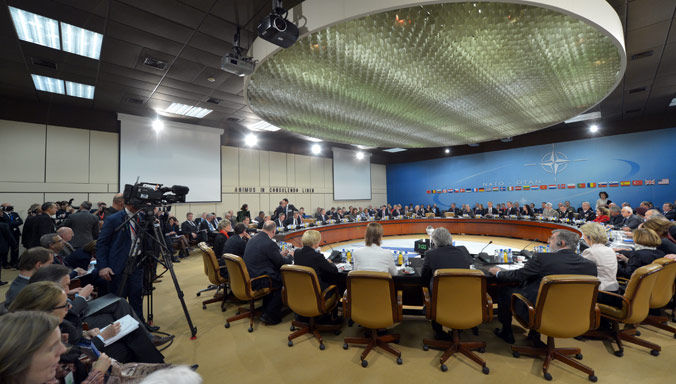
Defence Ministers agreed today (9 November 2017) to increase the size of NATO’s Resolute Support training mission in Afghanistan from around 13,000 to roughly 16,000 personnel. NATO Secretary General Jens Stoltenberg made the announcement at the end of a two-day meeting of the Alliance's Defence Ministers in Brussels. Mr Stoltenberg welcomed the fact that “Afghan forces are making progress, even though the situation remains very challenging.” Ministers also agreed on the importance of funding for the Afghan security forces, and welcomed Afghanistan’s intention to make further progress on reforms and reconciliation.
In response to changes in Europe’s security environment, Ministers agreed an outline design for an adapted NATO Command Structure on Wednesday (8 November 2017), with new commands to improve the movement of troops across the Atlantic, and within Europe. "We need a command structure which can make sure that we have the right forces, in the right place, with the right equipment at the right time," NATO Secretary-General Jens Stoltenberg told a press conference in the margins of the meeting.
With cyber-attacks a growing threat, Ministers endorsed a set of principles for how the Alliance can integrate the cyber capabilities of its Allies into Alliance military operations. Ministers also agreed to the creation of a new Cyber Operations Centre to help integrate cyber into NATO planning and operations at all levels. This follows steps last year to recognise cyber as an operational domain along with land, sea and air.
Another key focus of discussion among ministers was North Korea’s illegal nuclear and ballistic missile programmes. Secretary General Stoltenberg stressed that UN sanctions need to be fully and transparently implemented. Mr Stoltenberg added that Russia and China have a special role to play both as neighbouring countries and as permanent members of the UN Security Council. In the margins of the NATO ministerial discussion, US Secretary of Defense James Mattis also chaired a meeting of the Global Coalition to Defeat ISIS.