Close
Back


From now on you can download videos from our website
If you would also like to subscribe to the newsletter and receive our latest updates, click on the button below.
Enter the email address you registered with and we will send you a code to reset your password.
The password must be at least 12 characters long, no spaces, include upper/lowercase letters, numbers and symbols.
Click the button to return to the page you were on and log in with your new password.
19 October 2017
1 MIN READ
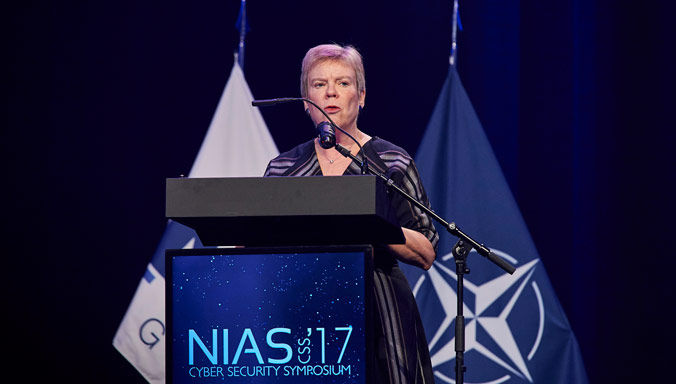
NATO Deputy Secretary General, Rose Gottemoeller, spoke of the vital importance of cyber defence when she addressed industry experts at the NATO Information Assurance Symposium (NIAS) Cyber Conference today (19 October 2017) in Mons, Belgium.
“Cyber-attacks are serious. They have the potential to undermine NATO’s missions around the world and to hamper our ability to deliver collective defence. That is why cyber defence is a top priority for NATO and for NATO Allies,” said the Deputy Secretary General. “We have to be just as effective in the cyber domain as we are in the physical world,” added Ms Gottemoeller.
The Deputy secretary General also addressed a workshop on Women in Cyber Defence. “Cybersecurity is a team sport, but we’re leaving half our players on the bench,” said the Deputy Secretary General.
Only around 1-in-10 people working in cyber defence is female. Worldwide by 2022, it is estimated that another 1.8 million professionals working cyber-security. If we solve the gender gap, we can also solve the workforce gap. NATO is committed to gender equality in cyber-defence as we are in all areas of security. It is not only the right thing to do, it is essential to our collective defence.
The annual NATO Cyber Symposium is hosted by the NATO Communications and Information Agency. It provides an opportunity for NATO and national cyber experts as well as the industry to discuss the latest advances in cyber technologies, as well as cyber-related threats and challenges.