
Close
Back


From now on you can download videos from our website
If you would also like to subscribe to the newsletter and receive our latest updates, click on the button below.
Enter the email address you registered with and we will send you a code to reset your password.
The password must be at least 12 characters long, no spaces, include upper/lowercase letters, numbers and symbols.
Click the button to return to the page you were on and log in with your new password.
07 May 2025
2 MIN READ
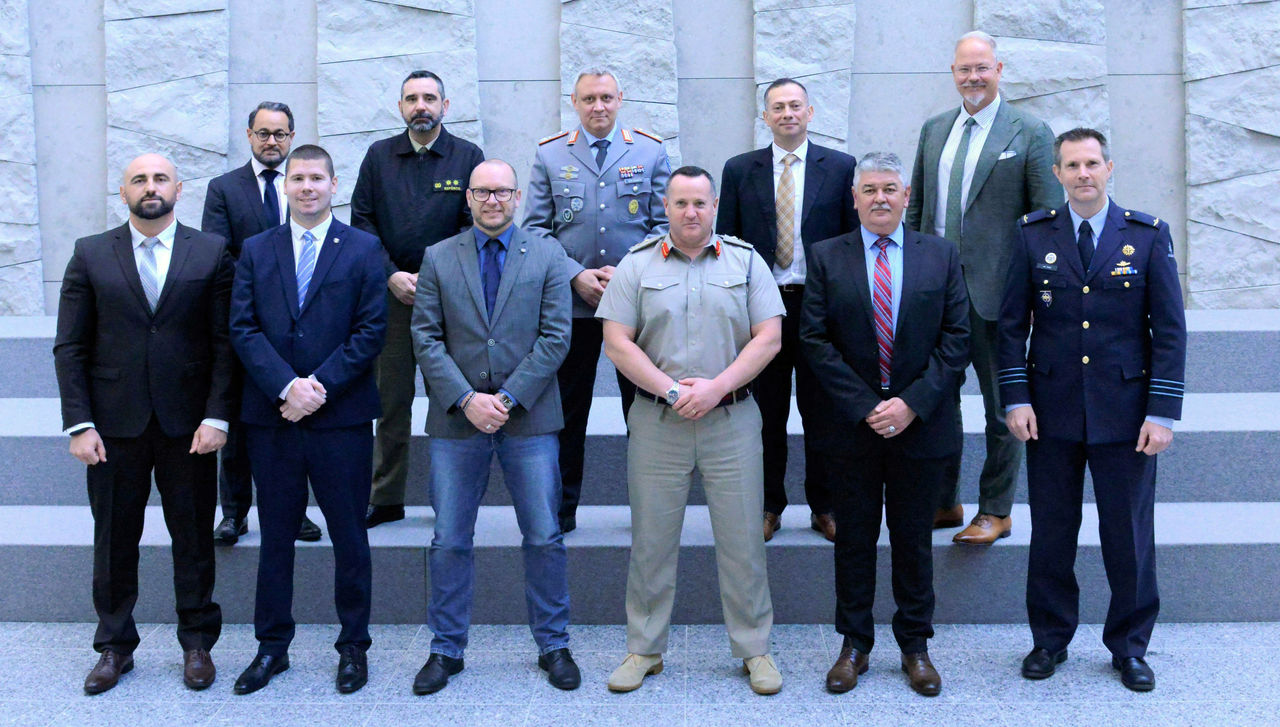
Brussels, NATO HQ, 5 May 2025 – The Joint Intelligence and Security Division (JISD) held its annual meeting with experts gathering from NATO’s intelligence and security-related Centres of Excellence (COEs) and the NATO Intelligence Enterprise (NIE). The annual meeting focusses on areas of common interests and best practices in order to further the intelligence capabilities of the Alliance.
NATO’s Deputy Assistant Secretary General for Intelligence, Major General Paul Lynch, opened the meeting by emphasising that “today, the NIE is better postured than ever to support the Allied decision-making on contemporary and future challenges.” He also acknowledged that “the effectiveness of our deterrence and defence posture relies precisely on NATO’s ability to adapt to an ever-changing world. And this is particularly true for Intelligence and Security.”
The very productive meeting, attended by participants from 7 COEs, ACT and NATO HQ, was split into three sessions, with the first being briefs and discussions about COEs’ initiatives. The second session highlighted innovation-related activities, with each COE providing agile and insightful ideas to foster innovation. The final session was open to NATO intelligence providers, Partners and Allied industries, with an in-depth discussion about the future of intelligence.
Sharing adaptive and impactful intelligence initiatives has become even more critical due to the rapidly changing global security environment. The meeting of NATO’s COEs and the NIE remains crucial to prepare the Alliance for the challenges of today and tomorrow, with COEs as essential actors in providing the Alliance with important information for its current and future posture. COEs act as a force multiplier, offering expertise across their four core tasks: exercise and evaluation, analysis and lessons learned, doctrine development and standardisation, and concept development and experimentation.