Fermer
Retour
Accédez aux ressources médiatiques officielles de l'OTAN. Un contenu de qualité professionnelle, diffusé sur les dernières actualités. La référence pour les professionnels des médias.

Accédez aux ressources médiatiques officielles de l'OTAN. Un contenu de qualité professionnelle, diffusé sur les dernières actualités. La référence pour les professionnels des médias.
Désormais, vous pouvez télécharger des versions complètes ou partielles de nos vidéos depuis notre site Web.
Si vous souhaitez également vous abonner à la newsletter et recevoir nos dernières mises à jour, cliquez sur le bouton ci-dessous.
Entrez l'adresse e-mail avec laquelle vous vous êtes inscrit et nous vous enverrons un code pour réinitialiser votre mot de passe.
Le mot de passe doit comporter au moins 12 caractères, sans espaces, inclure des lettres majuscules/minuscules, des chiffres et des symboles.
Cliquez sur le bouton pour revenir à la page sur laquelle vous étiez et connectez-vous avec votre nouveau mot de passe.
11 February 2025
4 MIN READ
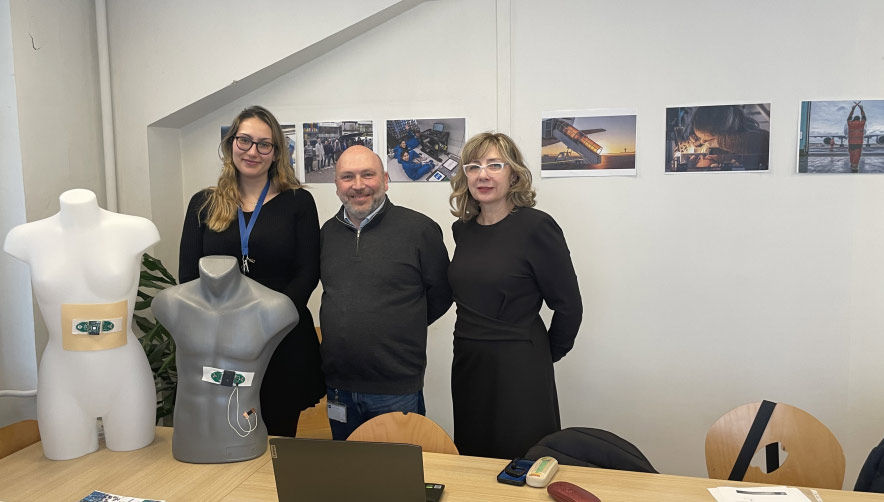
NATO’s Science for Peace and Security (SPS) Programme supports a wide range of activities, including research projects run by high-performing women scientists in leadership positions. NATO SPS helps these leading scientists contribute to the development of scientific research and technologies, partnerships and innovative solutions, with a direct positive impact on security. On 11 February, the International Day of Women and Girls in Science, the NATO SPS Programme is proud to present two remarkable scientists, devoted to enhancing societal security and resilience in times of crisis.
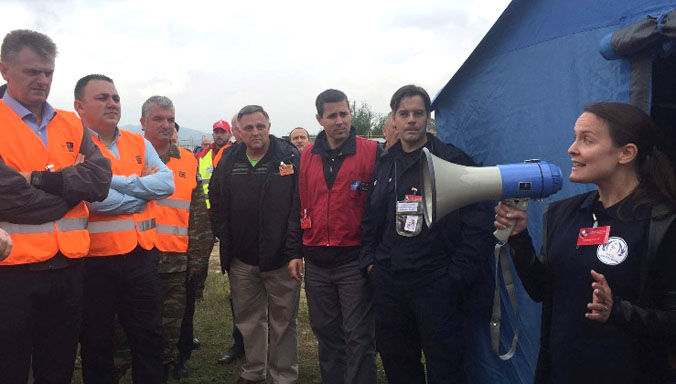
Dr Elena Savoia is a Principal Research Scientist at the Harvard T.H. Chan School of Public Health and an expert on public health emergency preparedness.

Her research focuses on the impact of disasters on people and strategies to increase public safety and resilience. Studying how disaster communications can impact a societal response to a crisis, she works with government agencies to identify the best ways to prepare for and respond to large-scale emergencies of any kind, including pandemics, weather-related disasters and terrorist attacks.
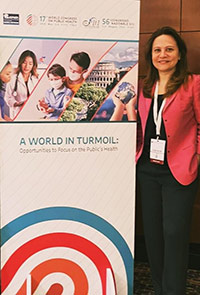
Dr Savoia is driven by the belief that peace and security can be achieved only when the public has trust in their disaster-response institutions and in the messages delivered to them. To that end, she has led an SPS-supported project, together with an expert from Sweden, to assist institutions in understanding the effectiveness of their response systems and assessing new methods that could boost public resilience to disasters. This will help them adapt their decision-making processes and public messaging to better serve society.
Building on this important work, Dr Savoia hopes to launch future projects that will support younger generations of women and girls in less developed countries, helping them find solutions that improve responses to major disasters.
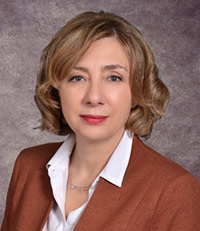
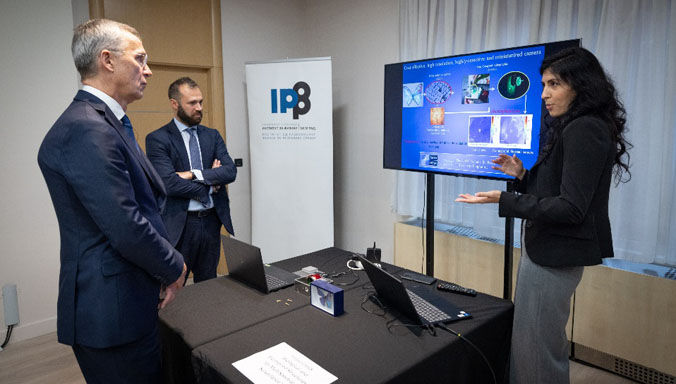
Prof Dr Ana Madevska Bogdanova is a professor in the Faculty of Computer Science and Engineering at Ss. Cyril and Methodius University in Skopje, North Macedonia.
Led by a deep interest in artificial intelligence (AI) and its transformative impact on the medical field, especially the work of first responders, Dr Bogdanova’s research enhances societal security and resilience by developing AI-driven systems for real-time monitoring and prediction of critical health parameters in emergency situations. By enabling early detection of medical risks and ensuring rapid intervention, these technologies reduce the consequences of mass casualty incidents. Additionally, the integration of AI in crisis response improves resource allocation and decision-making, ultimately saving lives.
Dr Bogdanova has led two projects supported by the NATO SPS Programme. Most recently, she led a project called SP4LIFE, which was conducted by a team of scientific and academic participants from Belgium, North Macedonia, Serbia and Slovakia. The team developed a patch-like sensor that, when placed on a victim’s chest, sets off an alarm indicating the severity of the injury, helping first responders prioritise the individuals for medical treatment and increase their chance of survival. Her team, consisting mostly of women scientists, contributed to the project by developing and optimising AI models for analysing and predicting vital parameters.
Throughout her university career, Dr Bogdanova has taken on leadership roles multiple times, firmly believing that science thrives on diverse perspectives and that women have the power to deliver ground-breaking discoveries and innovations. By sharing success stories, integrating young girls into ongoing projects and fostering supportive environments, she believes that we can inspire the next generation to pursue careers in science, starting from an early stage in the education system.
NATO’s SPS Programme offers unique ways to engage networks of scientists, experts and government officials from Allies and partners in meaningful, practical cooperation with tangible results. These activities contribute to scientific excellence, international cooperation and the security of people.
Proposals for new SPS activities are assessed based on technical and scientific merit, without gender bias and welcoming women-led research and insights. An important aspect is the encouragement to involve young researchers and scientists in our common efforts to improve security. Opportunities for cooperation are announced as calls for proposals on the SPS website.
Stay up-to-date with the latest opportunities offered by the SPS Programme by subscribing to the SPS newsletter.
11 February 2022
11 February 2021
11 February 2020
11 February 2019