Fermer
Retour
Accédez aux ressources médiatiques officielles de l'OTAN. Un contenu de qualité professionnelle, diffusé sur les dernières actualités. La référence pour les professionnels des médias.

Accédez aux ressources médiatiques officielles de l'OTAN. Un contenu de qualité professionnelle, diffusé sur les dernières actualités. La référence pour les professionnels des médias.

Désormais, vous pouvez télécharger des versions complètes ou partielles de nos vidéos depuis notre site Web.
Si vous souhaitez également vous abonner à la newsletter et recevoir nos dernières mises à jour, cliquez sur le bouton ci-dessous.
Entrez l'adresse e-mail avec laquelle vous vous êtes inscrit et nous vous enverrons un code pour réinitialiser votre mot de passe.
Le mot de passe doit comporter au moins 12 caractères, sans espaces, inclure des lettres majuscules/minuscules, des chiffres et des symboles.
Cliquez sur le bouton pour revenir à la page sur laquelle vous étiez et connectez-vous avec votre nouveau mot de passe.
28 novembre 2016
3 MIN DE LECTURE
Les pays des Balkans occidentaux ont souvent été touchés par des catastrophes naturelles majeures, notamment des inondations et des glissements de terrain. Grâce au soutien du programme OTAN pour la science au service de la paix et de la sécurité (SPS) et du département de la Sécurité intérieure des États-Unis, un nouveau projet vient d'être lancé qui vise à développer et à mettre en place un système qui facilite la coordination entre les intervenants et qui améliore la gestion des situations d'urgence civile dans la région.
When disaster strikes, good communication and effective coordination among responders is key to ensure appropriate emergency management. Therefore, the SPS Programme together with the US Department of Homeland Security, Science & Technology Directorate (DHS S&T), is supporting a new project that will develop and deploy a system in the Western Balkans to enhance situational awareness and help coordinate a response to incidents. Once in place, the new technology will allow responders to share all kinds of information about an incident, including the GPS location or images, via mobile devices. This will maximise real-time situational awareness and help find a coordinated, appropriate response to various emergencies.
A regional capacity-building initiative in the Western Balkans
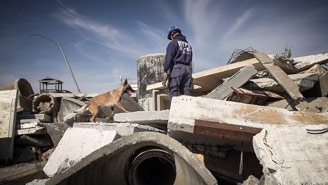
The project formally kicked off at NATO Headquarters on 28 November 2016. Experts and government officials from the United States, Bosnia and Herzegovina, Croatia, Montenegro, and the former Yugoslav Republic of Macedonia¹ will participate in this SPS project which will support capacity-building of emergency response and management in the Western Balkan region. “This project will have a strong and direct impact; it truly is an excellent example of practical cooperation with tangible results and concrete deliverables and resonates well with NATO’s political agenda,” said Ambassador Sorin Ducaru, NATO Assistant Secretary General for Emerging Security Challenges.
The kick-of project was also attended by Dan Cotter, DHS S&T Director of First Responders Group, the Ambassadors of Bosnia and Herzegovina and the former Yugoslav Republic of Macedonia, among others.
“This SPS flagship project directly supports NATO’s strategic objectives and is in line with its efforts to project stability beyond its territory,” emphasised Mr Ivan Mutavdžić, Deputy Permanent Representative of Croatia to NATO.
“It is a unique pilot project which will strengthen resilience and capacity, promote regional cooperation and, most importantly, save many lives and make citizens safer,” further elaborated Mrs Dragana Vešovič, Deputy Head of the Mission of Montenegro.
Cutting-edge technology for civil emergency coordination
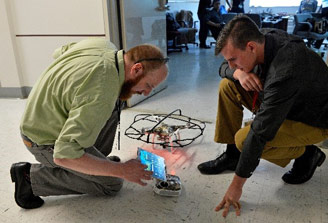
The technology used in this project is based on the Next-Generation Incident Command System (NICS), developed by the Massachusetts Institute of Technology’s Lincoln Laboratory (MIT LL) in collaboration with DHS S&T in the United States. NICS is a software platform that facilitates collaboration among emergency response agencies in case of incidents. “Often sharing even the most basic information on the location and scale of the disaster is complicated by the lack of interoperability between the myriads of technology tools used by governments at national, regional and local levels,” explained Dan Cotter. “This can make international collaboration difficult and slow. Tools such as NICS offer solutions to these types of problems.”
So far, NICS has been used in the United States in over 400 incidents, including natural disasters like earthquakes, floods, wildfires, but also search and rescue operations, and large public events such as marathons.
The SPS project will allow to further develop the NICS system and implement it in the participating countries in the Western Balkans, tailoring it to the needs of the region. Young scientists in particular will be involved in the project to customise and enhance the capabilities of the technology. The system will be especially useful in a region prone to natural disasters. In May 2014, the Balkans experienced devastating floods. At least 86 people were killed, and hundreds of thousands had to leave their homes as a result of the flooding.