Fermer
Retour
Accédez aux ressources médiatiques officielles de l'OTAN. Un contenu de qualité professionnelle, diffusé sur les dernières actualités. La référence pour les professionnels des médias.

Accédez aux ressources médiatiques officielles de l'OTAN. Un contenu de qualité professionnelle, diffusé sur les dernières actualités. La référence pour les professionnels des médias.
Désormais, vous pouvez télécharger des versions complètes ou partielles de nos vidéos depuis notre site Web.
Si vous souhaitez également vous abonner à la newsletter et recevoir nos dernières mises à jour, cliquez sur le bouton ci-dessous.
Entrez l'adresse e-mail avec laquelle vous vous êtes inscrit et nous vous enverrons un code pour réinitialiser votre mot de passe.
Le mot de passe doit comporter au moins 12 caractères, sans espaces, inclure des lettres majuscules/minuscules, des chiffres et des symboles.
Cliquez sur le bouton pour revenir à la page sur laquelle vous étiez et connectez-vous avec votre nouveau mot de passe.
Good morning.
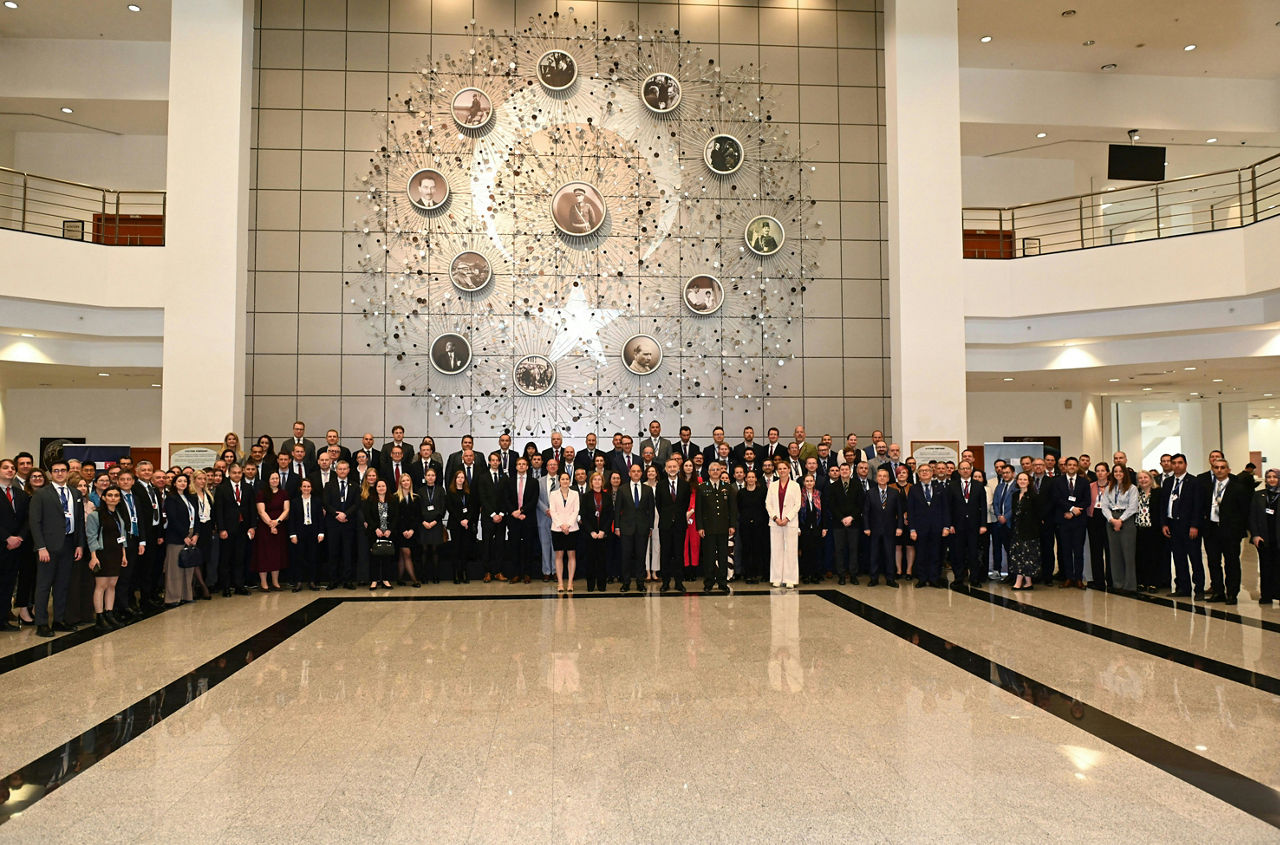
It is a great pleasure to address you all at the NATO Nuclear Policy Symposium.
And let me start by thanking our dear Ally, Türkiye, for hosting this event, as well as of course our NATO Summit in Ankara in just a few months. Thank you for everything you do for our shared security.
Türkiye is a highly valued Ally, investing heavily in defence, in all domains. This includes investments to strengthen our nuclear deterrence – with personnel, infrastructure, and command and control. And its defence industry continues to innovate and grow.
Türkiye’s contributions help keep us all safe. That’s what we need in a more dangerous world – a world where Russia continues using reckless nuclear rhetoric, and testing and employing dual-capable systems in Ukraine. Russia is attempting to both crush Ukraine and trying to intimidate NATO and our citizens. China is rapidly expanding and modernising its nuclear forces, without any transparency. North Korea continues to advance its missile and nuclear capabilities. And we, as NATO, but in particular our Ally, Türkiye, have recently experienced the threat that Iran can pose with its ballistic missiles, while it retains its nuclear ambitions.
NATO has successfully intercepted ballistic missiles launched from Iran against Türkiye. We will always do what is necessary to defend all Allies. We are adapting and strengthening our deterrence and defence posture – a posture based on an appropriate mix of nuclear, conventional and missile capabilities, complemented by space and cyber capabilities. And in times of great instability, as the importance of nuclear deterrence grows, we must ensure NATO’s nuclear deterrence remains credible, safe, secure and effective.
Allies are investing more, spending more and producing more for our collective defence. Much work is underway to adapt and modernise Allied military systems, including the nuclear ones. The US has successfully replaced and upgraded its nuclear weapons in Europe. The ongoing transition to fifth generation aircraft continues to improve NATO’s extended deterrence. Allies also increasingly provide infrastructure and conventional capabilities to contribute to nuclear operations, including Deep Precision Strike.
The US, the UK and France are modernising their nuclear forces. The UK has announced that it will rejoin NATO’s dual capable mission, and France has introduced its new policy of “forward deterrence,” complementing NATO’s nuclear deterrence. NATO’s Nuclear Consultation, Command and Control is also being modernised to ensure that we can take decisions and action no matter the circumstances, and at the speed of relevance.
But more needs to be done. And it will not be easy. Because strengthening our nuclear deterrence, while managing the possible risk of escalation with a nuclear-armed Russia, is a delicate balance. That is why this event, bringing together so many experts from Allied countries, is so important.
As we fast approach the next NATO Summit here in Türkiye, crucial decisions will need to be made, including how NATO’s nuclear posture will need to further adapt to the deteriorating security environment. I encourage you to address these key issues in an open and frank way.
So, thank you all for being here.
I wish you a successful and productive symposium.