Fermer
Retour
Accédez aux ressources médiatiques officielles de l'OTAN. Un contenu de qualité professionnelle, diffusé sur les dernières actualités. La référence pour les professionnels des médias.

Accédez aux ressources médiatiques officielles de l'OTAN. Un contenu de qualité professionnelle, diffusé sur les dernières actualités. La référence pour les professionnels des médias.
Désormais, vous pouvez télécharger des versions complètes ou partielles de nos vidéos depuis notre site Web.
Si vous souhaitez également vous abonner à la newsletter et recevoir nos dernières mises à jour, cliquez sur le bouton ci-dessous.
Entrez l'adresse e-mail avec laquelle vous vous êtes inscrit et nous vous enverrons un code pour réinitialiser votre mot de passe.
Le mot de passe doit comporter au moins 12 caractères, sans espaces, inclure des lettres majuscules/minuscules, des chiffres et des symboles.
Cliquez sur le bouton pour revenir à la page sur laquelle vous étiez et connectez-vous avec votre nouveau mot de passe.
Good morning all of you, at this early hour.
Looking forward today to host the foreign ministers of NATO. Of course, we'll be discussing the historic The Hague Summit, and to make sure that we implement all the decisions when it comes to, and so to discuss the implementation of that summit - particularly when it comes to defence spending. Ramping up to 5% on a credible path, defence industrial production - we have to do much more - we are doing better, but still a lot to be done. And of course, keeping Ukraine as strong as possible in the fight today, but also to be in the strongest possible position when peace talks really start to happen, in a way where this could lead to a result.
And then we will also have the NUC - NATO-Ukraine Council - later today, the lunch with Andrii Sybiha, the Foreign Minister, and Kaja Kallas, the EU High Representative, they are discussing again, Ukraine. How do we make sure that Ukraine stays as strong as possible?
The peace talks are ongoing. That's good, but at the same time, we have to make sure that, whilst they take place, and we are not sure when they will end, that Ukraine is in the strongest possible position to keep the fight going, to fight back against the Russians, but also in strongest possible position when peace talks really get to a point where they sit at the table.
Having said that, I'm open to a few questions, and then, of course, we will see each other later at a full presser after the Foreign Ministers Meeting, who wants to start?
NATO Secretary General, Mark Rutte – One at a time, one at a time. Yes.
Reporter – Yesterday Putin was threatening Europe with war again so what would be your message for him today after these threats?
NATO Secretary General, Mark Rutte – I'm not going to react to everything Putin is saying. We have seen him in military clothes, dressed like a soldier at the front, but not at the front, quite far from the front the day before yesterday, so I'm not going to react to everything.
Reporter - What do you think of the new pledges – new PURL pledges - by Norway, the Netherlands...?
NATO Secretary General, Mark Rutte – That's really great news. So, a lot of pledges have come in, and I hope I can make a few announcements later today of pledges made today. And when you look at the overall numbers, as I said yesterday, we are now at 4 billion. So that means we are really on track for the 1 billion a month - August, September, October, November - and I'm cautiously optimistic that we will reach the 5 billion for the full year. And then for next year we need, for the full year, again, a lot of money, at least 1 billion, maybe even a little bit more than 1 billion a month. It might be around 15, maybe a little bit more for the whole year. When it comes to this crucial US gear - so this is offensive and defensive, including interceptors for the air defence systems - crucial to keep Ukrainian civilians and civilian infrastructure safe. So, it is really good that this flow is there, that Europeans are stepping up, and Canada, by the way, also doing a lot here. So really, really glad that this is working.
Reporter – [inaudible] ... went in Moscow last night?
NATO Secretary General, Mark Rutte – I'm, as you know, I'm really glad that the US President broke the deadlock with Putin, started this whole peace process. It was only the US, under the leadership of President Trump, who could do this. But I don't want to comment on every step. So last night was, of course, important. There will be more steps, but you will not hear me commenting on every in-between step. We closely coordinate with the Americans what's happening, but not commenting on every step.
Reporter - What do you make of the rare absence of the US Secretary of State? And do you have the impression that the US are consulting enough with the European allies?
NATO Secretary General, Mark Rutte – Oh, they are absolutely consulting enough. The teams here at NATO and Marco Rubio's team are in constant contact. I myself, in constant contact with the Secretary of State. Of course, he's working very hard when it comes to the peace process on Ukraine, but also when it comes to Sudan, Gaza and all the other issues the Americans are working on. So I find it totally acceptable that he is not here. Chris Landau was here, the deputy secretary. I had dinner with him last night, and he will be, yeah, really great at the table. So let's not see, look into more than anything else there is there.
Reporter – How would you comment on corruption cases and scandals in Ukraine? Kaja Kallas this week said that trust is important, even important during war times, but nothing should tint the European way of Ukraine. So what is your position about it?
NATO Secretary General, Mark Rutte – No, no. I mean, I commented before that, of course, when corruption takes place, that it is important when these corruption cases emerge, that the Ukrainians deal with it, and they are dealing with it. I think the Ukrainian President is taking all the necessary steps to root out corruption.
Reporter - How to push Russia to compromise something during these peace negotiations? And does these peace negotiations even make sense? Because Russia doesn't want to compromise anything.
NATO Secretary General, Mark Rutte – Again, the process is taking place. We had successful meetings in Geneva and in Miami between the American and Ukrainian teams. Last night, there was the meeting in Moscow. Again, I'm not going to comment on every step on the way. It's important that the peace process is there, hopefully it will lead to results. And if it takes too long or it is not leading to results, the best way to put pressure on the Russians is by doing two things. One is making sure that the Russians understand that the weapon flow into Ukraine will keep on going. That's exactly what's happening today, thanks to the US, thanks to the Europeans, US sending its crucial gear to Ukraine, paid for by Canada and European allies, but also Europe and Canada are doing a lot bilaterally. And secondly, making sure that the economic sanctions bite, that they are effective. That's also exactly what is happening, the US and Europe work in conjunction to have the maximum impact through sanctions on the Russian economy. That's the best way to change Putin's calculus. And in the meantime, of course, we hope that this will end sooner than later, because, as the President of the United States has said, the meat grinder has got to stop, and I agree fully with him. Final question then.
Reporter - Talking about financing and supporting Ukraine, how important are the Russian frozen assets in context, to keep this weapon flow you were talking about going?
NATO Secretary General, Mark Rutte – What’s important is that the weapon flow and all the other support keeps on flowing, including the Danish Lithuanian initiative of investing in the defence industrial base in Ukraine, including the Czech ammunition initiative, including all the bilateral support going into Ukraine. I commend what the Irish have announced yesterday. So, I think this is all important. Of course, Ireland not in NATO, but still supporting Ukraine. Of course, the way to fund it is a debate, and I'm not going into that, because this is really up to the EU and I know the European Union is working hard at solving that issue. So thank you so much, and we'll meet again after all the meetings. Thanks.


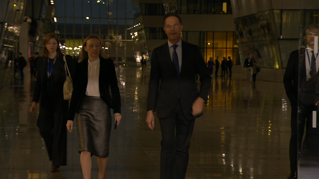
Doorstep statement by NATO Secretary General Mark Rutte at the start of the meetings of NATO Foreign Ministers
Doorstep statement by NATO Secretary General Mark Rutte at the start of the meetings of NATO Foreign Ministers
Doorstep statement by NATO Secretary General Mark Rutte at the start of the meetings of NATO Foreign Ministers
Doorstep statement by NATO Secretary General Mark Rutte at the start of the meetings of NATO Foreign Ministers
Doorstep statement by NATO Secretary General Mark Rutte at the start of the meetings of NATO Foreign Ministers
Doorstep statement by NATO Secretary General Mark Rutte at the start of the meetings of NATO Foreign Ministers
Doorstep statement by the NATO Secretary General
03 December 2025