Fermer
Retour
Accédez aux ressources médiatiques officielles de l'OTAN. Un contenu de qualité professionnelle, diffusé sur les dernières actualités. La référence pour les professionnels des médias.

Accédez aux ressources médiatiques officielles de l'OTAN. Un contenu de qualité professionnelle, diffusé sur les dernières actualités. La référence pour les professionnels des médias.
Désormais, vous pouvez télécharger des versions complètes ou partielles de nos vidéos depuis notre site Web.
Si vous souhaitez également vous abonner à la newsletter et recevoir nos dernières mises à jour, cliquez sur le bouton ci-dessous.
Entrez l'adresse e-mail avec laquelle vous vous êtes inscrit et nous vous enverrons un code pour réinitialiser votre mot de passe.
Le mot de passe doit comporter au moins 12 caractères, sans espaces, inclure des lettres majuscules/minuscules, des chiffres et des symboles.
Cliquez sur le bouton pour revenir à la page sur laquelle vous étiez et connectez-vous avec votre nouveau mot de passe.
23 octobre 2019
2 MIN DE LECTURE
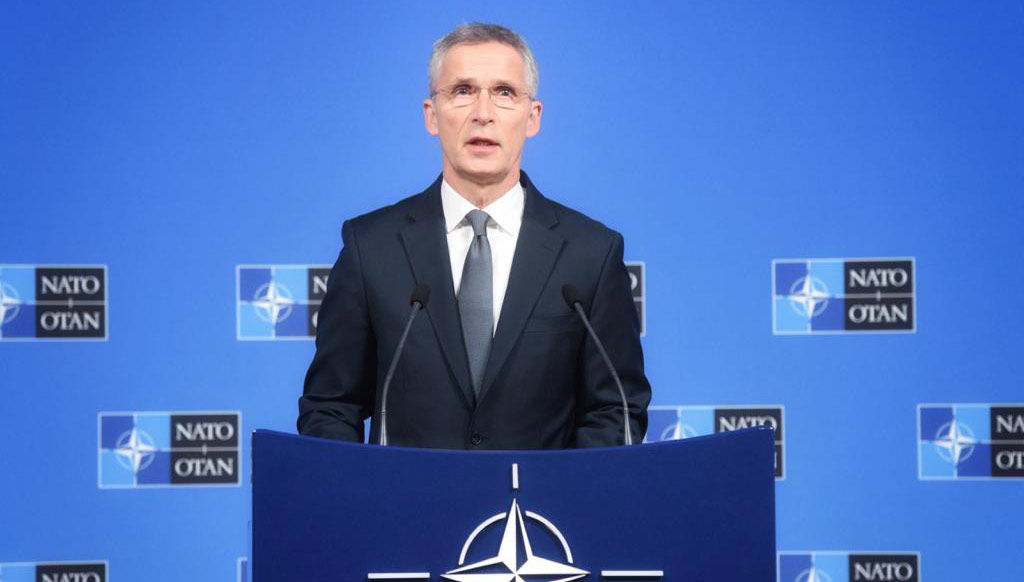
(As delivered)
Good morning.
NATO Defence Ministers will be meeting tomorrow and the day after tomorrow to discuss key issues for our Alliance.
Including our missions and operations, and the increased readiness of our forces, progress towards fairer-burden sharing within the Alliance, and the resilience of our telecommunications systems.
We will also discuss the situation in northeast Syria. I welcome the significant reduction in violence following the joint statement by Turkey and the United States. It is important that all forces on the ground act with restraint and with full respect of international humanitarian law. The recent developments underscore the urgent need for a political solution. NATO fully supports UN-led efforts to achieve that, after so many years of this terrible conflict.
It is also important that we safeguard the gains we have made together against ISIS.
NATO plays an important role in the fight against terrorism. We will discuss our training mission in Iraq, which helps security forces there make sure that ISIS does not return.
And we will restate our commitment to our mission in Afghanistan, which ensures that this country does not become a safe haven for international terrorists once again.
We will also discuss our responses to hybrid threats. And our work to ensure our societies are more resilient.
Civilian infrastructure is a national responsibility. But under Article 3 of our founding Treaty, being resilient is part of every Ally’s commitment to the Alliance, and to each other. This is why NATO defence ministers will agree an update to our baseline requirement for civilian telecommunications.
The requirement is for all Allies to have reliable telecommunications systems in peacetime, crisis and conflict, including for 5G.
This means having in place:
And it means that Allies should conduct a thorough assessment of the risks to communications systems associated with cyber threats. As well as the consequences of foreign ownership, control or direct investment. I expect Ministers will agree to take these requirements into account when taking national decisions on designing, building and operating their telecommunications networks.
We will discuss these issues tomorrow, together with our partners from the European Union, Finland and Sweden.
Later today, I will address a public conference on Arms Control and Disarmament here in Brussels.
The arms control regime in Europe is eroding, due to Russia’s disregard for its international commitments, and the emergence of new actors and new technologies. So we need to strengthen arms control to take account of new realities.
Including by:
All of this will help to strengthen the international rules-based order and preserve peace.
In six weeks, NATO Heads of State and Government will meet in London. Our discussions over the next two days will set the stage for the meeting, where we will take decisions to further adapt and strengthen our Alliance to a fast changing world.
And with that, I am ready to take your questions.