Close
Back


From now on you can download videos from our website
If you would also like to subscribe to the newsletter and receive our latest updates, click on the button below.
Enter the email address you registered with and we will send you a code to reset your password.
The password must be at least 12 characters long, no spaces, include upper/lowercase letters, numbers and symbols.
Click the button to return to the page you were on and log in with your new password.
Updated: 09 July 2026
NATO and Ukraine share a deep and enduring partnership. Since the early 1990s, the Alliance and Ukraine have steadily built a strong, mutually beneficial relationship based on close cooperation and shared values. Today, NATO Allies are providing unprecedented levels of military assistance to Ukraine, supporting its ability defend itself against Russia’s war of aggression. NATO fully supports Ukraine’s inherent right to self-defence, and its right to choose its own security arrangements.
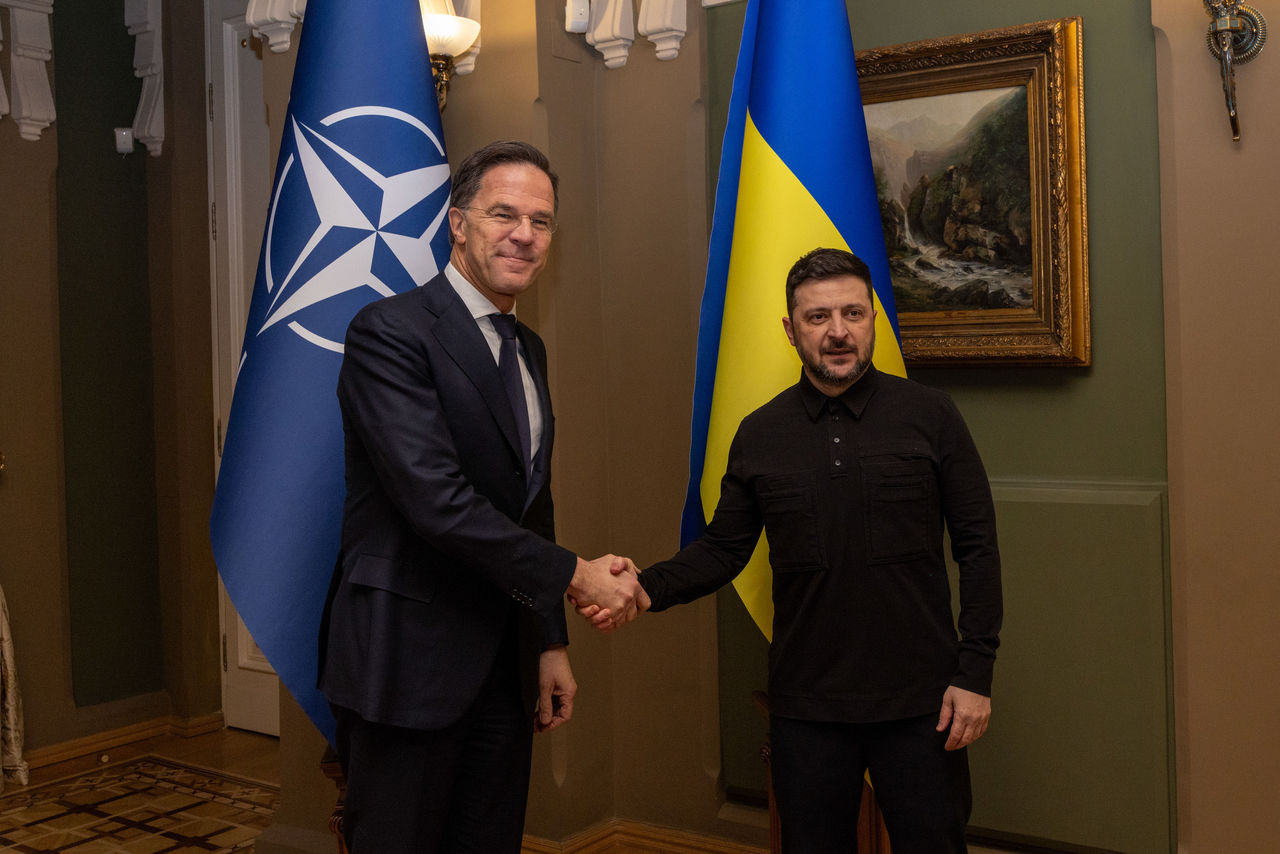
NATO Secretary General Mark Rutte with Ukrainian President Volodymyr Zelenskyy in Kyiv on 3 February 2026.
NATO condemns Russia's war of aggression against Ukraine in the strongest possible terms. Russia’s unprovoked aggression has gravely undermined global security and stability, and is a blatant violation of international law. NATO Allies, in concert with relevant resolutions of the United Nations General Assembly, demand that Russia stop the war immediately, cease its use of force against Ukraine, and completely and unconditionally withdraw all its forces from Ukraine.
Since Russia's illegal annexation of Crimea and the beginning of its aggression in eastern Ukraine in 2014, NATO has adopted a firm position in full support of Ukraine's sovereignty and territorial integrity within its internationally recognised borders, extending to its territorial waters. Furthermore, NATO has condemned the following actions:
As a result of Russia's illegal and illegitimate annexation of Crimea, NATO Allies decided in 2014 to suspend all practical civilian and military cooperation with Russia, while leaving political and military channels of communication open.
Since Russia's full-scale invasion of Ukraine in February 2022, Allies have imposed severe sanctions on Russia to weaken its economy and deprive the country of critical technologies and markets, decreasing its ability to rebuild its military at a faster pace. Allies continue to refine these sanctions in order to increase the pressure on Moscow. Sanctions make it harder for Russia to repair its armoured vehicles and aircraft, manufacture missiles and drones, and finance its war.
NATO welcomes the efforts to negotiate a just and lasting peace as soon as possible. It is crucial that peace is secured with a sustainable deal, so that Russia never again attacks Ukraine or threatens any part of NATO. Ceasefires in 2014 and 2015 were repeatedly violated by Russia; they did not prevent more fighting, or Russia’s full-scale invasion of Ukraine in 2022. This is why NATO continues to strengthen Ukraine – the stronger Ukraine is on the battlefield, the stronger it will be at the negotiating table, and the greater the chances of a just and lasting peace, backed by security guarantees from Ukraine’s partners and strong Ukrainian Armed Forces capable of deterring any future Russian aggression. To that end, NATO’s support for Ukraine will continue in the event of a ceasefire or peace deal.
NATO has helped Ukraine develop its self-defence capabilities since the country joined the Partnership for Peace (PfP) programme in 1994. Ukraine’s military capabilities have become increasingly interoperable with NATO, including through its participation in NATO defence and security sector reform initiatives, and its contributions to NATO-led exercises, operations and missions.
Following Russia’s illegal annexation of Crimea in 2014, NATO stepped up its support for Ukraine’s self-defence, developing new initiatives that helped train and equip tens of thousands of Ukrainian troops. Since Russia’s full-scale invasion of Ukraine in 2022, Allies have raised their support to unprecedented levels, providing the massive military aid required to keep Ukraine strong. The aim of all Allied security assistance to Ukraine is to bring the war to a just and lasting end as quickly as possible, and to strengthen Ukraine’s ability to deter future threats.
This section lists current major programmes of support, while a broader range of support activities (both current and historical) are listed under “Wider activities” below.
Through the Prioritised Ukraine Requirements List (PURL), NATO Allies purchase critical defence equipment from the United States, which is then delivered to Ukraine. NATO itself plays a crucial coordinating role; under PURL, NATO’s Supreme Allied Commander Europe (SACEUR) regularly identifies packages of equipment and munitions that Ukraine needs and that the United States can provide in greater volumes than European Allies and Canada. Subsequently, Allies (individually or in groups) agree to provide funding for these packages, and NATO coordinates the delivery of the equipment to Ukraine, including through NATO Security Assistance and Training for Ukraine (NSATU, see below).
The PURL initiative was launched in July 2025. Since then, over two thirds of Allies have committed to purchasing equipment for Ukraine through PURL, as have NATO partners Australia and New Zealand. In total, these Allies and partners have funded more than USD 6 billion of military equipment from the United States via PURL. Deliveries are currently underway, including shipments of ammunition and critical equipment needed for air defence.
NATO Security Assistance and Training for Ukraine (NSATU) is a NATO command that coordinates the provision of military equipment and training to Ukraine by NATO member and partner countries. This includes:
NSATU places security assistance to Ukraine on an enduring footing, ensuring enhanced, predictable and coherent support for the long term. It brings together much of the security support being provided by the international community to Ukraine under one overarching framework, improving coordination, accountability and burden-sharing among Allies. NSATU, which operates only on Allied territory, helps Ukraine uphold its right to self-defence, as enshrined in the UN Charter; under international law, it does not make NATO a party to the conflict.
NSATU HQ is based in Wiesbaden, Germany with three logistical hubs in the eastern part of the Alliance. It is led by a three-star general reporting to NATO’s Supreme Allied Commander Europe (SACEUR) and involves around 300 personnel from NATO member and partner countries, including Ukraine.
The establishment of NSATU was decided by NATO Leaders at the Washington Summit in July 2024, and NSATU was up and running by December 2024.
Learn more about NSATU from Allied Command Operations.
The Comprehensive Assistance Package (CAP) for Ukraine is the overarching framework through which NATO provides non-lethal support to Ukraine. It covers two main areas of work: urgently needed military assistance based on Ukraine’s requests for support, and longer-term capacity-building projects designed to assist Ukraine with its reforms in the defence and security sector and post-war recovery.
Learn more: Comprehensive Assistance Package (CAP) for Ukraine
The NATO-Ukraine Joint Analysis, Training and Education Centre (JATEC) in Bydgoszcz, Poland is the first joint NATO-Ukraine organisation and an important pillar of NATO-Ukraine relations. At the Centre, Ukrainian and NATO personnel work hand-in-hand to identify and apply lessons learned from Russia’s war against Ukraine, and embed these lessons into NATO and Ukrainian strategies, policies and operations. This helps strengthen Ukraine’s armed forces and build interoperability with NATO.
The JATEC is part of the NATO Command Structure, reporting directly to Allied Command Transformation.
In February 2024, Defence Ministers from NATO and Ukraine agreed to create the JATEC. At the Washington Summit in July 2024, NATO Leaders further endorsed its establishment as a civil-military centre with NATO Military Headquarters status. The JATEC officially opened in February 2025. Since opening, the Centre has carried out projects focused on air defence, protection of critical infrastructure and resilience.
Learn more about JATEC from Allied Command Transformation.
Since the start of Russia's war of aggression against Ukraine, Allies have provided unprecedented political, economic, military, financial and humanitarian support. Allies have also made their defence industrial capacity available to support Ukraine’s needs. All of this is having a substantial effect, enabling Ukraine to defend effectively and inflict real and severe costs on Russia.
To ensure that support continues, Allies made a Pledge of Long-Term Security Assistance for Ukraine at the 2024 Washington Summit. Through proportional contributions, Allies agreed to provide a minimum baseline funding of EUR 40 billion in 2024, and to provide sustainable levels of security assistance in subsequent years. Allies far exceeded this amount in 2024, providing over EUR 50 billion, nearly 60% of which came from European Allies and Canada.
At the 2026 Ankara Summit, Allies pledged to provide EUR 70 billion in military equipment, assistance and training for Ukraine in 2026. They also affirmed their commitment to sustaining at least an equivalent level of assistance for 2027.
Allies report to NATO on support delivered in relation to the Pledge twice per year. Based on this, the Secretary General provides an overview of all notified contributions to Allies. Heads of State and Government continue to re-evaluate Allied contributions at NATO summits.
In addition to providing material assistance and training directly to Ukraine, and purchasing equipment for Ukraine through PURL, Allies also fund support to Ukraine through NATO. The Alliance’s practical support to Ukraine is organised through two main funding channels: dedicated NATO Trust Funds and the NATO Civil Budget.
The Ukraine CAP Trust Fund enables resourcing for Ukraine-related activities within a single dedicated financial instrument – a flexible and scalable fund to provide Ukraine with short-term non-lethal military assistance (sustainment) as well as long-term capacity-building support. As of June 2026, Allies and partners have contributed over EUR 1.4 billion (approximately USD 1.6 billion) to the Ukraine CAP Trust Fund.
The NSATU Trust Fund, managed by the United Kingdom, enables NSATU to quickly respond to Ukraine’s urgent wartime requirements. To that end, it helps provide rapid procurement and delivery of urgent goods and services for the Ukrainian military.
At the 2022 Madrid Summit, Allied Leaders agreed as part of the NATO 2030 agenda to boost training and capacity-building, including to partners, and to increase the NATO common funding ceilings year-on-year in real terms. These increases started in 2023 and provide a predictable source of Allied funding to achieve results in these vital areas.
From January 2023 through the 2025 fiscal year, almost EUR 52 million has been dedicated to cooperative security initiatives to further support selected partner countries, including Ukraine. Under the CAP, this key funding source enables projects to be developed and implemented in areas such as defence planning and interoperability, governance and integrity, immediate non-lethal practical support, information technology, and education and training.
In addition to the NATO programmes and structures described above, Allies are also providing Ukraine with support through other mechanisms outside of NATO.
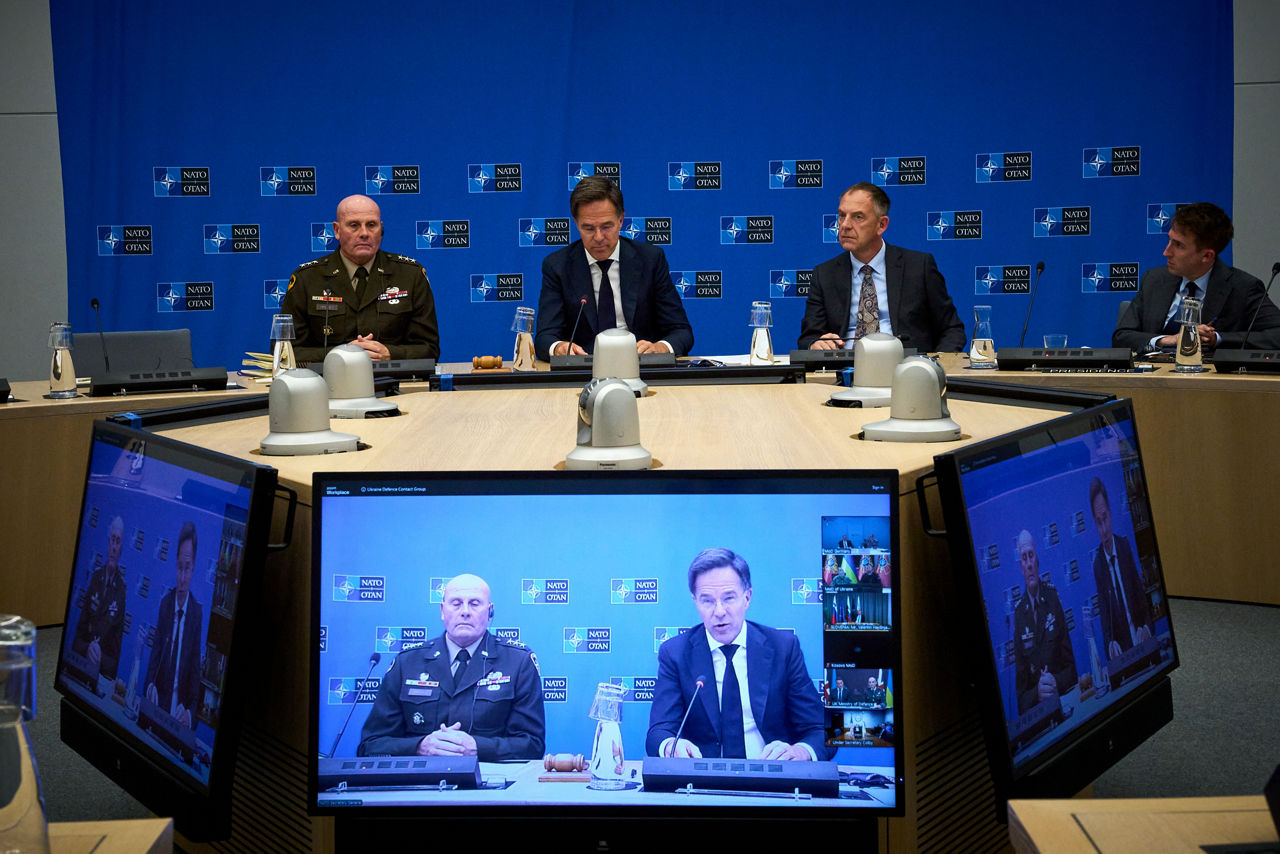
The Ukraine Defence Contact Group (UDCG) is a coalition of more than 50 countries (including all NATO Allies, many NATO partner countries and the European Union) that helps coordinate the delivery of military aid to Ukraine. This has included the transfer of heavy artillery, battle tanks, fighter jets, ammunition, air defences and other vital equipment.
Although it is not a NATO body, the Alliance has supported coordination between the UDCG and Allies – the UDCG has met repeatedly at NATO Headquarters in Brussels, Belgium, and the NATO Secretary General has attended UDCG meetings. The UDCG is also known as the “Ramstein Group”, since many of its meetings have also been held at Ramstein Air Base in Germany (also the site of NATO’s Allied Air Command).
NATO welcomes the bilateral, long-term security commitments that Allies and NATO partners have agreed with Ukraine based on the G7 Joint Declaration of Support for Ukraine launched at the 2023 Vilnius Summit. These agreements outline the key priorities of bilateral security cooperation and are mutually reinforcing. They are a testament to the shared and unwavering commitment to a free, independent, democratic and sovereign Ukraine, within its internationally recognised borders, capable of defending itself and deterring future aggression. Through these agreements, Ukraine’s partners reaffirm their long-term commitments in support of Ukraine.
The NATO Representation to Ukraine (NRU) facilitates political and military dialogue and cooperation between the Alliance and Ukraine, and coordinates NATO’s practical support to Ukraine.
A key role of the NRU is to provide advisory assistance to Ukraine’s security and defence sector, helping Ukraine transition its armed forces towards full interoperability with NATO and implement its adapted Annual National Programme. The NRU is also a principal stakeholder in coordinating the Comprehensive Assistance Package, the overarching framework through which NATO provides non-lethal support to Ukraine, and it leads NATO’s public communications in Ukraine.
The NRU’s primary tasks include:
As NATO and Ukraine continue to intensify their cooperation and strengthen Ukraine’s political integration with NATO, the Alliance has reinforced the NRU and expanded its staff levels at the office in Kyiv. To that end, in July 2024, the Secretary General appointed a NATO Senior Representative to head the NRU and to act as a focal point for NATO’s engagement with Ukrainian authorities in Kyiv.
The NRU was established in September 2015 by merging two already existing offices: the NATO Information and Documentation Centre (NIDC) and the NATO Liaison Office (NLO). The NIDC was inaugurated in Kyiv in May 1997 to support efforts to inform the Ukrainian public about NATO's activities and the benefits of NATO-Ukraine cooperation. Part of the NATO Office of Information and Press (now the Office of Strategic Communications), it was the first information office established by NATO in a partner country and open to the general public. The NATO Liaison Office (NLO) was established in Kyiv in April 1999 to facilitate Ukraine's participation in the Partnership for Peace (PfP) programme and to support Ukrainian efforts in the area of defence reform.
NATO-Ukraine relations were formally launched in 1991, when the newly independent country joined the North Atlantic Cooperation Council (NACC). Since then, NATO’s relationship with Ukraine has developed into one of the Alliance’s most substantial partnerships.
Click through the timeline below for key milestones in NATO-Ukraine relations.
Ukraine’s independence
On 24 August 1991, the Act of Declaration of Independence of Ukraine is adopted. Ukraine re-establishes its independence from the Soviet Union.
Ukraine joins the North Atlantic Cooperation Council
Newly independent Ukraine establishes formal relations with NATO, joining the North Atlantic Cooperation Council (NACC) in December 1991. A forum for dialogue and cooperation, the NACC brings together NATO Allies and their former Warsaw Pact adversaries in Central and Eastern Europe, including Ukraine and Russia. It is succeeded by the Euro-Atlantic Partnership Council (EAPC) in May 1997.
Ukraine joins the Partnership for Peace (PfP) programme
Ukraine expands its practical cooperation with NATO by joining the Partnership for Peace (PfP) programme in 1994. The PfP is a programme of bilateral cooperation between individual Euro-Atlantic partner countries and NATO. It allows partners to build up an individual relationship with NATO, choosing their own priorities for cooperation.
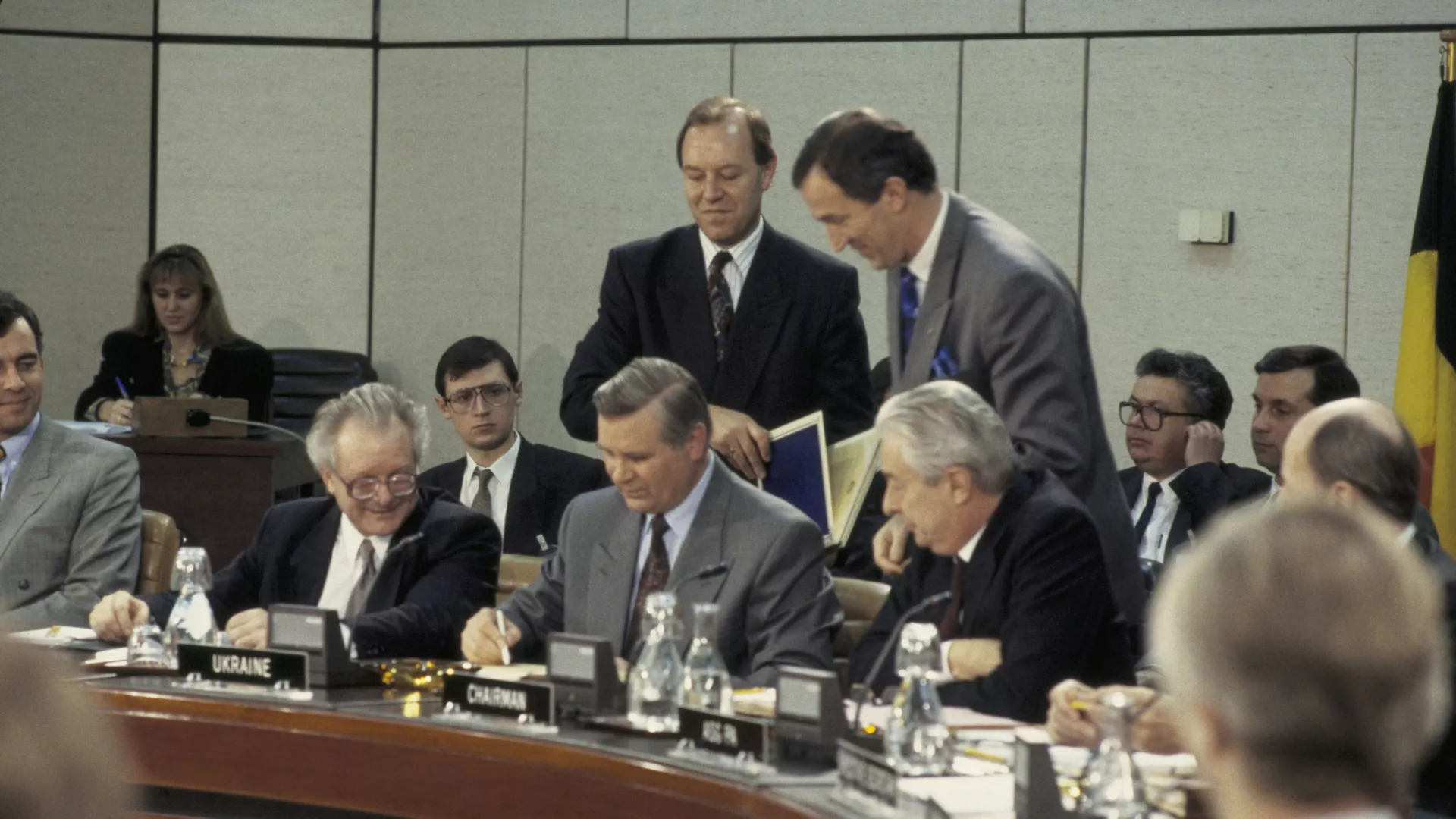
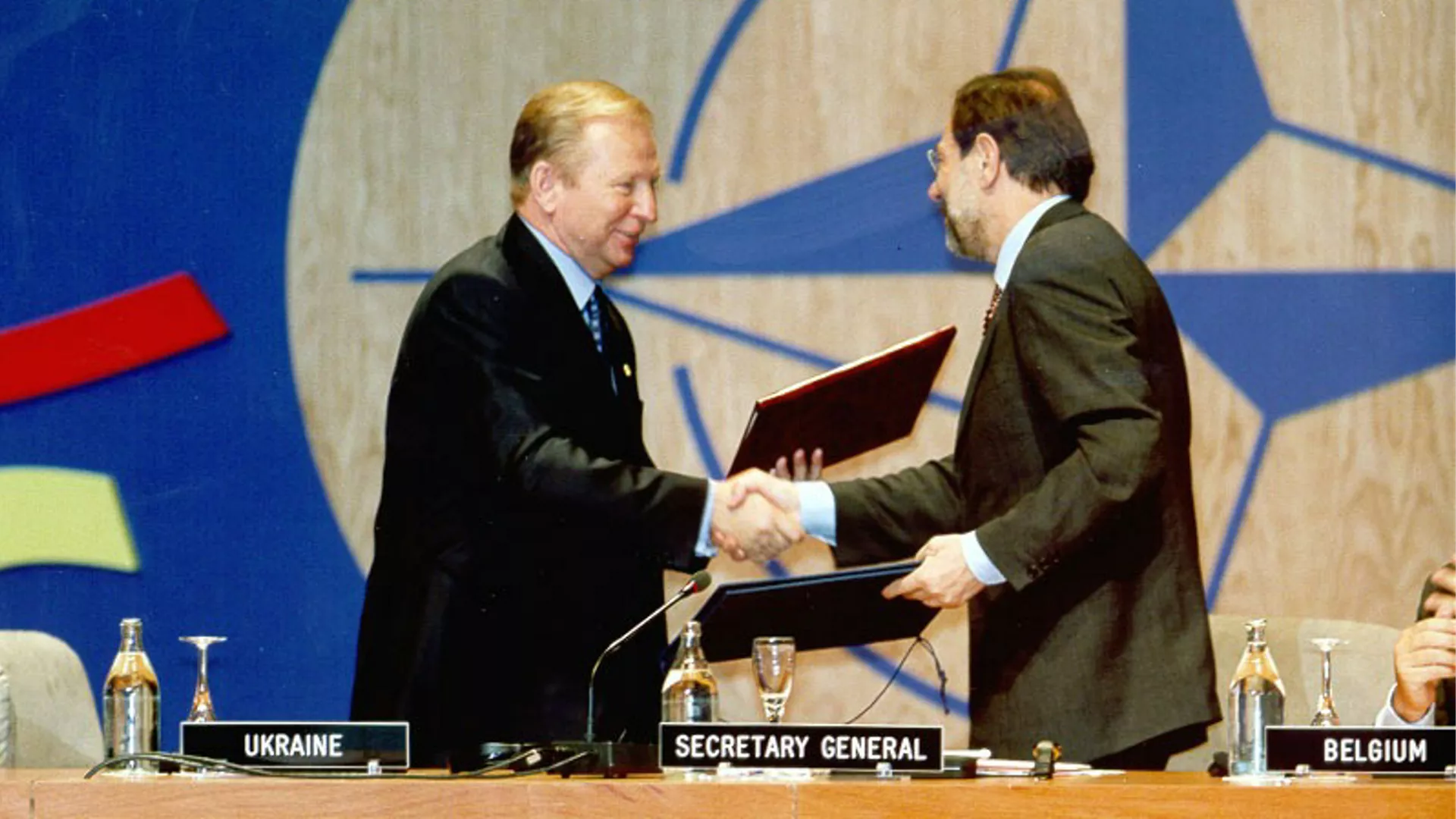
NATO and Ukraine sign the Charter on a Distinctive Partnership
The Alliance and Ukraine sign the Charter on a Distinctive Partnership, which remains the basic foundation underpinning NATO-Ukraine relations. Their mutual goal is to strengthen ties and increase cooperation across a range of areas, including political, military, civil emergency and environmental activities.
Establishment of the NATO-Ukraine Commission
The Charter establishes the NATO-Ukraine Commission as the main body responsible for advancing NATO-Ukraine relations. From 1997-2023 (when it is replaced by the NATO-Ukraine Council), the Commission directs cooperative activities and provided a forum for consultation between the Allies and Ukraine on security issues of common concern (including extraordinary meetings following Russia’s illegal annexation of Crimea in 2014, its use of military force against Ukrainian ships near the Kerch Strait in 2018, its military build-up in 2021 and its full-scale invasion in 2022).
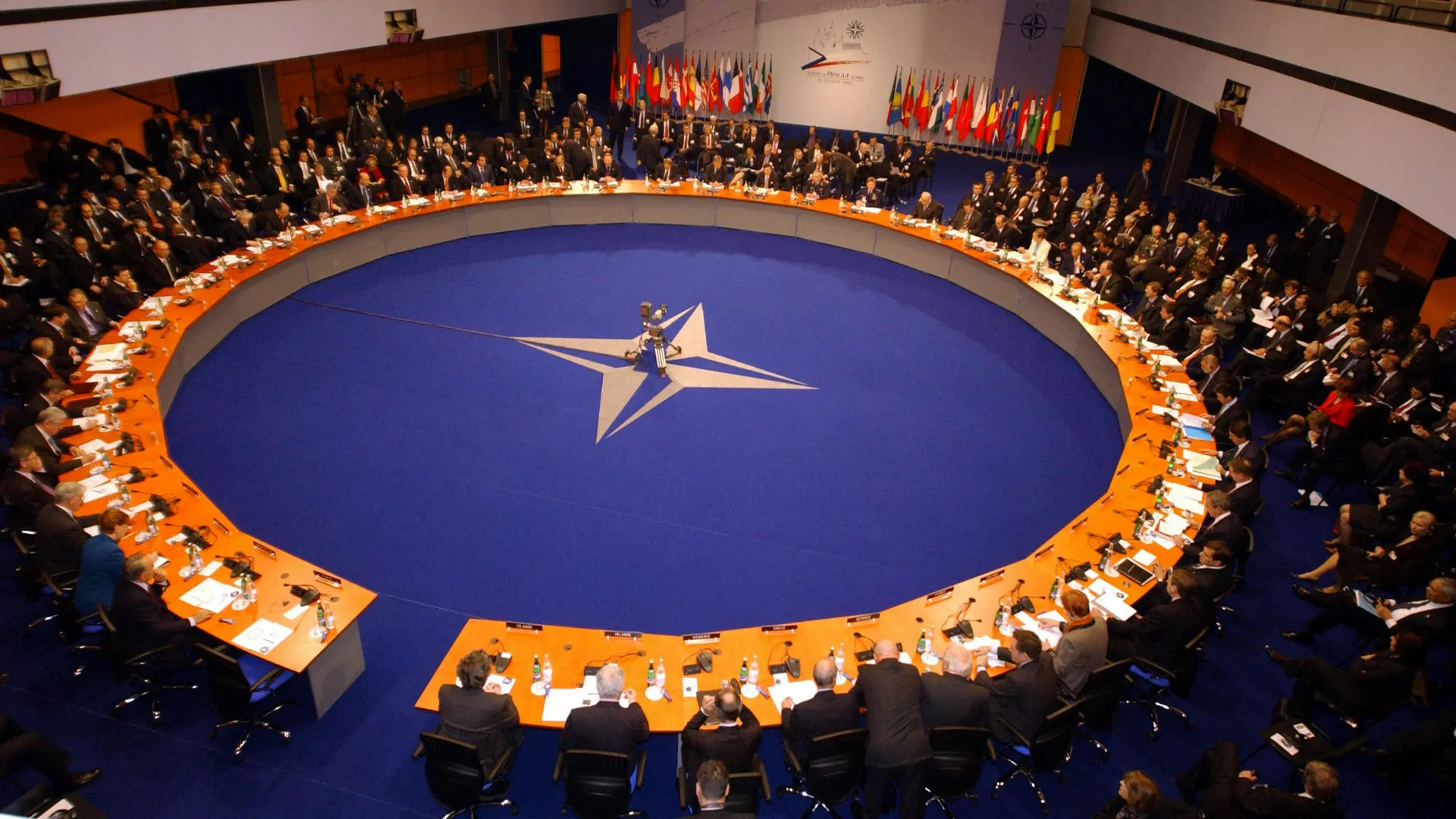
At the NATO-Ukraine Commission meeting in Iceland in May 2002, Foreign Ministers underline their desire to take the NATO-Ukraine relationship to a new level. This leads to the development of a NATO-Ukraine Action Plan, adopted at the NATO-Ukraine Commission meeting of Foreign Ministers in November 2002 during the 2002 Prague Summit in Czechia.
Bucharest Summit – NATO Allies agree that Ukraine will become a NATO member
At the 2008 Bucharest Summit, Allies welcome Ukraine’s Euro-Atlantic aspirations for membership and agree that Ukraine will become a member of NATO. To that end, Allies support Ukraine’s application to the Membership Action Plan (MAP) – NATO’s programme of political, economic, defence, resource, security and legal reforms for aspirant countries.
:16x9?fmt=webp-alpha&qlt=80)
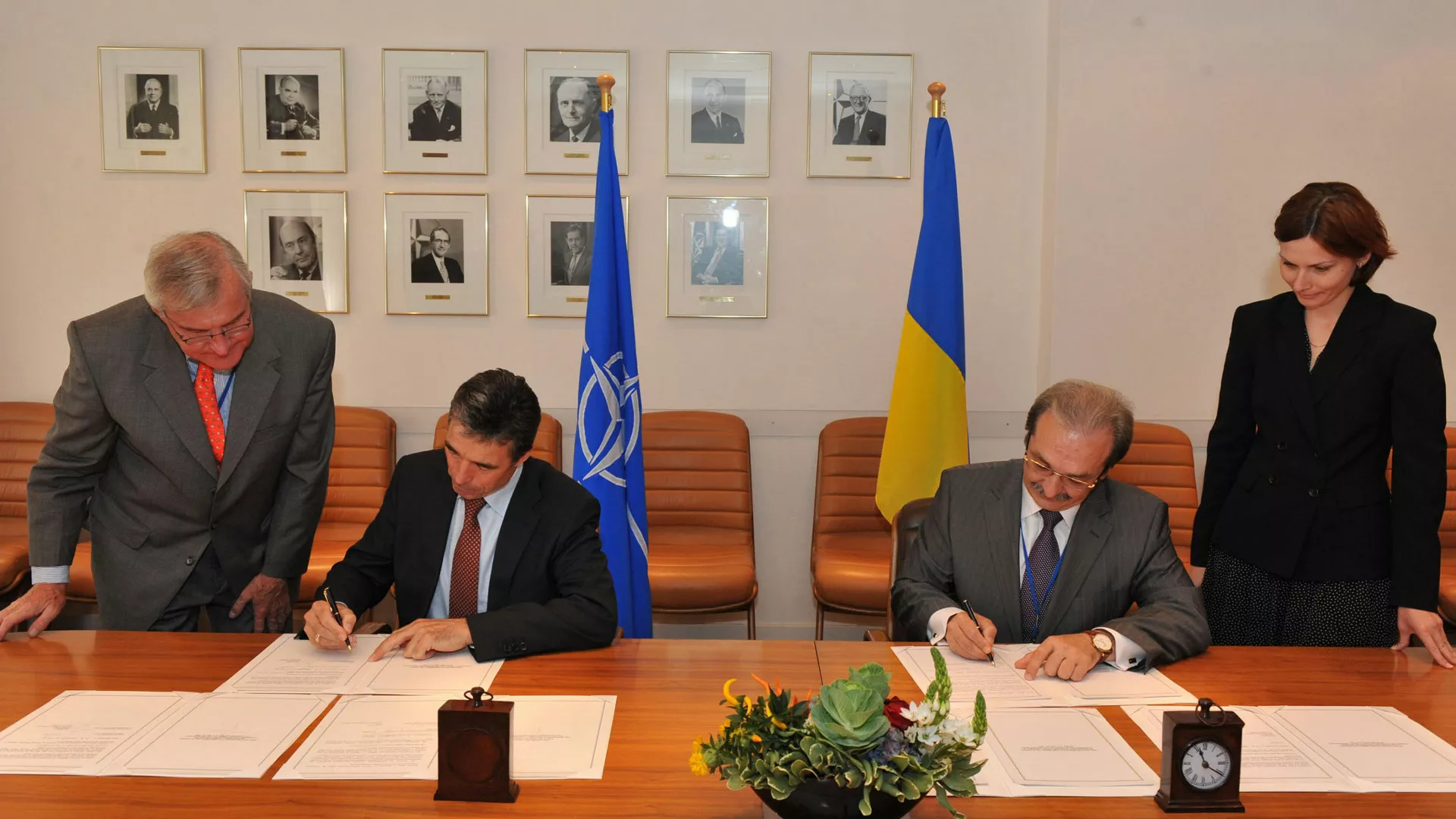
NATO and Ukraine enhance the 1997 Charter on a Distinctive Partnership by signing the 2009 Declaration to Complement the Charter. Following up on the decisions taken at the 2008 Bucharest Summit, the 2009 Declaration gives the NATO-Ukraine Commission a key role in strengthening Ukraine's reform efforts, which have been central to its aspirations for membership in NATO.
Russia illegally annexes Crimea and begins its aggression in eastern Ukraine
Between February and March 2014, Russia invades the Crimean Peninsula, part of Ukraine, before illegally annexing it. NATO strongly condemns Russia’s illegal and illegitimate annexation of Crimea.
%20(Anton%20Holoborodko):16x9?fmt=webp-alpha&qlt=80)
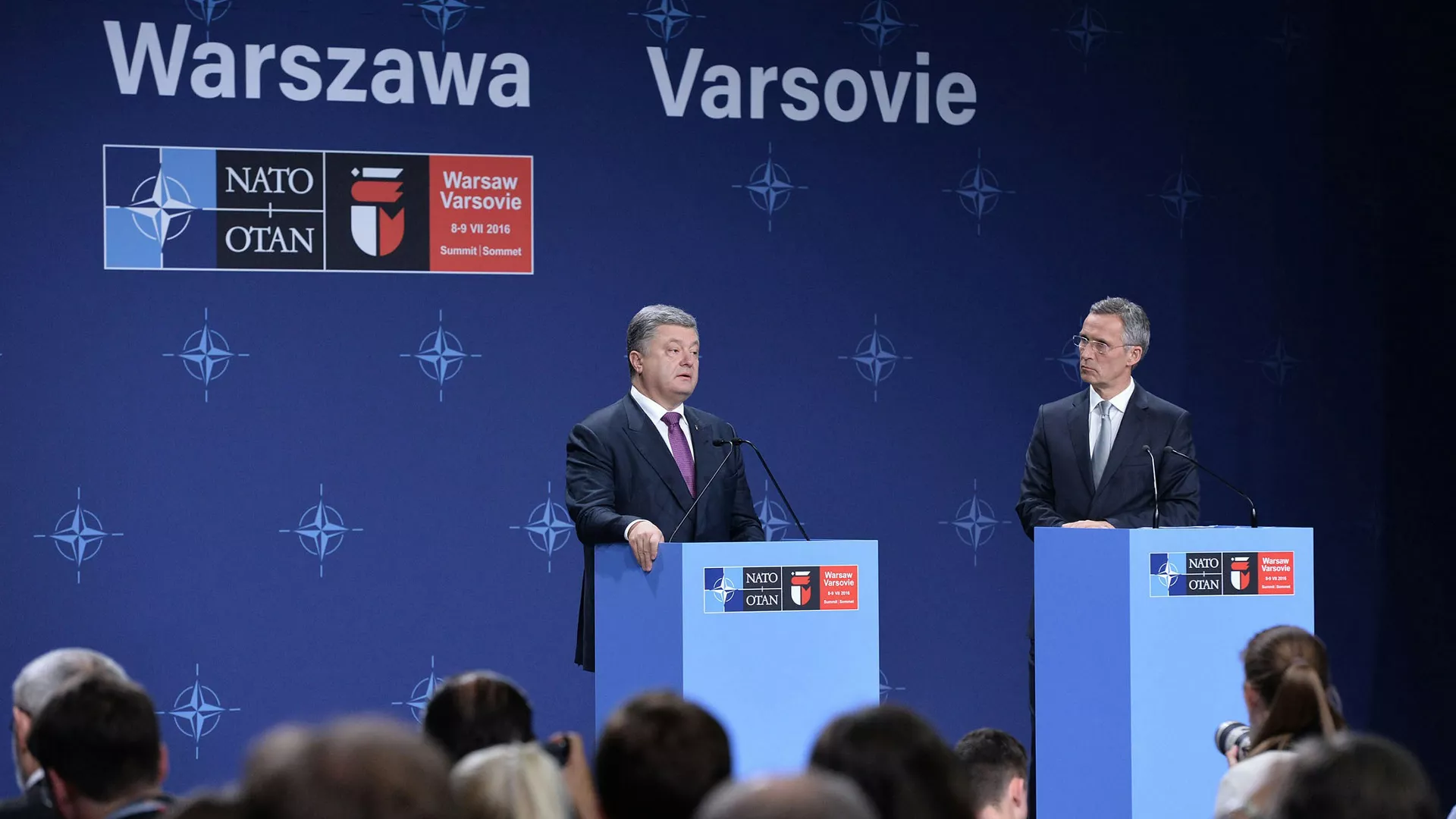
Warsaw Summit – NATO establishes the Comprehensive Assistance Package (CAP) to provide Ukraine with practical non-lethal support
The CAP consolidates and enhances NATO’s support to Ukraine, including by tailored capability development and capacity-building measures for the security and defence sector, which contribute to enhancing Ukraine’s resilience against a wide array of threats.
The Warsaw Summit Communiqué, paragraph 118, 9 July 2016.
24 February 2022 – Russia launches its full-scale invasion of Ukraine
On 24 February 2022, Russia launches its full-scale invasion of Ukraine. Allies immediately condemn Russia’s invasion of Ukraine in the strongest possible terms, calling on Russia to cease its attack and withdraw its forces from Ukraine.
Statement by the North Atlantic Council on Russia's attack on Ukraine, 24 February 2022.
Madrid Summit – NATO and Ukraine strengthen the Comprehensive Assistance Package (CAP) for Ukraine
NATO and Ukraine jointly agree to strengthen the CAP. This includes accelerating the delivery of non-lethal defence equipment, improving Ukraine’s cyber defences and resilience, and supporting activities to modernise its defence and security sector, speeding up its transition to long-term interoperability with NATO.
The Madrid Summit Declaration, paragraph 8, 29 June 2022.
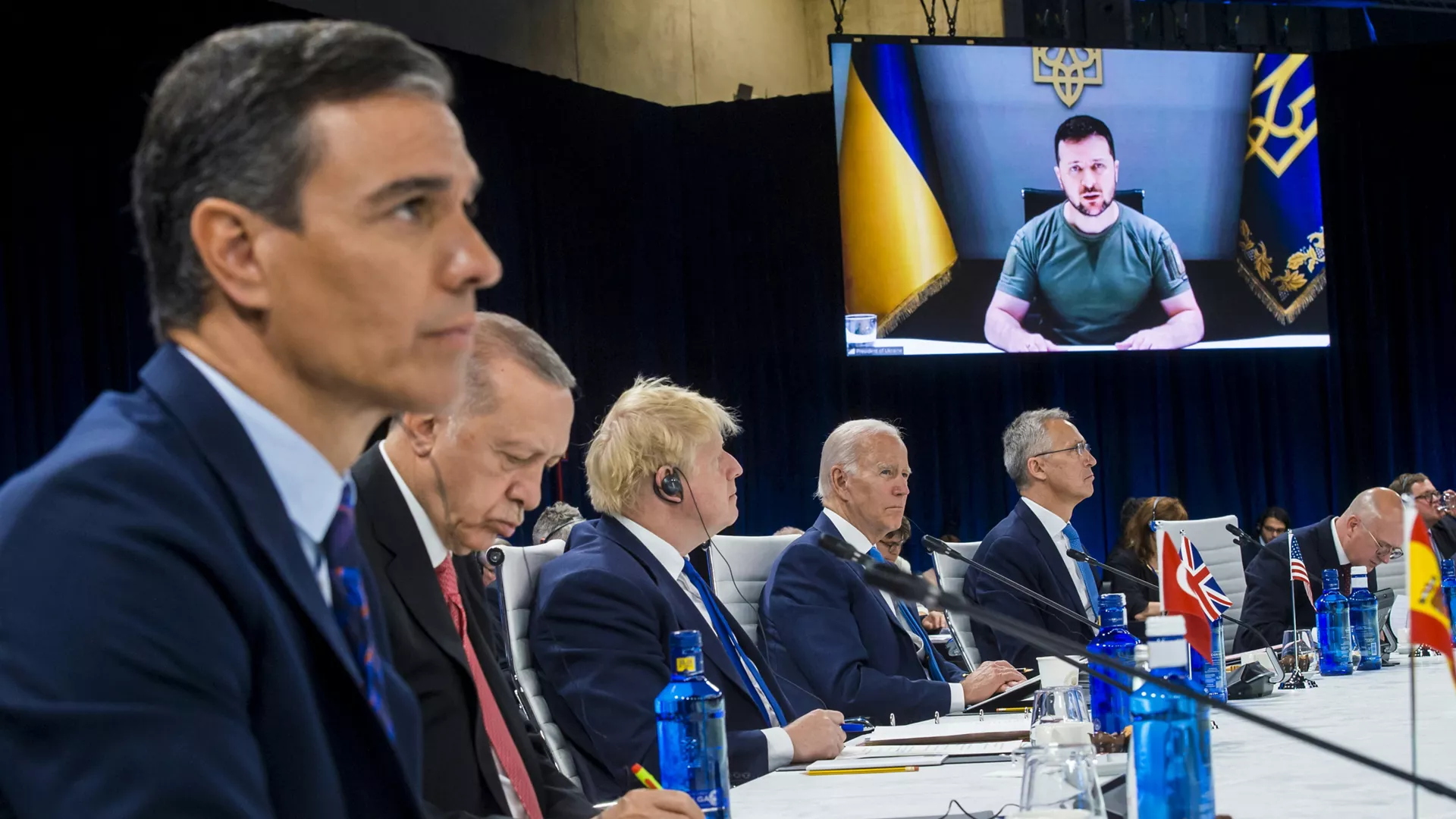
The NATO-Ukraine Council replaces the NATO-Ukraine Commission
The NATO-Ukraine Commission guided relations and practical cooperation since 1997. In 2023, the Commission is replaced by the NATO-Ukraine Council, where Allies and Ukraine sit as equals. This change demonstrates the strengthening of political ties and Ukraine’s increasing integration with NATO. The Council can be convened by the Secretary General as well as by its individual participants, including Ukraine, for crisis consultations. The inaugural meeting of the NATO-Ukraine Council took place at the Vilnius Summit on 12 July 2023.
Vilnius Summit – NATO develops the Comprehensive Assistance Package (CAP) for Ukraine into a multi-year programme of assistance
To support Ukraine’s deterrence and defence in the short, medium and long term, NATO Allies agree to further develop the CAP into a multi-year programme of assistance for Ukraine. The assistance provided will help rebuild the Ukrainian security and defence sector and transition Ukraine towards full interoperability with NATO.
The Vilnius Summit Communiqué, paragraph 13, 11 July 2023.
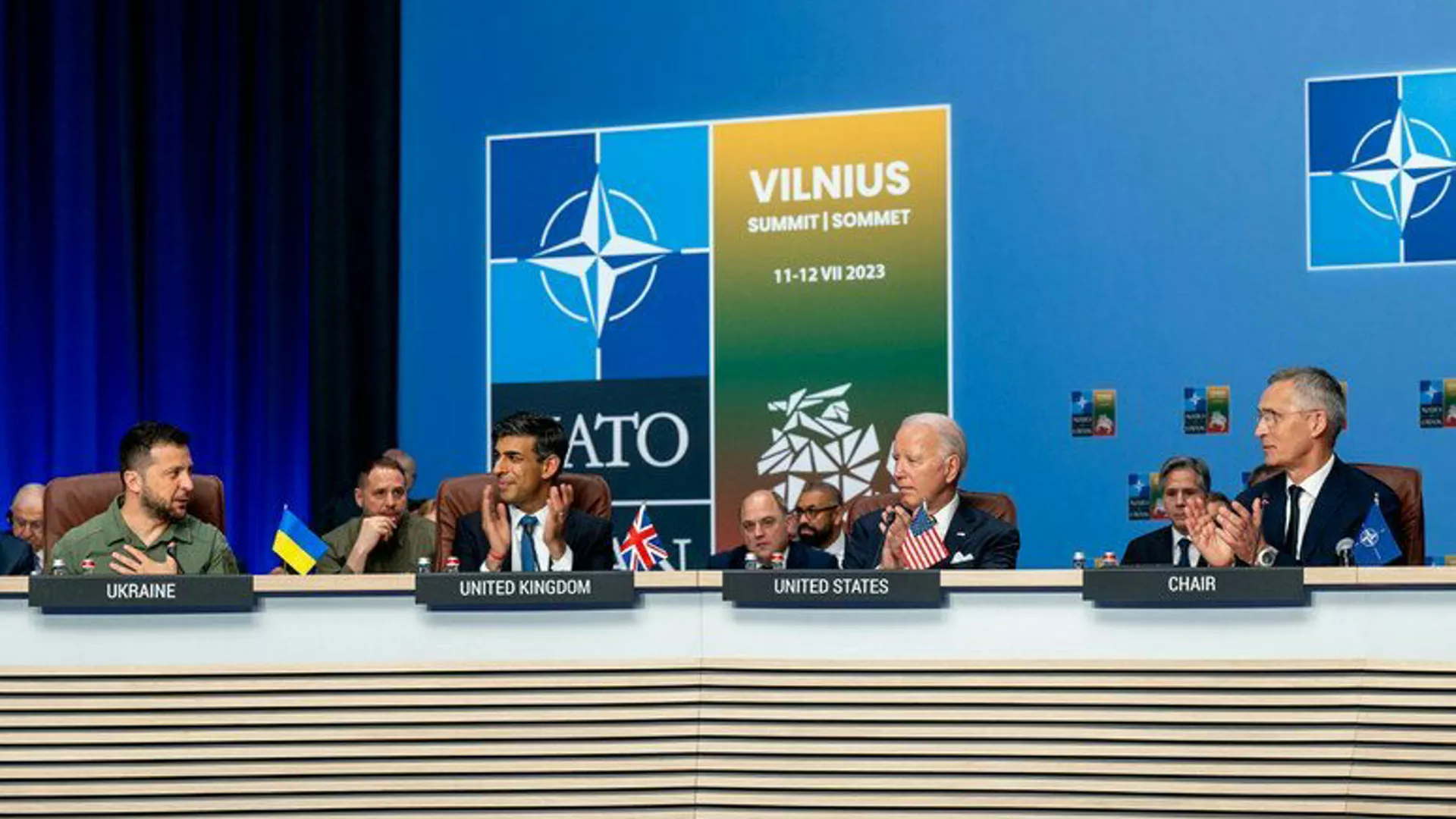
Washington Summit – Allies endorse long-term CAP projects
NATO Allies endorse long-term CAP projects for recovery and reconstruction, institutional transformation, and transition towards NATO interoperability. These include:
The Washington Summit Declaration, 10 July 2024.
Establishment of NATO Security Assistance and Training for Ukraine (NSATU)
In December 2024, Allies establish NSATU, a NATO command that coordinates the provision of military equipment and training to Ukraine by NATO member and partner countries. NSATU places security assistance to Ukraine on an enduring footing, ensuring enhanced, predictable and coherent support for the long term. It brings together much of the security support being provided by the international community to Ukraine under one overarching framework, improving coordination, accountability and burden-sharing among Allies. NSATU HQ is based in Wiesbaden, Germany, with logistical hubs in the eastern part of the Alliance.
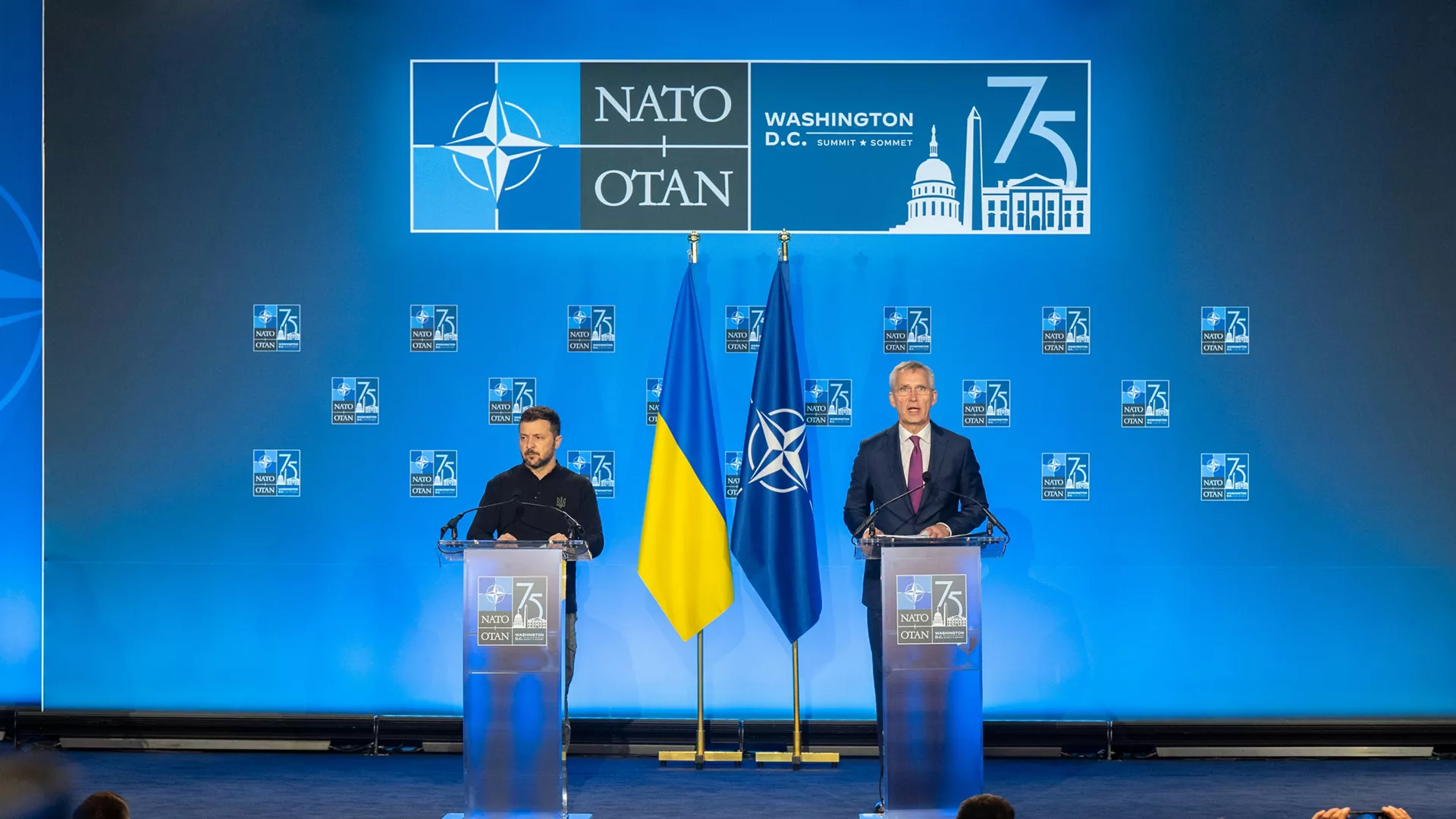
Opening of the NATO-Ukraine Joint Analysis, Training and Education Centre (JATEC) in February 2025
NATO and Ukraine establish the NATO-Ukraine Joint Analysis, Training and Education Centre (JATEC) in Bydgoszcz, Poland, to identify and apply lessons learned from Russia’s war against Ukraine and increase interoperability. The Centre is established under the CAP framework and is now a joint civil-military centre subordinate to Allied Command Transformation (ACT) as decided by Allies at the 2024 Washington Summit.
Launch of the Prioritised Ukraine Requirements List (PURL) in July 2025
NATO and the United States launch PURL – a mechanism that allows NATO Allies and partners to contribute funds for military equipment and munitions, sourced from the United States and identified by Ukraine as operational priorities. PURL aims to ensure a steady flow of critical US equipment to Ukraine, including life-saving air defence.
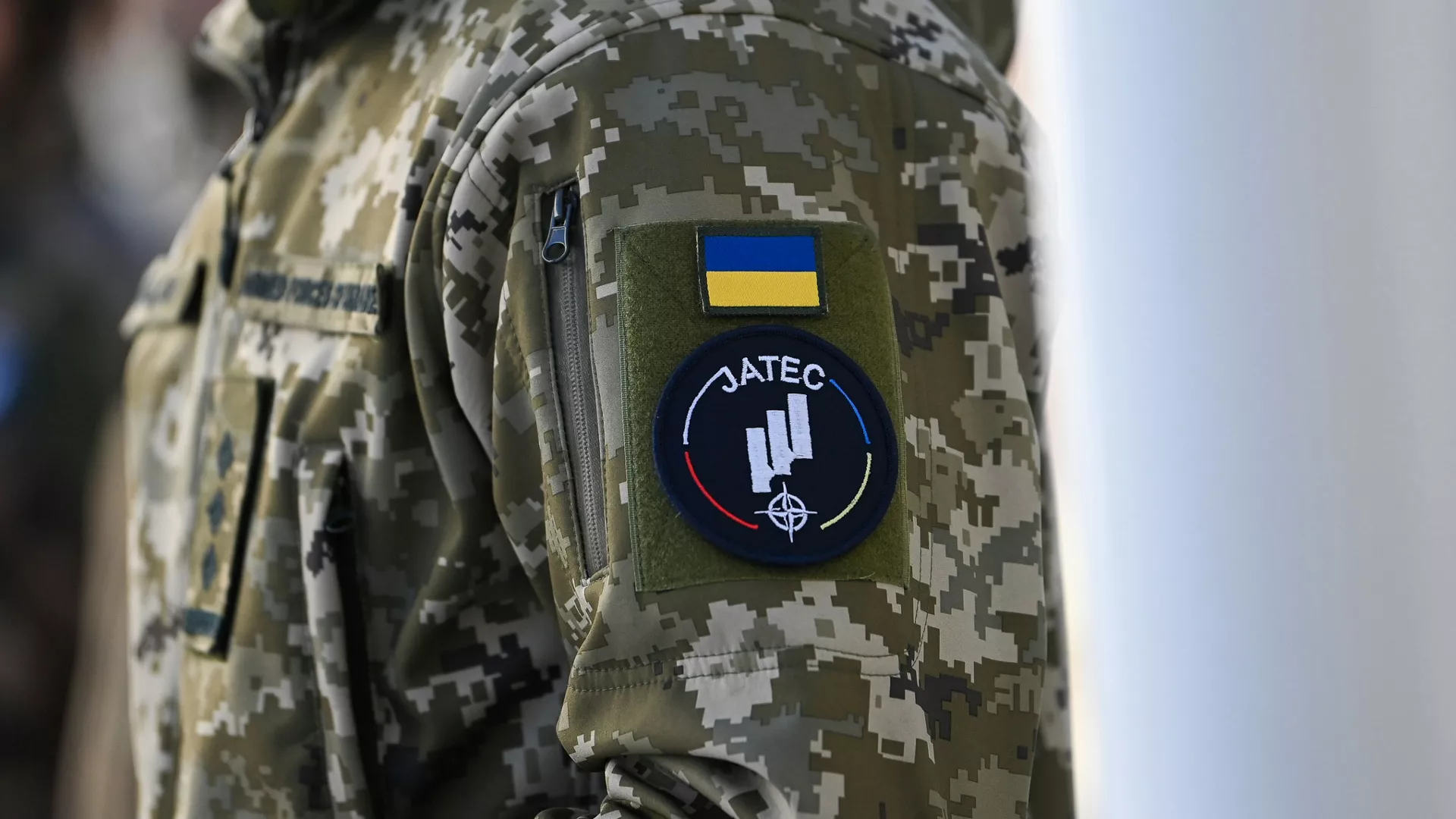
Historic meeting of the NATO-Ukraine Council in Kyiv – the first NUC to take place in Ukraine
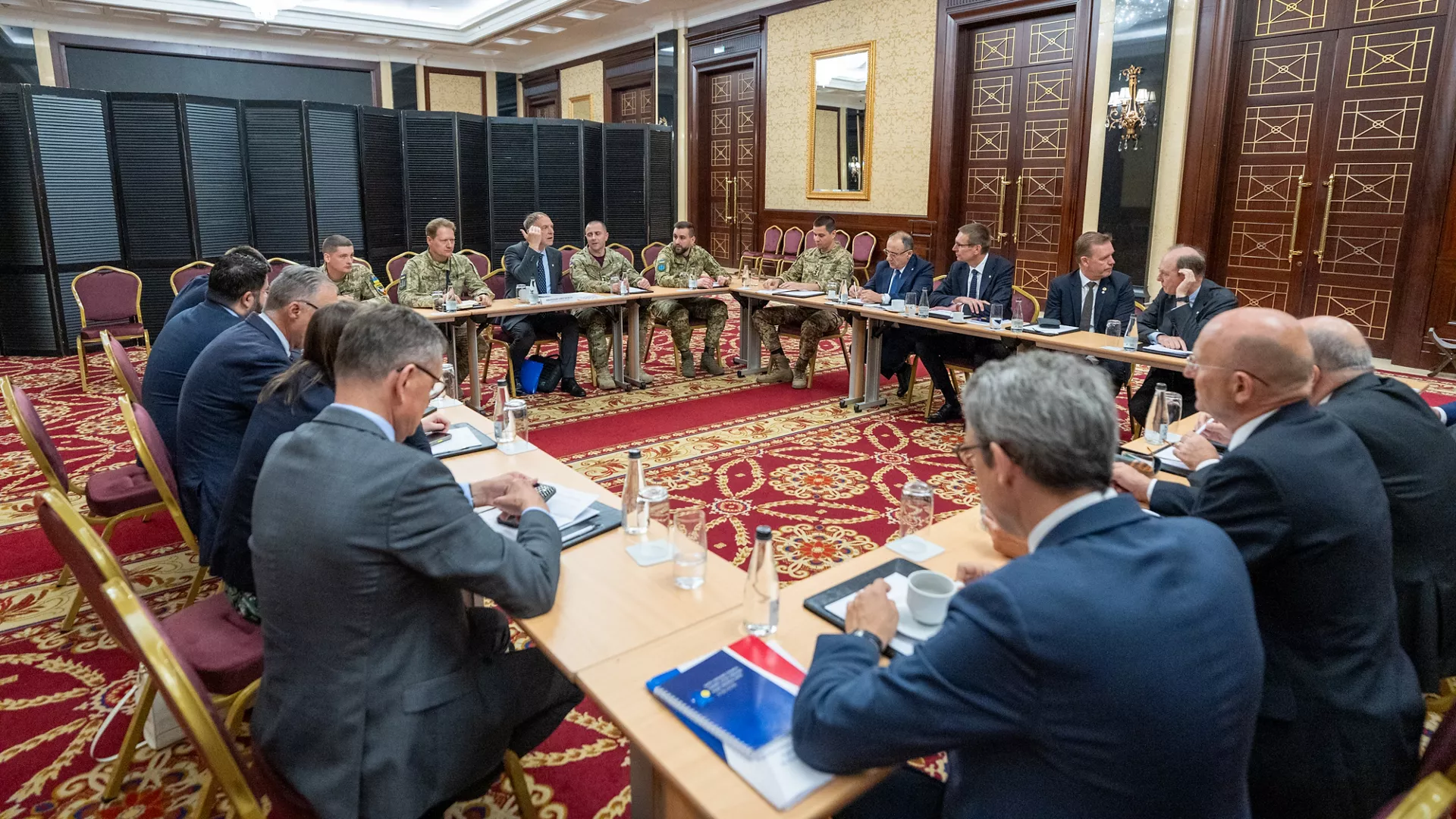
On 3 June 2026, NATO Secretary General Mark Rutte, Chair of the NATO Military Committee Admiral Giuseppe Cavo Dragone and the Ambassadors of the North Atlantic Council gather in Kyiv. Ukrainian President Volodymyr Zelenskyy joins for a historic meeting of the NATO-Ukraine Council (NUC) – the first NUC to take place in Ukraine since it was established in 2023. The meeting sends a strong message, showing the enduring bond between NATO and Ukraine, and Allies’ unwavering commitment to Ukraine. The Ukrainian President, the NATO Secretary General, the Chair of the Military Committee and the Ambassadors also pay their respect to Ukraine’s fallen defenders at a ceremony.
In response to Ukraine’s aspirations for NATO membership, Allies agreed at the 2008 Bucharest Summit that Ukraine will become a member of NATO (2008 Bucharest Summit Declaration, paragraph 23). They also agreed that Ukraine’s next step on its way to membership was the Membership Action Plan (MAP), NATO’s programme of political, economic, defence, resource, security and legal reforms for aspirant countries.
In 2009, the Annual National Programme (ANP) was introduced as Ukraine’s key instrument to advance its Euro-Atlantic integration and related reforms. The ANP has been composed of five chapters focusing on: political and economic issues; defence and military issues; resources; security issues; and legal issues. This includes reforms related to good governance, the fight against corruption, the rule of law, human rights, and the security and defence sector, in accordance with Euro-Atlantic principles and standards. Allies assess progress under the ANP annually. The responsibility for its implementation falls primarily on Ukraine. The Commission for Coordination of Euro-Atlantic Integration of Ukraine, chaired by the Deputy Prime Minister for European and Euro-Atlantic Integration, ensures the general coordination of its implementation by the state bodies.
From 2010 to 2014, Ukraine pursued a non-alignment policy, which it terminated in response to Russia’s aggression. In June 2017, the Ukrainian Parliament adopted legislation reinstating membership in NATO as a strategic foreign and security policy objective. In 2019, a corresponding amendment to Ukraine's Constitution entered into force.
In September 2020, President Volodymyr Zelenskyy approved Ukraine's National Security Strategy, which provides for the development of the distinctive partnership with NATO with the aim of membership in NATO. In September 2022, following Russia’s illegal attempted annexations of Ukrainian territory, Ukraine reiterated its request for NATO membership.
Recognising Ukraine’s increased interoperability and substantial progress with reforms, Allies decided at the 2023 Vilnius Summit that Ukraine’s path to full Euro-Atlantic integration has moved beyond the need for the Membership Action Plan – changing Ukraine’s path to NATO from a two-step process to a one-step process (2023 Vilnius Summit Communiqué, paragraph 11).
Allies have reaffirmed that Ukraine’s future is in NATO and that they will continue to support it on its irreversible path to full Euro-Atlantic integration, including NATO membership. To that end, Allies will continue to support Ukraine’s progress on interoperability, as well as additional democratic and security sector reforms, which NATO Foreign Ministers will continue to assess through the adapted Annual National Programme (aANP). Allied Leaders have reaffirmed that they will be in a position to extend an invitation to Ukraine to join the Alliance when Allies agree and conditions are met.
For more than three decades, Ukraine's cooperation with NATO has been mutually beneficial and has covered a wide range of activities – from building Ukraine's capabilities and interoperability with NATO forces, to promoting reforms in Ukraine's defence and related security sector, to supporting non-military activities like collaborative scientific research.
Participation in the Planning and Review Process has helped Ukraine set and achieve ambitious yet realistic objectives in three key areas:
At the 2024 Washington Summit, NATO and Ukrainian Leaders endorsed the NATO-Ukraine Innovation Cooperation Roadmap, which has five key objectives:
The roadmap establishes NATO as a central platform through which Ukraine can communicate its needs for new technologies, encourage innovation and invite the public and private sector to match those needs. It also encourages stronger ties between NATO’s and Ukraine's innovation initiatives, including through prize challenges, hackathons and other collaborative activities. For example, in June 2024, NATO and Ukraine launched their first joint Defence Innovators Forum, which brought together more than 450 technology start-ups, investors, researchers and government officials. These and similar efforts will help unlock Ukraine's innovation potential and ensure both NATO and Ukraine can find innovative solutions to real-world operational challenges.
The Ukraine-NATO Innovation, Technology and Engineering programme (UNITE – Brave NATO) is the first joint NATO-Ukraine programme focused on scaling prototyped and tested innovative technologies that help meet Ukraine’s interoperability requirements with NATO. This includes new products aiming to counter uncrewed aerial systems, strengthen air defence and secure frontline communications. Launched in November 2025, the programme accepts joint bids by teams of Allied and Ukrainian companies, with the first competition round closing in February 2026. Ukraine’s defence tech cluster Brave1 is coordinating from the Ukrainian side, and the NATO Communications and Information Agency (NCIA) is conducting the first competition. The first round will provide up to EUR 10 million in joint grant funding, allocated equally by NATO and Ukraine. After a successful pilot competition, NATO and Ukraine are prepared to scale funding further, up to EUR 50 million for 2026.
Ukraine has been actively engaged in NATO's Science for Peace and Security (SPS) Programme since 1991. A Working Group on Scientific and Environmental Cooperation contributes to identifying priority areas for practical scientific cooperation in the framework of the SPS Programme. Since 2014, in response to the crisis in Ukraine, cooperation in the field of security-related civil science and technology has been strengthened, and Ukraine has since become the largest beneficiary of the SPS Programme. Leading areas of cooperation with Ukraine in the SPS framework include advanced technology, counter-terrorism, defence against chemical, biological, radiological and nuclear (CBRN) agents, as well as energy and environmental security. Among these activities, noteworthy is the participation of Ukraine in the DEXTER Programme, which is developing an integrated system to detect explosives and firearms in public spaces.
Against the background of the initial stages of Russia's war against Ukraine – not just the illegal annexation of Crimea in 2014, but also the use of cyber attacks, disinformation and other hybrid activities over the subsequent years – the NATO-Ukraine Platform on Countering Hybrid Warfare was established at the NATO Summit in Warsaw in July 2016. It provides a mechanism to be better able to identify hybrid threats and to build capacity in identifying vulnerabilities and strengthening resilience of the state and society. Projects in support of research, training and expert consultations are ongoing, with a focus on lessons learned, countering disinformation and enhancing resilience.
Since Russia's illegal annexation of Crimea and destabilisation of eastern Ukraine in 2014, experts have provided advice on Ukraine's contingency plans and crisis management measures to defend critical energy infrastructure and protect the civilian population. Today, cooperation focuses on improving national capacity for civil preparedness and resilience. In 2019, a Resilience Advisory Support Team (RAST) drew up recommendations to Ukrainian institutions with regard to the enhancement of national resilience. At Ukraine's request, follow-up expert-level RAST consultations providing technical advice to support the country's long-term resilience and civil preparedness activities took place in early 2022, prior to Russia's full-scale invasion. Ukraine also participates regularly in activities organised by NATO's Euro-Atlantic Disaster Response Coordination Centre and has itself hosted multiple disaster response exercises.
Since 2007, Ukraine has participated in NATO's Building Integrity (BI) Initiative, which provides practical assistance and advice for strengthening integrity, accountability and transparency in the defence and security sector. In October 2019, nine institutions of Ukraine's defence and security sector completed the NATO BI Self-Assessment and Peer Review Process, which provided a thorough assessment of institutional needs and vulnerabilities and offered a set of policy-level sectoral recommendations to improve good governance and pursue sustainable anti-corruption reforms in the defence and related security sectors. On this basis, a tailored programme of activities continues to provide two levels of capacity-building support – specific expertise to the institutions to enhance the good governance and management of defence resources (financial, human and materiel), and education and training activities to develop individual capacities and foster an organisational culture of integrity.
Since 2013, the Defence Education Enhancement Programme (DEEP) has helped to improve and restructure Ukraine's military education and professional training systems, focusing on eight defence higher education institutions and five training centres for Non-Commissioned Officers. Additionally, DEEP advises on management of the academies and universities, supporting faculty on how to teach and assisting in the development of courses on leadership and decision-making processes. The focus of the DEEP programme for officers is on: curriculum and faculty development; instructor training; English language training; occupational specialties development; lessons learned system development; e-learning systems; and increasing institutional capacities. The focus for NCOs is on: instructor training, firearms instructor training and combat squad leader training.
NATO supports Ukraine in implementing United Nations Security Council Resolution 1325 on Women, Peace and Security, which recognises the disproportionate impact that conflict has on women and girls, and the vital roles that women play in peace and security. In support of the WPS agenda, NATO and Ukraine ensure that gender perspectives are incorporated into all cooperation activities.
Since establishing its partnership with NATO, Ukraine has participated in thousands of NATO and Allied military exercises. These multinational exercises give NATO Allies and Ukraine practical experience working side-by-side in a crisis scenario, which helps both sides develop interoperability with each other and learn how to use different capabilities.
Ukraine also built capacity and interoperability through participation in the NATO Response Force.
Ukraine’s participation in the Partnership Interoperability Initiative (PII) has helped maintain and deepen the connections built up between NATO and Ukrainian armed forces over years of operations and exercises. Under the PII, Ukraine became an Enhanced Opportunity Partner (EOP) in June 2020. EOP status has provided Ukraine with preferential access to NATO's interoperability toolbox, including exercises, training, exchange of information and situational awareness.
Ukraine joined the Air Situation Data Exchange programme in July 2006. It enhances awareness and aviation safety through the mutual sharing of air situation data, which improves the operational effectiveness of air defence through the identification, classification and potential de-confliction of aircraft. This capability has had particular operational relevance and benefit following Russia's further invasion of Ukrainian territory since February 2022. NATO has been working closely with Ukraine to provide the most relevant information possible.
Participation in a wide range of military activities and exercises under the Military Committee with Ukraine Work Plan focuses on improving the interoperability and operational capabilities of Ukraine's armed forces, but also substantially contributes to ongoing security and defence reforms.
Since it joined the Partnership for Peace (PfP) in 1994, Ukraine has developed its interoperability with NATO forces by contributing to a number of NATO-led operations and missions. including:
A legal framework has been established to enable NATO’s and Ukraine’s operational cooperation, including the Partnership for Peace (PfP) Status of Forces Agreement (SOFA) (entered into force in May 2000); the Host Nation Support Agreement (ratified in March 2004); and the Strategic Airlift Agreement (ratified in October 2006).
Ukraine's participation in the NATO Operational Capabilities Concept Evaluation and Feedback Programme supports the further development of the country’s armed forces, enabling the Alliance to include Ukraine in tailored force packages that can be deployed in support of NATO-led operations and missions.

10 September 2026
8 September 2026