Close
Back


From now on you can download videos from our website
If you would also like to subscribe to the newsletter and receive our latest updates, click on the button below.
Enter the email address you registered with and we will send you a code to reset your password.
The password must be at least 12 characters long, no spaces, include upper/lowercase letters, numbers and symbols.
Click the button to return to the page you were on and log in with your new password.
Updated: 07 July 2026
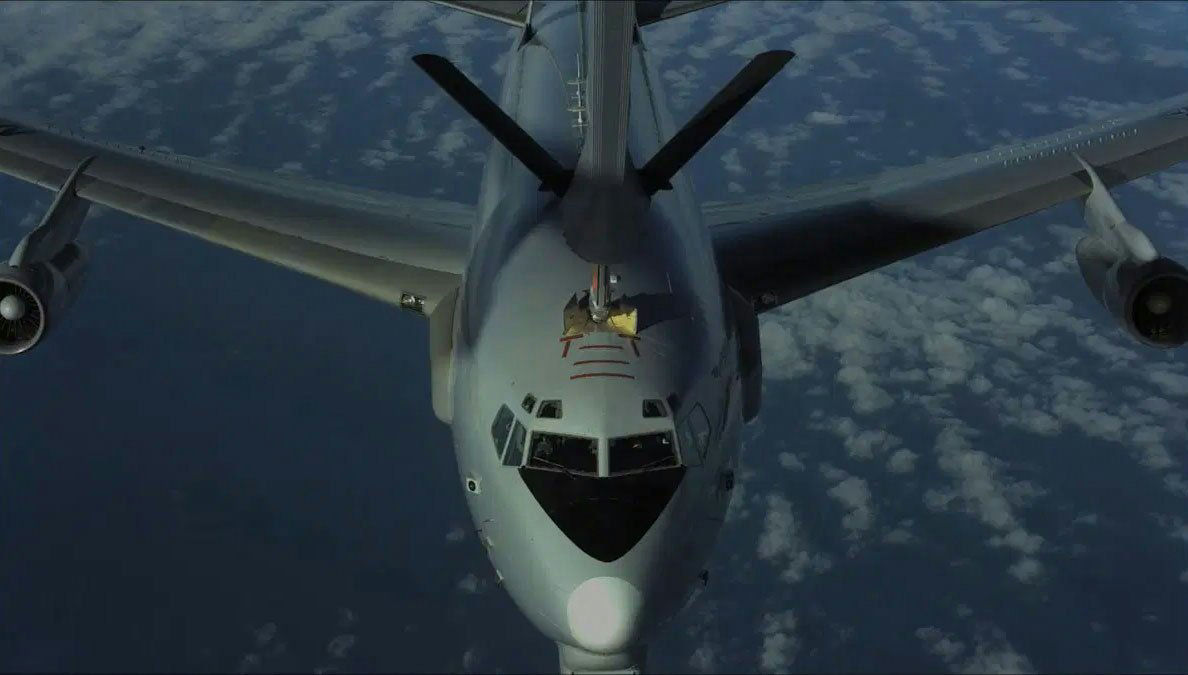
NATO operates a fleet of Airborne Warning & Control System (AWACS) aircraft, which provide the Alliance with air surveillance, command and control, battlespace management and communications. These modified Boeing 707s, which are easily identifiable by the distinctive radar dome mounted on the fuselage, are equipped with long-range radar and passive sensors capable of detecting air and surface contacts over large distances. NATO’s AWACS fleet is managed by the NATO Airborne Early Warning and Control Force (NAEW&CF), based in Geilenkirchen, Germany.
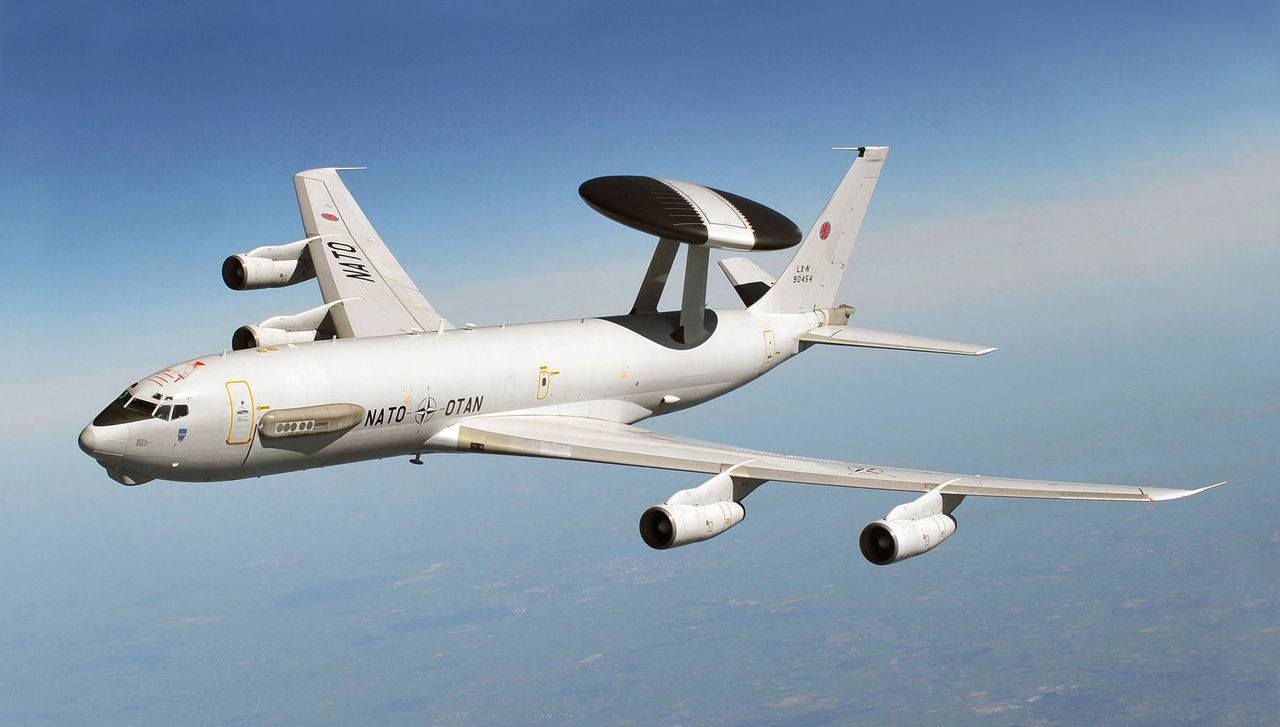
NATO E-3A AWACS aircraft during a surveillance mission
The NATO Airborne Early Warning and Control Force (NAEW&CF) is one of the Alliance’s most successful collaborative ventures, having contributed to most NATO operations, missions and other key activities for more than four decades. It is an example of what NATO member countries can achieve by pooling their resources and working together in a truly multinational environment, developing and maintaining a capability that is owned and operated by NATO itself.
The NAEW&CF conducts a wide range of missions, such as air policing, support to counter-terrorism operations, air space management, support to evacuation operations, crisis response and the full spectrum of wartime missions. It has also been deployed on complex and demanding tactical missions, including: support to maritime operations, close air support (CAS), combat search and rescue (CSAR), disaster relief and counter-piracy. It also plays an important role in NATO’s Joint Intelligence, Surveillance and Reconnaissance (JISR) system, providing data and information that analysts use to produce intelligence products for decision makers.
In recent years, the Force has played an important role in the Alliance’s strengthened deterrence and defence posture following Russia’s full-scale invasion of Ukraine in 2022. NATO AWACS aircraft have conducted hundreds of flights patrolling the skies along the Alliance’s eastern flank, including over the Baltic and Black Seas, and also monitored the skies over Ukraine. During these flights, NATO AWACS aircraft have been able to monitor Russian warplanes, detect missiles and observe the movements of everything from navy ships to large drones and tanks. Since September 2025, the AWACS fleet has contributed to Eastern Sentry, the multi-domain military activity that is strengthening NATO’s eastern flank. These activities ensure that the Alliance’s military and political leaders have a clear picture of what’s happening in Ukraine and can see the threats approaching NATO territory.
The NATO AWACS fleet includes 14 Boeing E-3A aircraft with the following technical specifications:
The NATO E-3A is currently undergoing a large-scale mission and audio system modernisation effort called the Final Lifetime Extension Programme, which will ensure the aircraft’s operational viability through 2035.
The AWACS programme is a collaborative venture undertaken by a group of NATO Allies. These Allies collectively created the NATO Airborne Early Warning and Control Programme Management Organisation (NAPMO) as the main entity overseeing the programme and reporting to the North Atlantic Council, NATO’s principal political decision-making body. Under the NAPMO, the NAEW&C Programme Management Agency (NAPMA) manages the AWACS programme on a day-to-day basis, including the execution of modernisation projects. The NAEW&CF carries out operations and missions as instructed by the NAPMA.
Multinational cooperation is the key characteristic of the NAEW&C Programme Management Organisation (NAPMO). Currently, the 16 full NAPMO participating countries are: Belgium, Czechia, Denmark, Germany, Greece, Hungary, Italy, Luxembourg, the Netherlands, Norway, Poland, Portugal, Romania, Spain, Türkiye and the United States.
The United Kingdom exercises limited participation as a NAPMO member but is an integral part of the NAEW&CF through its contribution of national aircraft and crews. Its fleet of E-7 Wedgetails will soon provide a fifth-generation airborne early warning capability, carrying on the contribution that the UK Royal Air Force’s fleet of E-3Ds provided from 1991 to 2021.
France has an observer role and maintains continual coordination to ensure its E-3F aircraft remain interoperable with the other AWACS fleets. France also often assists in coordinated operations with the NAEW&CF.
The NAEW&C Programme Management Agency (NAPMA) is located in Brunssum, the Netherlands. The agency is staffed by military officers seconded to the agency and by civilian officials from the countries participating in the programme. In 2011, the NAPMA General Manager was assigned by the NAPMO member countries as the Technical Airworthiness Authority (TAA) for the NATO E-3A fleet. Supported by a dedicated engineering office, the TAA shares responsibilities for airworthiness certification, together with the NAEW&CF Commander, who is responsible for operations and support of the fleet and serves as the Operational Airworthiness Authority.
The NATO Airborne Early Warning and Control Force (NAEW&CF) Headquarters is located at NATO Air Base (NAB) Geilenkirchen, Germany. The NAEW&CF Commander reports to the Supreme Allied Commander Europe (SACEUR) and ensures optimal use of the Force, which consists of two operational units:
The E-3A Component also maintains three forward-operating bases (FOBs) in Konya, Türkiye; Aktion, Greece; and Trapani, Italy; and a forward-operating location (FOL) in Ørland, Norway.
Additionally, the Mission Systems Engineering Centre (MSEC), located at NAB Geilenkirchen, provides dedicated engineering services for the E-3A aircraft mission systems and forms part of the NAEW&CF.
Originally designed as an elevated radar platform, the AWACS aircraft has constantly evolved to address the realities of geopolitical change and NATO’s varying missions and objectives over the last 40 years. In emphasising the control aspect of the AEW&C, the AWACS aircraft has become an essential part of battlespace management and has continued to remain operationally relevant through successive modernisation programmes involving state-of-the-art engineering and manufacturing developments. For example, in 2019, the cockpit of the E-3A aircraft was modernised with a “glass” cockpit, replacing analogue instruments with modern, digital technology designed to meet evolving European air traffic management requirements.
NATO’s AWACS fleet is currently embarking upon a final modernisation effort to extend its service life to 2035. Valued at USD 1 billion and funded by the 16 Allies participating in the AWACS programme, this effort will provide AWACS with sophisticated new communications and networking capabilities for multi-domain command and control, including upgrades to the E-3A’s data link and voice communications capabilities. The modernisation contract has been awarded to Boeing as prime contractor with contributions from other participating Allies’ industries.
From the Initial NAEW&C Acquisition Programme through to the Final Lifetime Extension, the NAPMO countries have collectively spent/committed approximately USD 13 billion – prohibitively expensive for any single country, but realisable through the collective contribution of the NAPMO countries.
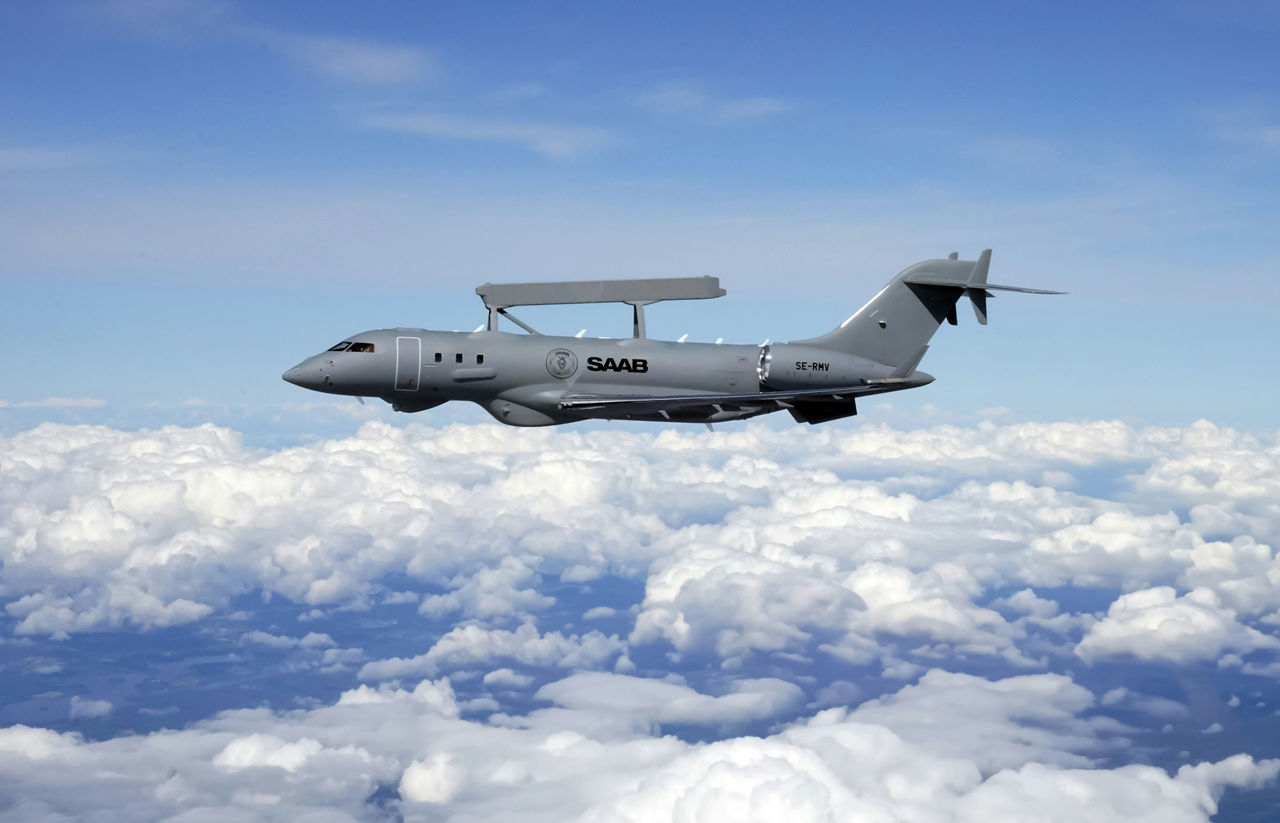
At the 2026 NATO Summit Defence Industry Forum in Ankara, 11 Allies announced the joint procurement of up to 10 Saab GlobalEye aircraft as NATO’s new AWACS to succeed part of the Alliance’s aging Boeing E-3A fleet. The GlobalEye system will provide advanced, multi-domain surveillance across air, land and sea from a single platform and will offer enhanced detection and tracking of complex threats, including drone swarms and ballistic and cruise missiles. The Allies participating in the project are Belgium, Canada, Denmark, Germany, Latvia, Lithuania, Luxembourg, the Netherlands, Norway, Romania and Sweden.
NATO’s E-3A AWACS fleet is predicted to retire soon after 2035. At the 2016 Warsaw Summit, Allies declared that “by 2035, the Alliance needs to have a follow-on capability to the E-3 AWACS. Based on high-level military requirements, we have decided to collectively start the process of defining options for future NATO surveillance and control capabilities.” This decision launched the Alliance Future Surveillance and Control (AFSC) initiative, which includes all NATO Allies.
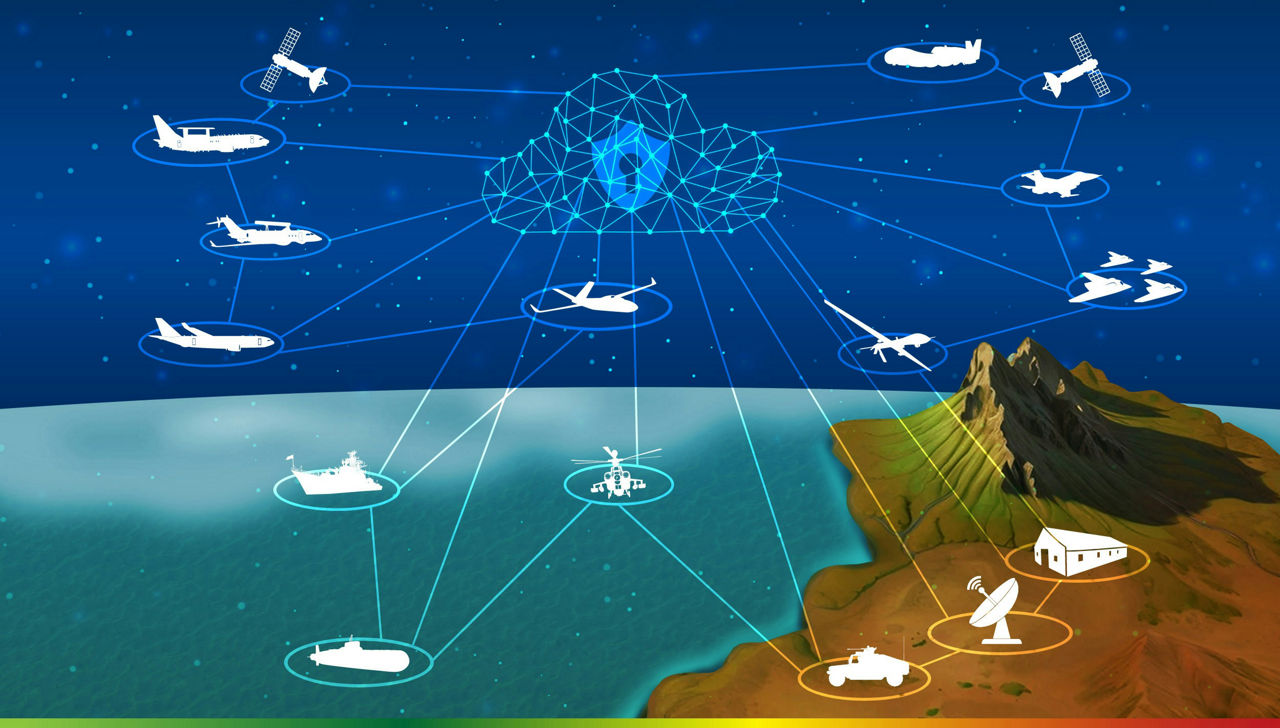
In February 2017, NATO Defence Ministers agreed to embark upon the first phase of the AFSC Concept Stage, comprised of a series of studies to evaluate new technologies and explore a "system-of-systems" approach, including potential combinations of air, ground, space or uncrewed systems networked together to collect and share information. These studies have helped inform decisions by NATO and Allies to acquire new systems in the future.
In December 2018, the North Atlantic Council declared the first phase of the AFSC Concept Stage complete on schedule and on budget, and agreed to advance into the second phase. In the second phase, NATO tapped into the expertise of Alliance industries, receiving six high-level concept proposals developed by six transatlantic firms and consortia, comprising expertise from both defence and non-defence sectors. Allies selected the best ideas from the six proposals and committed to continue working with industry to develop and refine these options over further rounds of consultation and advice.
In November 2023, the NATO Support and Procurement Agency (NSPA) announced its acquisition strategy for an initial Alliance Future Surveillance and Control (iAFSC) capability.
In February 2026, AFSC entered its build-up phase, beginning the development of the “AFSC System of Systems” that will replace the AWACS fleet. This new approach will connect NATO-owned, multinational and national ground, air, maritime and space assets, providing a collaborative, multi-domain surveillance and control capability. To reflect this change in approach, AFSC was renamed “Alliance Federated Surveillance and Control”. The first step towards establishing the new AFSC System of Systems will focus on the incremental integration of NATO-owned and operated assets (such as the Alliance Ground Surveillance (AGS) drone fleet and the successor aircraft to the E-3A AWACS) as well as multinational and national systems (such as the Alliance Persistent Surveillance from Space (APSS) initiative). Both legacy and new assets will be integrated into AFSC. NATO and Allies will work closely with industry to tailor future national and multinational capability development to the AFSC’s specific needs in Intelligence, Surveillance and Reconnaissance (ISR) and tactical control.
Since it commenced flight operations in 1982, the NAEW&CF has proven to be a key asset in crisis management and peace support operations.
Following the Iraqi invasion of Kuwait in 1990, aircraft from the NATO E-3A Component (NATO Air Base (NAB) Geilenkirchen) deployed to eastern Türkiye to help reinforce NATO’s southern flank during the war. Operation Anchor Guard included monitoring air and sea traffic in the eastern Mediterranean and providing airborne surveillance along the Iraqi-Turkish border. The mission was conducted from August 1990 to March 1991.
For most of the 1990s, aircraft from both NATO’s and the United Kingdom's AEW&C fleets operated extensively in the Balkans, supporting United Nations resolutions and Alliance missions in Bosnia and Herzegovina and Kosovo during Operations Deliberate Force and Allied Force. AWACS aircraft from the French Air Force and the US Air Force also helped achieve the objectives of these missions.
From 2007 until 2016, the NAEW&CF was used successfully in support of NATO's counter-terrorism activities in the Mediterranean Sea during Operation Active Endeavour.
During Operation Unified Protector in 2011, the NAEW&CF also performed the crucial function of commanding and controlling all Alliance air assets operating over Libya. This included the issuing of real-time tactical orders and taskings to NATO combat aircraft, surveillance and reconnaissance aircraft, air-to-air refuelling aircraft, and uncrewed aerial vehicles (UAVs). AWACS aircraft also supported Allied ships and submarines enforcing the maritime arms embargo against Libya by providing an aerial maritime surveillance capability.
From 2011 until 2014, aircraft from NAB Geilenkirchen were deployed to Afghanistan to support the International Security Assistance Force (ISAF) by providing air surveillance coverage as part of Operation Afghan Assist. In Afghanistan, AWACS aircraft conducted air surveillance and tactical battle management functions (such as support and control of friendly aircraft involved in close air support), battlefield air interdiction, combat search and rescue, reconnaissance and tactical air transport.
On 25 September 2014, the last NATO AWACS aircraft returned to its home base in Geilenkirchen from Mazar-e Sharif, Afghanistan. NATO had decided that AWACS aircraft would not be required for the Resolute Support Mission stood up on 1 January 2015 as ISAF’s successor mission, which focused on training, advising and assisting Afghan forces.
NATO AWACS aircraft have been flying regular missions in support of NATO assurance measures since 2014. These measures are a series of land, sea and air activities in, on and around the territory of NATO Allies in Central and Eastern Europe, designed to reassure their populations and deter potential aggression. They are taken in response to Russia’s aggressive actions to NATO’s east, and have been further enhanced since Russia’s full-scale invasion of Ukraine in February 2022 (see first section above for more information).
The NAEW&CF has been conducting these types of assurance activities for decades. In early 2001, the Force also supported NATO’s defensive deployment to south-eastern Türkiye during Operation Display Deterrence.
In the wake of the 9/11 terrorist attacks in the United States in 2001, AWACS aircraft were deployed to the mainland US to help defend North America against further attacks during Operation Eagle Assist. This represented the first time in Alliance history that NATO assets were deployed under Article 5 of the North Atlantic Treaty in support of the defence of a NATO member country.
On 1 December 2015, NATO Foreign Ministers took steps to further the Alliance’s adaptation to security challenges from the south and agreed on tailored assurance measures for Türkiye that are meant to contribute to de-escalation in the region. This support includes AWACS surveillance flights, increased naval presence in the eastern Mediterranean, Standing Naval Forces port calls, participation in exercises, enhanced air policing and maritime patrol aircraft flights.
The NAEW&CF fleets have consistently provided support to NATO summit meetings and other high-level events.
They have been providing this type of support since shortly after the 9/11 attacks, when NATO governments requested the air surveillance and control capability offered by the NAEW&CF to assist with security for major public events.
These high-visibility events have included the 2004 Summer Olympic Games in Greece, the 2006 World Cup Football Championship in Germany, the 2012 European Football Championship in Poland as well as important meetings held by other international organisations such as the 2015 G7 summit in Germany, the 2016 World Youth Day in Poland, the 2019 EU summit in Romania and the 2023 European Political Community Summit in the Republic of Moldova.
In February 2016, NATO Defence Ministers decided in principle that NATO AWACS surveillance planes would backfill national AWACS capabilities in support of the Global Coalition to Defeat ISIS. This decision was made in response to a request from the United States.
In July 2016, Allies agreed in principle to enhance the Alliance’s contribution to the Global Coalition by providing direct NATO AWACS support to increase the Coalition’s situational awareness. The first NATO AWACS flight in support of the Coalition took place on 20 October 2016.
Operating from Konya Air Base in Türkiye, the aircraft supported the Coalition’s overall air picture by providing surveillance and situational awareness, thereby making the skies safer. NATO’s AWACS aircraft did not coordinate Coalition air strikes or provide command and control for fighter aircraft. AWACS aircraft only flew in international airspace or over Türkiye. AWACS can detect aircraft hundreds of kilometres away, so they could monitor airspace in Iraq and Syria from inside Turkish airspace. This was an important contribution to the counter-ISIS effort and a clear signal of NATO’s determination to help fight terrorism.
As of May 2022, NATO AWACS support to the Global Coalition to Defeat ISIS has been paused.
During the 1960s, it became clear that military aircraft could no longer fly high enough to avoid surface-to-air missiles. To survive in an increasingly lethal air defence environment, aircraft were forced down to levels little higher than tree-top. By the 1970s, the requirement to detect high-speed combat aircraft with low-level penetration capability made it necessary to augment NATO’s system of ground-based radars with new means.
The NATO military authorities determined that an Airborne Early Warning (AEW) capability would provide the key to meeting the challenge. The operational requirement for the NATO AEW system stressed the need to detect small, high-speed intruder aircraft at long range. The need to detect maritime surface targets (such as ships and boats) was also specified because of the geographical regions where the AEW aircraft would have to operate. The inherent mobility and flexibility of the system, especially for control function, were also foreseen by NATO planners as providing air, maritime, and land force commanders with an enhanced command and control (C2) capability. The creation of a NATO AEW Force was therefore designed to make a significant contribution to the Alliance’s deterrence posture.
In December 1978, the NATO Defence Planning Committee approved the joint acquisition of 18 aircraft based on the US Air Force (USAF) Airborne Warning and Control System (AWACS), to be operated as an Alliance-owned Airborne Early Warning System. In addition to the delivery of the 18 E-3A aircraft (four have since been retired or decommissioned) between February 1982 and May 1985, the NAEW&C programme included the upgrade of 40 NATO Air Defence Ground Environment (NADGE) sites and the establishment of a main operating base (MOB) for the AWACS E-3A Component at Geilenkirchen, Germany, along with three FOBs in Greece, Italy and Türkiye, and an FOL in Norway. The E-3A Component holds a unique place in military history because it was the first multinational flying unit established by the Alliance.
26 February 2026
13 November 2025