Close
Back


From now on you can download videos from our website
If you would also like to subscribe to the newsletter and receive our latest updates, click on the button below.
Enter the email address you registered with and we will send you a code to reset your password.
The password must be at least 12 characters long, no spaces, include upper/lowercase letters, numbers and symbols.
Click the button to return to the page you were on and log in with your new password.
Updated: 31 August 2022
For nearly 20 years, NATO Allies and partner countries had military forces deployed to Afghanistan under a United Nations (UN) Security Council mandate. NATO Allies went into Afghanistan after the 9/11 terrorist attacks on the United States, to ensure that the country would not again become a safe haven for international terrorists to attack NATO member countries. Over the last two decades, there have been no terrorist attacks on Allied soil from Afghanistan.

View of the Herat Citadel during a visit by the NATO Secretary General in May 2011
In February 2020, the United States and the Taliban signed an agreement on the withdrawal of international forces from Afghanistan by May 2021. In April 2021, NATO Foreign and Defence ministers decided to withdraw all Allied troops from Afghanistan within a few months.
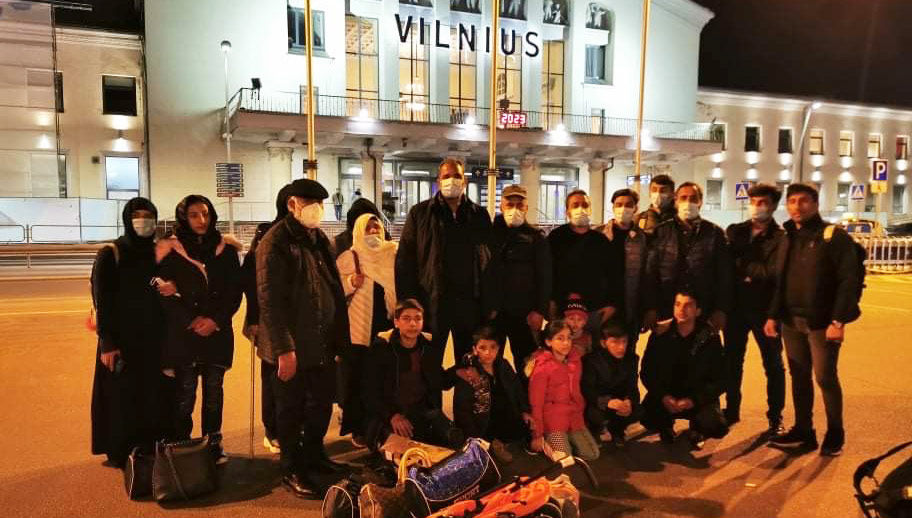
In summer 2021, following the collapse of the Afghan government and the Afghan National Defence and Security Forces, NATO focused on ensuring the safe departure of personnel from Allied and partner countries, and NATO-affiliated Afghans. In August 2021, more than 120,000 people were evacuated in the Allied airlift from Kabul airport as part of the coalition effort – including around 2,000 Afghans working for NATO, and their families. Many of them have already been resettled in Allied and partner countries. For several others, NATO is working with Allies to provide housing, care and support while arrangements are made for follow-on movement to Allied and partner countries.
Following the rapid collapse of the Afghan government and forces in August 2021, a comprehensive political and military assessment was conducted over the autumn, with the active involvement of Allies and experts.
The assessment found that NATO’s engagement in Afghanistan demonstrated immense capacity and military capabilities, and that in an increasingly complex security environment, crisis management should remain a core task for NATO. It also concluded that the international community’s level of ambition in Afghanistan extended far beyond degrading terrorist safe havens, and that in future, Allies should continuously assess strategic interests, set achievable goals and remain aware of the dangers of mission expansion.
The assessment made a number of other recommendations, including on maintaining interoperability with operational partners; considering the political and cultural norms of host nations, as well as their ability to absorb capacity-building and training; and ensuring timely reporting and meaningful consultations. It also suggested that NATO should consider how to strengthen its capabilities to conduct short-notice, large-scale evacuation operations in the future.
The assessment's key conclusions and recommendations are intended to inform NATO’s political and military leaders as they consider and direct future crisis management operations.
Launched by NATO on 1 January 2015, the Resolute Support Mission (RSM) focused primarily on training, advice and assistance activities at the security-related ministries, in the country's institutions and among the senior ranks of the army and police, as well as in support of Afghan Special Operations Forces and the Air Force.

The non-combat mission performed supporting functions in several areas. These included operational planning; budgetary development; force generation process; management and development of personnel; logistical sustainment; and civilian oversight to ensure the Afghan national defence and security forces and institutions act in accordance with the rule of law and good governance.
As of August 2020, RSM had around 10,000 personnel from 36 NATO Allies and partner countries, operating in one hub (Kabul/Bagram) and four spokes (Mazar-e Sharif in the north, Herat in the west, Kandahar in the south, and Laghman in the east).
The Allies decided on 14 April 2021 to start the withdrawal of RSM forces by 1 May. The Mission was terminated early September 2021.
At the Brussels Summit in 2018 and the Wales Summit in 2014, NATO Allies and operational partners renewed the pledge made at the Chicago Summit to play their part in the financial sustainment of the Afghan National Defence and Security Forces (ANDSF) after 2014. The responsibility to contribute to the financing of this effort was borne by the international community as a whole.
The NATO-run Afghan National Army (ANA) Trust Fund was one of four funding streams used to channel financial support to Afghanistan’s security forces and institutions. The other three were the Law and Order Trust Fund for Afghanistan (LOTFA) to pay for the salaries, of police and justice personnel and to build the capacity of the Interior Ministry, administered by the United Nations Development Programme; the United States Afghanistan Security Forces Fund (ASFF) paying for the equipping and running of the Afghan security forces; and the Afghan government’s commitment to providing USD 500 million each year.
As of 31 May 2021, total contributions made to the ANA Trust Fund since its establishment in 2007 amount to over USD 3.4 billion.
Funding to the Afghan National Defence and Security Forces is currently suspended and the ANA Trust Fund is being closed out.
Deployed in 2001 – initially under the lead of individual NATO Allies on a six-month rotational basis – ISAF was tasked, on the request of the Afghan government and under a United Nations (UN) mandate, to assist the Afghan government in maintaining security, originally in and around Kabul exclusively. NATO agreed to take command of the force in August 2003 and the UN Security Council subsequently mandated the gradual expansion of ISAF’s operations to cover the whole country.
ISAF was one of the largest coalitions in history and NATO’s longest and most challenging mission to date. At its height, the force was more than 130,000 strong with troops from 50 NATO and partner countries.
As part of the international community’s overall effort, ISAF worked to create the conditions whereby the Afghan government would be able to exercise its authority throughout the country.
Developing professional, capable and self-sustaining Afghan National Security Forces was at the centre of ISAF’s efforts and the core mission of the NATO Training Mission in Afghanistan (NTM-A). This work was carried out in close cooperation with the European Union Police Mission in Afghanistan (EUPOL Afghanistan) and the Afghan Ministry of Defence.
Following its creation in 2002, the Afghan National Army (ANA) incrementally progressed from an infantry-centric force to an army, with both fighting elements and enabling capabilities – such as military police, intelligence, route clearance, combat support, medical, aviation and logistics. The role of the Afghan National Police (ANP) gradually shifted from countering the insurgency to a more civilian policing role, by further developing capabilities ranging from criminal investigations to traffic control. The Afghan Air Force steadily increased its personnel including civilians as well as military aircrew and maintenance and support personnel, and its fleet of fixed-wing and rotary-wing aircraft.
A gradual process of transition to full Afghan security responsibility – known as “Inteqal” in Dari and Pashtu – was launched in 2011. This process was completed on schedule in December 2014, when ISAF’s mission ended and Afghan forces assumed full security responsibility for their country.
ISAF helped create a secure environment for improving governance and socio-economic development. Afghanistan made the largest percentage gain of any country in basic health and development indicators over the decade of ISAF’s mission. Maternal mortality went down and life expectancy rose. A vibrant media scene sprang up. Millions of people exercised their right to vote in five election cycles since 2004, including the 2014 presidential and provincial council elections, which resulted in the establishment of a National Unity Government.
Addressing Afghanistan’s challenges required a comprehensive approach, involving civilian and military actors, aimed not only at providing security but also at promoting good governance, the rule of law and long-term development. Over the course of its engagement in Afghanistan, NATO acted in a supporting role to the Afghan government and worked in close coordination with other international partners, including the United Nations Assistance Mission in Afghanistan (UNAMA), the World Bank, the European Union and the development community.
From the start of NATO’s engagement, the Alliance also worked closely with many partner countries. ISAF troop contributors included partners from as far afield as Australia and Latin America, representing more than a quarter of UN member countries, underlining the broad international support for ISAF’s mission. Australia, Georgia and Jordan were among the top non-NATO troop-contributing countries to ISAF.
Partner support continued for the Resolute Support Mission.
11 September 2001: A series of four coordinated terrorist attacks are launched on several targets in the United States, killing almost 3,000 people.
12 September 2001: NATO Allies and partner countries condemn the attacks, offering their support to the United States. The Allies decide to invoke Article 5 of the Washington Treaty – the Alliance's collective defence clause – for the first time in NATO's history, if it is determined that the attack was directed from abroad against the United States.
2 October 2001: The North Atlantic Council is briefed by a high-level US official on results of investigations into the 9/11 attacks and determines that the attacks are regarded as an action covered by Article 5.
7 October 2001: Following the Taliban's refusal to hand over Osama Bin Laden and close down terrorist training camps, the United States launches airstrikes against Al-Qaeda and Taliban targets in Afghanistan with the support of allies. Ground forces are deployed two weeks later. This marks the start of Operation Enduring Freedom, which is supported by a coalition of allies.
14 November 2001: UN Security Council Resolution (UNSCR) 1378 calls for a central role for the UN in establishing a transitional administration and invites member states to send peacekeepers to Afghanistan.
5 December 2001: At a UN-sponsored conference in Bonn, delegates of Afghan factions appoint Hamid Karzai as head of an interim government. They also sign the Bonn Agreement, which provides for an international peacekeeping force to maintain security in Afghanistan.
20 December 2001: UNSCR 1386 authorises the deployment of the International Security Assistance Force (ISAF) in and around Kabul to help stabilise Afghanistan and create the conditions for self-sustaining peace.
January 2002: The first contingent of ISAF peacekeepers arrive in Afghanistan, deployed under Chapter VII of the UN Charter (Action with Respect to Threats to the Peace, Breaches of the Peace and Acts of Aggression). The United Kingdom takes on the first six-month rotation of the command of ISAF; 18 other countries deploy forces and assets.
28 March 2002: The United Nations Assistance Mission in Afghanistan (UNAMA) is established at the request of the interim government of Afghanistan to assist it and the people of Afghanistan in laying the foundations for sustainable peace and development in the country.
November 2002: The US military starts setting up Provincial Reconstruction Teams (PRTs) in Afghanistan – first in Gardez, then Bamiyan, Kunduz, Mazar-e-Sharif, Kandahar and Herat – to coordinate redevelopment with UN agencies and non-governmental organisations. Some of these PRTs are later taken over by NATO member and partner countries.
21-22 November 2002: The Prague Summit paves the way for NATO to go "out-of-area".
August 2003: NATO takes the lead of the ISAF operation.
31 December 2003: NATO-led ISAF initiates the expansion of ISAF to the north by taking over command of the German-led PRT in Kunduz.
January 2004: Ambassador Hikmet Çetin, Turkey, takes up his post as the first NATO Senior Civilian Representative in Afghanistan.
28 June 2004: At the Istanbul Summit, NATO announces that it would establish four other PRTs in the north of the country: in Mazar-e-Sharif, Meymanah, Feyzabad and Baghlan.
May-September 2004: ISAF expands to the west, first taking command of PRTs in the provinces of Herat and Farah and a Forward Support Base (a logistics base) in Herat, followed by PRTs in Chaghcharan, the capital of Ghor Province, and one in Qala-e-Naw, capital of Badghis Province. NATO-led ISAF is now providing security assistance in 50 per cent of Afghanistan's territory.
1 October 2004: NATO-led ISAF's expansion into Afghanistan's nine northern provinces is completed.
29 October 2004: In a video message, Osama Bin Laden takes responsibility for the 9/11 attacks and threatens the West with further attacks.
September 2005: NATO temporarily deploys 2,000 additional troops to Afghanistan to support the provincial and parliamentary elections.
18 September 2005: Legislative elections are held in Afghanistan. In the lower house of parliament, 68 out of 249 seats are reserved for female members, as are 23 out of 102 seats in the upper house.
8 June 2006: Meeting in Brussels, defence ministers from 37 NATO and partner countries that are contributing to ISAF confirm they are ready to expand ISAF's operation to the south of Afghanistan. It is the first-ever meeting of ministers in ISAF format; after that, such meetings become a regular event.
31 July 2006: NATO-led ISAF assumes command of the southern region of Afghanistan from US-led coalition forces, expanding its area of operations to cover an additional six provinces – Daikundi, Helmand, Kandahar, Nimroz, Uruzgan and Zabul – and taking on command of four additional PRTs. Expanded ISAF now leads a total of 13 PRTs in the north, west and south, covering some three-quarters of Afghanistan's territory.
5 October 2006: ISAF implements the final stage of its expansion, by taking on command of the international military forces in eastern Afghanistan from the US-led coalition. In addition, ISAF starts to deploy training and mentoring teams to Afghan National Army units at various levels of command.
28-29 November 2006: At the Riga Summit, NATO leaders agree to remove some of the national caveats and restrictions on how, when and where their forces can be used.
3 April 2008: At the Bucharest Summit, ISAF troop-contributing countries set out a strategic vision for Afghanistan guided by four principles: a firm and shared long-term commitment; support for enhanced Afghan leadership and responsibility; a comprehensive approach by the international community, bringing together civilian and military efforts; and increased cooperation and engagement with Afghanistan's neighbours, especially Pakistan.
August 2008: Lead security responsibility for Kabul city is transferred to Afghan forces.
17 February 2009: New US President Barack Obama announces an additional 17,000 troops to be deployed to Afghanistan during the spring and summer to counter a resurgent Taliban and stem the flow of foreign fighters into the south of Afghanistan.
27 March 2009: President Obama announces a new strategy for Afghanistan and Pakistan. He also decides to deploy 4,000 troops to Afghanistan as trainers for the Afghan security forces.
3-4 April 2009: At the Strasbourg/Kehl Summit, Allied leaders agree to send an additional 5,000 troops to train the Afghan security forces and provide security for the presidential elections in August.
21 November 2009: Following decisions taken at the Strasbourg/Kehl Summit in April 2009, the NATO Training Mission in Afghanistan is formally activated. Its aim is to bring together efforts to train the Afghan forces.
December 2009: Following a three-month review of the military campaign, President Obama decides on a troop surge involving the deployment of a further 30,000 troops, while also promising to start drawing down US troops by summer 2011. NATO foreign ministers announce the deployment of a further 7,000 soldiers.
28 January 2010: At an international conference in London, high-level representatives from over 70 countries discuss plans to gradually hand over the lead for security operations to the Afghan security forces.
20 July 2010: The Joint Afghan-NATO Inteqal Board is established as the mechanism to assess the readiness of districts and provinces to transition to Afghan lead for security.
20 July 2010: At a conference in Kabul, hosted by the Afghan government and co-chaired by the United Nations, the government makes a renewed commitment to the Afghan people, presenting an Afghan-led plan for improving development, governance and security.
19-20 November 2010: At the Lisbon Summit, NATO leaders agree with the Afghan government to hand over full responsibility for security in Afghanistan from ISAF to Afghan forces by end 2014. The gradual transition to Afghan security lead is set to be launched in 2011, starting in areas that are relatively stable. NATO and Afghanistan also sign a declaration on Enduring Partnership, providing a framework for long-term political and practical support, designed to continue after the ISAF mission.
22 March 2011: President Karzai announces the first set of Afghan provinces and districts to start transitioning towards Afghan lead for security.
1 May 2011: Osama Bin Laden is killed by US Special Operations Forces in Pakistan.
22 June 2011: President Obama announces plans to withdraw 10,000 troops by end of year and the remaining 20,000 of the "surge" troops by summer 2012.
26 November 2011: Pakistani officials claim that NATO aircraft killed at least 25 soldiers in strikes against two military posts at the northwestern border with Afghanistan. NATO launches an investigation which later finds that poor coordination and mistakes made by both the NATO and Pakistani forces caused the incident.
5 December 2011: An international conference takes place in Bonn, to discuss cooperation with Afghanistan beyond the withdrawal of ISAF at the end of 2014. The Afghan president commits to strengthening the fight against corruption in exchange for continued international development aid. Pakistan boycotts the conference because of deaths caused by NATO airstrikes in November.
1 April 2012: The Regional Police Training Centre in Mazar-e Sharif is handed over to the Afghans. It later becomes a training site for the Afghan National Civil Order Police.
21 May 2012: At the Chicago Summit, leaders from NATO's 28 member countries and the 22 partners in the ISAF coalition gave Afghanistan a clear, long-term commitment to continue supporting the Afghan security forces with training, advice and assistance after the NATO-led ISAF mission is completed in 2014. Over USD 4 billion is pledged to sustain the Afghan forces.
8 July 2012: At the Tokyo donors' conference on Afghanistan, the international community pledges USD 16 billion in development aid through 2015 beyond the withdrawal of ISAF. But pressure is put on the government to hold inclusive, transparent and credible elections; to fight corruption and improve good governance; to uphold the constitution, especially human rights; and to enforce the rule of law.
16 July 2012: The Afghan Army Special Operations Command is stood up.
1 February 2013: The Afghan Ground Forces Command is established to oversee all operations in Afghanistan.
1 April 2013: The Afghan National Defence University is set up to train the future officers of the Afghan National Army.
24 November 2013: The Loya Jirga votes in favour of a Bilateral Security Agreement with the United States, calling on President Hamid Karzai to sign the deal immediately. The agreement governs the presence of US troops in Afghanistan after 2014 and is needed to enable thousands of US soldiers to stay in Afghanistan after the withdrawal of ISAF.
September 2014: At the NATO Summit in Wales, the leaders of ISAF troop-contributing countries underline their commitment to continue supporting Afghanistan post-2014.
30 September 2014: A Status of Forces Agreement between NATO and Afghanistan is signed in Kabul. Ratified by the Afghan Parliament in November, it provides the legal framework for a new NATO-led, non-combat mission ("Resolute Support") to train, advise and assist the Afghan security forces and institutions, starting in January 2015.
12 December 2014: The UN Security Council unanimously adopts Resolution 2189, welcoming the new Resolute Support Mission.
28 December 2014: At a ceremony in Kabul, ISAF formally completes its mission in Afghanistan, concluding a three-year transition process whereby the lead for security was gradually transferred to the Afghans. The Afghan security forces now have full security responsibility for Afghanistan.
1 January 2015: The Resolute Support Mission (RSM) is launched to continue to provide training, advice and assistance to the Afghan National Defence and Security Forces (ANDSF).
13 May 2015: NATO foreign ministers decide that the Alliance will maintain a civilian-led presence in Afghanistan after the end of RSM with the aim to continue to advise and instruct the Afghan security institutions, to help them become self-sufficient.
15 October 2015: The NATO Secretary General welcomes President Obama’s announcement that the United States will maintain its current troop levels in Afghanistan through 2016 and will retain a substantial presence beyond 2016.
1 December 2015: NATO foreign ministers and their RSM partners agree a plan to sustain the training mission in Afghanistan during 2016 and start work to secure funding for Afghan security forces and institutions until the end of 2020.
9 July 2016: At the NATO Summit in Warsaw, Allied leaders and their RSM partners recognise that, while the Afghan security institutions and forces continue to develop and make progress, challenges and capability gaps persist, and they continue to need international support. They reaffirm their mutual commitment to ensuring long-term security and stability in Afghanistan by sustaining RSM beyond 2016; continuing financial support for the Afghan National Defence and Security Forces until the end of 2020; and strengthening the Enduring Partnership between Afghanistan and NATO.
5 October 2016: 75 countries and 26 international organisations and agencies pledged USD 15.2 billion in financial support for Afghanistan until 2020.
9 November 2017: Defence Ministers from NATO Allies and partner countries agree to increase their troop contributions to RSM in the coming months from around 13,000 to around 16,000 troops. Ministers also confirm that they will continue to fund the Afghan security forces until at least 2020.
27 April 2018: NATO foreign ministers reaffirm NATO’s commitment to the development of the Afghan security and defence forces through a conditions-based approach for the Resolute Support Mission. They express support for the Afghan president’s proposal for peace talks between the Government of National Unity and the Taliban in an Afghan-led and Afghan-owned process. They also underline the importance of fair, inclusive and timely parliamentary and presidential elections due in 2018 and 2019.
8 June 2018: Defence ministers from NATO Allies and partner countries discuss the strengthening of RSM’s support to the Afghan government and Afghan security forces.
12 July 2018: The heads of state and government of Allies and RSM troop-contributing partners meet with the Afghan president at the Brussels Summit. They welcome the progress the Afghan security institutions are making as a result of RSM’s capacity-building efforts and Afghan-led institutional reforms. They underline that effective, professional and self-sustaining Afghan forces will be better able to provide security for the country, create the conditions for a negotiated resolution of the conflict through an Afghan-led and Afghan-owned peace process, and demonstrate to the Taliban that it cannot prevail through force. They welcome the Afghan government’s unprecedented offer of unconditional peace talks to the Taliban and called on the Taliban to engage credibly in this process. Allies and partners reiterated the importance of good and inclusive governance, institution building as well as social and economic development, which would help set the conditions for long-term stability and have an important impact on migration. The Afghan government made a number of commitments in this regard.
29 February 2020: Secretary General Jens Stoltenberg attends a ceremony held at the President’s Palace with Afghan President Ashraf Ghani and US Secretary of Defense Mark Esper, to mark the Joint Declaration between the United States and the Islamic Republic of Afghanistan and signature of an agreement between the United States and the Taliban. The North Atlantic Council welcomes these significant first steps in pursuit of a peaceful settlement and undertakes to implement conditions-based adjustments, including a reduction in military presence.
24 April 2020: The North Atlantic Council reflects that the prospect of the start of negotiations to reach a comprehensive peace agreement in Afghanistan represents an historic opportunity to end the decades-long conflict. The Allies call urgently upon Afghanistan’s political leaders and their supporters to come together to resolve their differences and form an inclusive government, while also calling on the Taliban to reduce violence and create the conditions conducive to commence negotiations.
14 July 2020: The North Atlantic Council calls on all parties to rapidly resolve the remaining issues still precluding the start of inclusive intra-Afghan negotiations, and reflects that levels of violence, driven especially by Taliban attacks on Afghan security forces, remain unacceptably high.
12 September 2020: NATO Allies welcome the start of intra-Afghan peace negotiations, announced at a ceremony in Doha. They urge the Afghan government and the Taliban to fulfil their commitments to working towards a comprehensive peace agreement.
14 April 2021: The Allies decide to start the withdrawal of RSM forces by 1 May and complete it within a few months.
14 June 2021: At the Brussels Summit, Allied Leaders reconfirm the decision to withdraw the military presence, while remaining committed to providing training and financial support to Afghan security forces and institutions, and maintaining the Senior Civilian Representative's Office in Kabul to continue diplomatic engagement with Afghanistan. They also commit to ensuring the continued functioning of Hamid Karzai International Airport to maintain Afghanistan’s connection to the rest of the world. Allies also reiterate their support to the Afghan-owned and Afghan-led peace process.
August 2021: Following the collapse of the Afghan government and the Afghan National Defence and Security Forces, NATO focuses on ensuring the safe departure of personnel from Allied and partner countries, and NATO-affiliated Afghans. Thanks to Allies’ joint efforts, around 2,000 Afghans who worked with NATO, and their families, are evacuated from Kabul as part of the largest evacuation mission in NATO's history. NATO works around the clock to coordinate evacuations, and NATO Senior Civilian Representative Ambassador Stefano Pontecorvo and his staff play a key role to this effect. Over the course of two weeks, more than 120,000 people are flown out, on hundreds of Allied flights. Troops from the United States, the United Kingdom, Turkey and Norway play a key role in securing the airport and operating a field hospital, while around 800 NATO staff maintain key operations such as fuelling and communications. Following the end of the evacuation, all areas of cooperation with Afghanistan are suspended.
September 2021: Following the completion of the withdrawal of all Resolute Support Mission forces the previous month, RSM is terminated in early September.
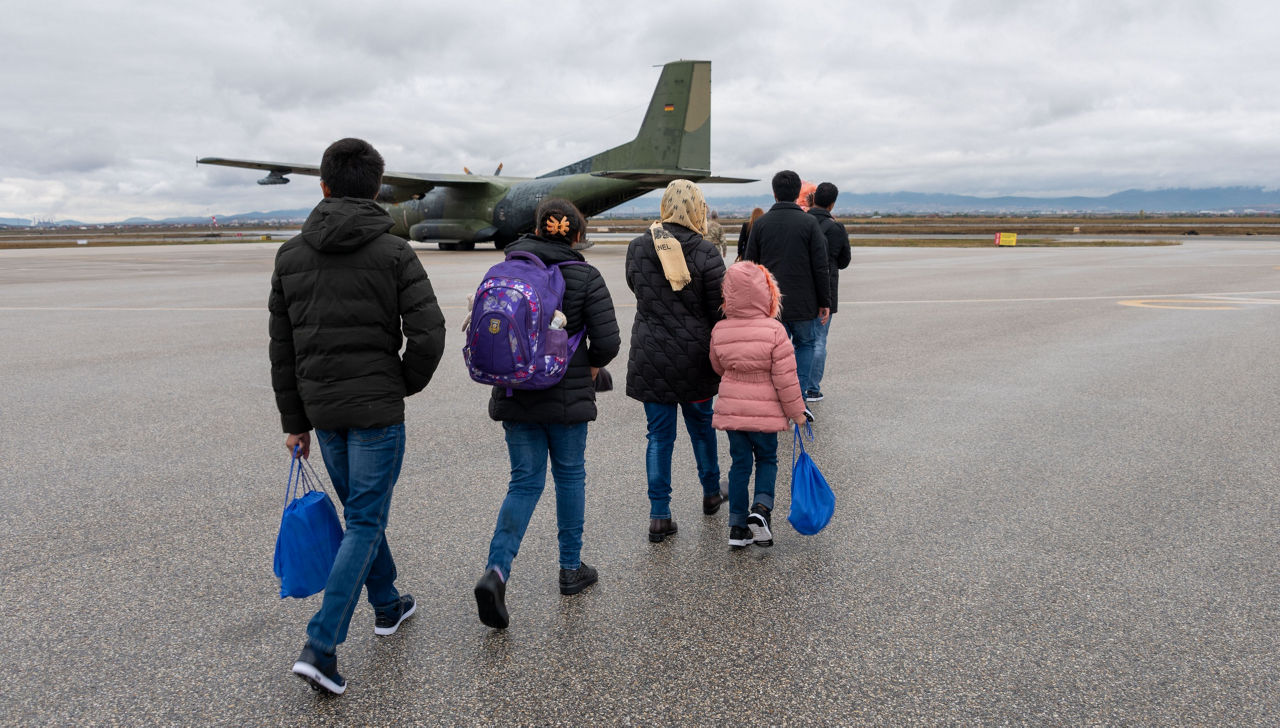
Autumn 2021: NATO launches Operation Allied Solace to assist with the resettlement of NATO-affiliated Afghans and their families. Allied troops from the NATO Response Force help relocate evacuees to temporary staging areas in Germany, Poland and Kosovo, and onwards to resettlement in several Allied countries. NATO Allies and partners continue to work together to help evacuated Afghans start a new life. Over the following weeks and months, several hundred former Afghan employees and their families are resettled in Allied countries.
December 2021: NATO Foreign Ministers discuss the lessons learned from the Alliance’s engagement in Afghanistan, reviewing a comprehensive political and military assessment that outlines key conclusions and recommendations.
31 August 2022
18 July 2025
8 November 2024
11 July 2024
10 July 2024