NATO - North Atlantic Treaty Organisation

NATO-Pakistan relations

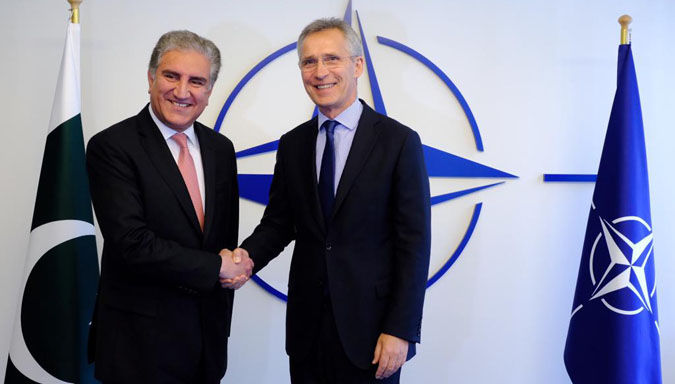
Arrival and bilateral: Left to right: Yousuf Raza Gilani (Prime Minister of Pakistan) shaking hands with NATO Secretary General, Anders Fogh Rasmussen

Since the Alliance’s relief-assistance operation in response to the devastating earthquake in Pakistan in 2005, NATO and Pakistan have significantly expanded political relations and practical cooperation. Political dialogue has been intensified, in particular with regard to the shared objective of bringing security and stability to Afghanistan.

In May 2007, during the first-ever visit by a NATO Secretary General to Pakistan, both sides agreed to hold regular high-level political exchanges, a further step towards broader cooperation.

How does cooperation work in practice?

While Afghanistan is a key focus of cooperation, NATO and Pakistan have developed regular exchanges at various levels, including visits by senior officials and opinion leaders, as well as participation by Pakistani military officials in NATO training programmes.

Cooperation on Afghanistan

Pakistan is a key neighbour of Afghanistan. Pakistan’s support for the efforts of NATO and the international community in Afghanistan remains crucial to the success of the Alliance’s mission there. At the same time instability, extremism and terrorism in Afghanistan pose a threat to Pakistan, as well as to the wider international community. As Pakistan’s Prime Minister put it during a visit to NATO on 30 January 2007, “Pakistan is committed to a strong, stable Afghanistan. The one country that will benefit the most, after Afghanistan itself, will be Pakistan.”

The growing NATO-Pakistan military-to-military cooperation in the context of Afghanistan is reflected in the work of the  Tripartite Commission, a joint forum on military and security issues which brings together representatives from the NATO-led ISAF operation, Afghanistan and Pakistan.

The Tripartite Commission meets regularly at various levels and is used to exchange views, as well as to discuss security matters of mutual concern. Its four main areas of cooperation are intelligence sharing, border security, countering improvised explosive devices (IEDs) and initiatives relating to information operations. A joint Afghan, ISAF and Pakistani intelligence centre that was opened in Kabul in January 2007 improved coordination within the Tripartite Commission.

NATO welcomes Pakistan’s constructive approach towards security and stability in the region. The issues of increasing drug cultivation in Afghanistan and dealing with refugees from that country have also been raised during political high-level talks.

Broader cooperation

However, NATO-Pakistan relations go beyond the Alliance’s operational agenda in Afghanistan. 

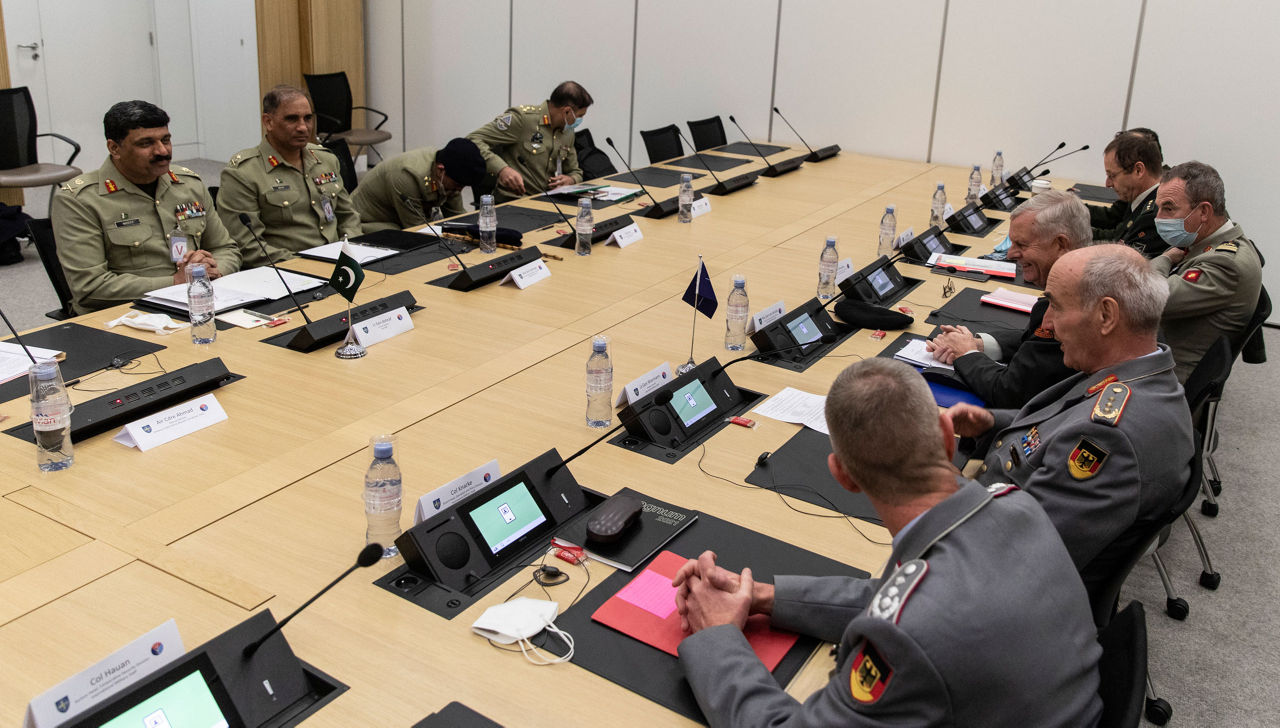
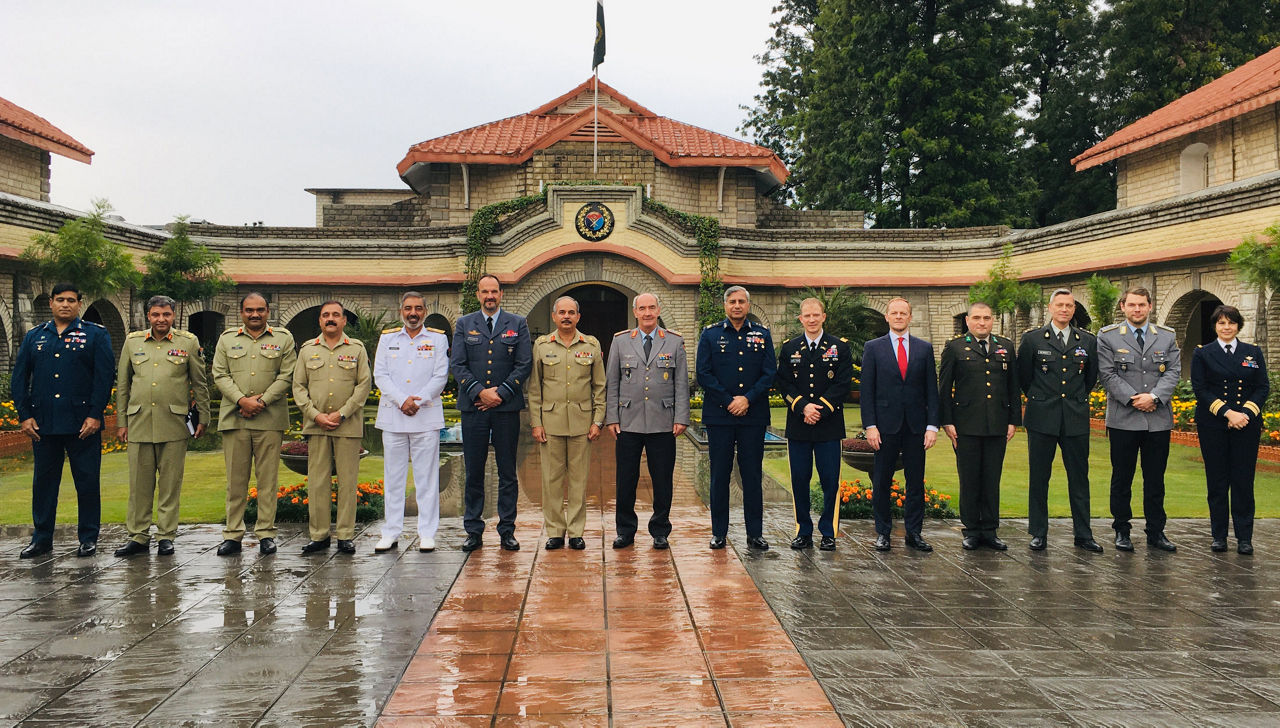
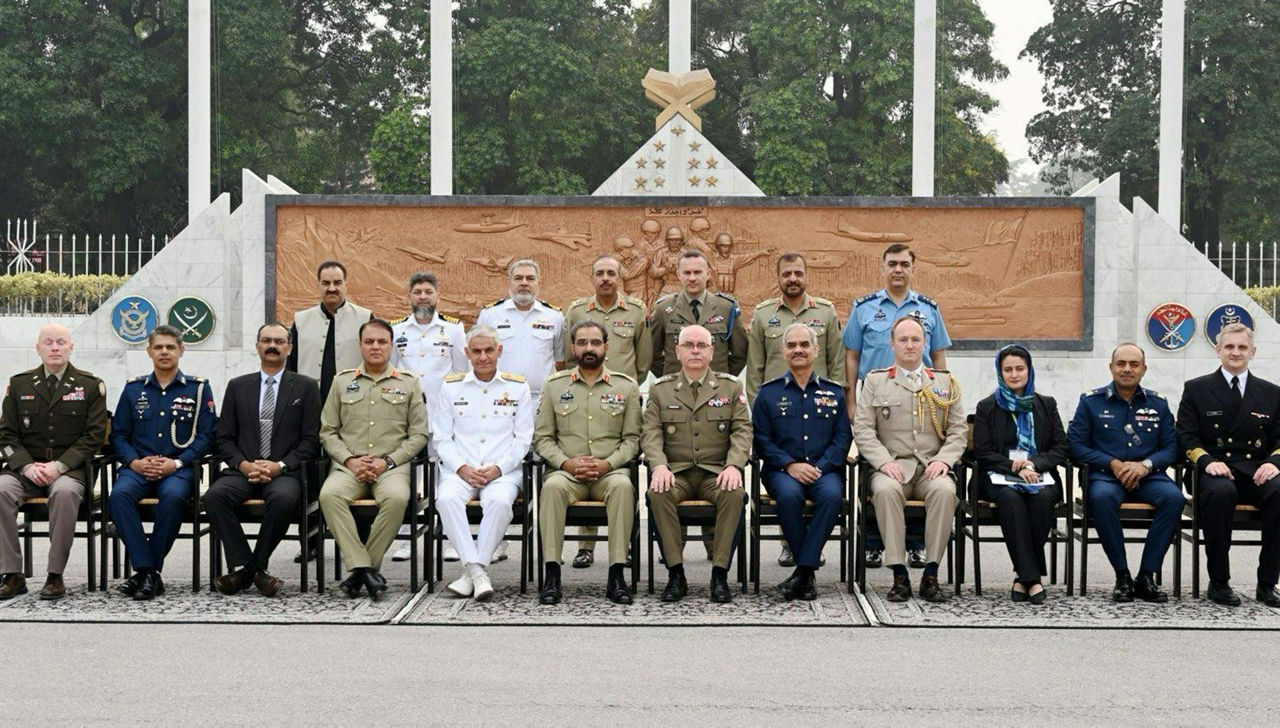
NATO’s Deputy Secretary General has visited Pakistan twice since 2005. Visits of Pakistani opinion leaders to NATO HQ have also been organised.  There, they were briefed on NATO’s policies. Military contacts are also taking place, and NATO has agreed to open selected training and education courses to Pakistani officers. These venues provide opportunities to prevent misunderstandings, and to promote a culture of cooperative security focused on areas of common interest – such as regional stability and the fight against terrorism.

How did relations with Pakistan evolve?

After Pakistan was struck by a devastating earthquake in October 2005, NATO launched an airlift of urgently-needed supplies and deployed engineers, medical units and specialist equipment to the country. A massive air-bridge was established, and assets of the NATO Response Force (NRF) were used in the effort.

Following the end of the mission in February 2006, political dialogue between NATO and Pakistan intensified. The relationship has gradually been augmented by practical cooperation, starting with the opening of NATO training courses to Pakistani officers.

Key milestones
March 2005 Visit to Pakistan by Ambassador Alessandro Minuto Rizzo, NATO Deputy Assistant Secretary General.
October 2005 Start of Paki2000stan earthquake relief operation; NATO airlifts supplies via two air bridges, from Germany and Turkey.
December 2005 General Ahsan Saleem Hyat, Vice Chief of Pakistani Army Staff, visits NATO teams at Arja, Pakistan.
January 2006 End of NATO’s earthquake relief operation in Pakistan. Almost 3500 tons of relief supplies, over 7600 people moved, more than 8000 patients treated. In addition, roads cleared, schools and shelters built.
May 2006 Alliance officials visit Pakistani President Pervez Musharraf and other officials in Islamabad.
September 2006 First Pakistani military officers and civilians attend courses at NATO School in Oberammergau, Germany.
November 2006 First visit by top Pakistani officer, General Ehsan ul Haq, Chairman of the Joint Chiefs of Staff, to NATO Headquarters.
January 2007 Opening of Joint Intelligence Operations Centre (JIOC) at ISAF HQ.  The JIOC facilitates joint intelligence operations between ISAF and the Pakistani and Afghan armies. .
  Visit to NATO by Prime Minister of Pakistan; NATO and Pakistan agree on Afghanistan approach.
February 2007 Visit of high-level Pakistani civil and military officials, as well as representatives of the think-tank community, to NATO HQ and commands.
May 2007 First visit by a NATO Secretary General to Pakistan. NATO and Pakistan agree to hold regular high-level political exchanges.

Last updated: 27-Oct-2010 17:39