Close
Back


From now on you can download videos from our website
If you would also like to subscribe to the newsletter and receive our latest updates, click on the button below.
Enter the email address you registered with and we will send you a code to reset your password.
The password must be at least 12 characters long, no spaces, include upper/lowercase letters, numbers and symbols.
Click the button to return to the page you were on and log in with your new password.
Updated: 03 March 2026
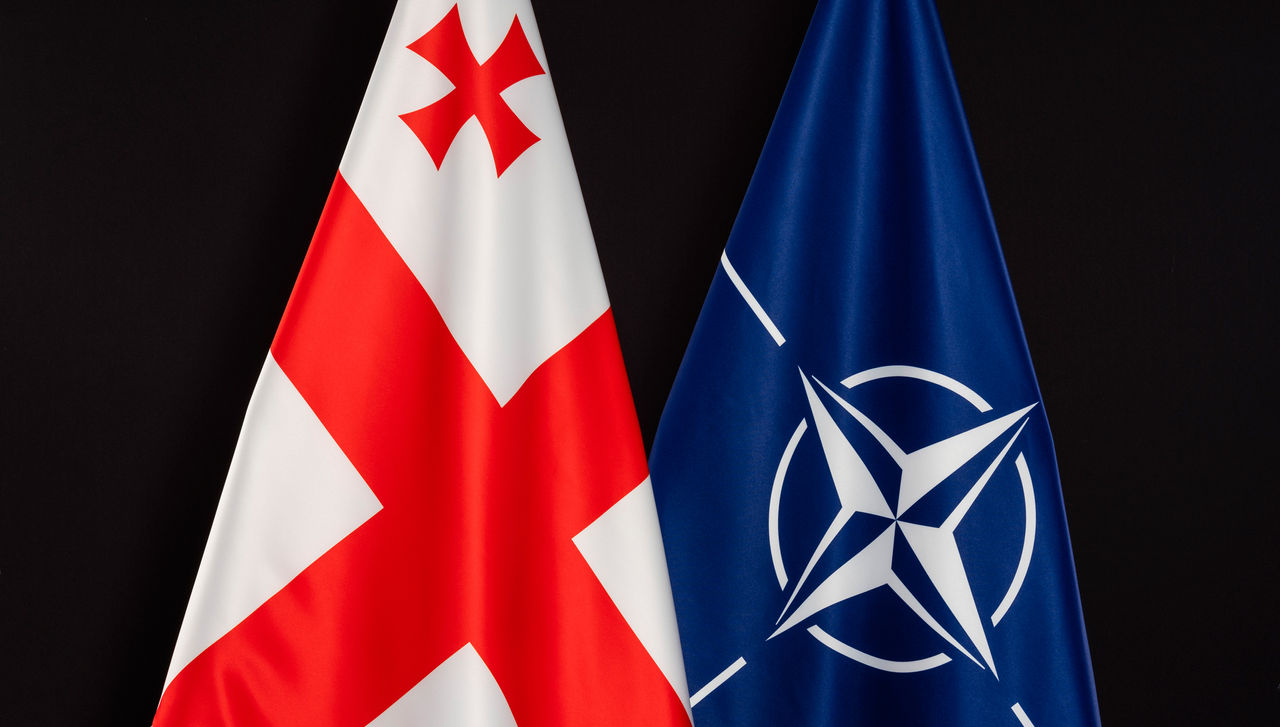
Georgia is one of NATO’s closest partners. It aspires to join the Alliance. Over time, a broad range of practical cooperation has developed between NATO and Georgia, supporting Georgia’s reform efforts and its goal of eventual NATO membership. The country contributes to the NATO-led Operation Sea Guardian and cooperates with the Allies and other partner countries in many other areas.
Georgia's cooperation with NATO is mutually beneficial and includes:
Building capabilities and interoperability
Substantial NATO-Georgia Package (SNGP)
The Substantial NATO-Georgia Package (SNGP) is the main vehicle for practical cooperation between Georgia and NATO. First launched in 2014, the package aims to strengthen Georgia's defence capabilities in line with NATO standards and help Georgia advance in its preparations for eventual NATO membership.
The Substantial NATO-Georgia Package aims to support the following objectives:
In 2020, a thorough review was conducted by NATO together with the Georgian Foreign Affairs, Defence and Interior Ministries, as well as with the Georgian Defence Forces and the Coast Guard. This review led to an upgraded Substantial NATO-Georgia Package, which was endorsed by Foreign Ministers in December 2020. The upgraded package encompasses multiple domains (air, land, sea) and includes support activities at the tactical, operational and strategic levels, including conducting regular joint NATO-Georgia exercises.
The upgraded SNGP currently consists of 12 initiatives, three of which were added in 2020. These three initiatives are meant to support Georgia in the development of a deployable military medical capacity; to improve Georgia's English language training capacity; and to improve the codification and standardization system, which will ensure an even higher level of interoperability of new Georgian defence projects and programmes with NATO requirements.
The level of ambition for ongoing initiatives has also been increased, including through the NATO-Georgia Joint Training and Evaluation Centre and the Defence Institution Building School. The Joint Training and Evaluation Centre in Georgia hosts live and simulated training exercises and certification for military units from Allied and partner countries. The most recent NATO-Georgia exercise took place in March 2022 and the next one is scheduled to be held in Spring 2025. Allies have provided the funding for a number of vehicles for the Centre.
Tailored support measures following Russia’s war on Ukraine
At the 2022 Madrid Summit, Allies endorsed a set of tailored support measures for Georgia, as one of NATO’s partners most directly affected by external threats and interference in the current security environment resulting from Russia’s war of aggression against Ukraine.
These measures step up both political and practical support to Georgia. The political measures aim to intensify the dialogue between Georgia and NATO. The practical measures aim to help Georgia accelerate its transition from Soviet-era equipment to equipment meeting today’s NATO standards, and enhance Georgia’s situational awareness.
Other initiatives
First launched in 2009, a Professional Development Programme for civilian personnel is strengthening the capacity for democratic management and oversight in the Defence Ministry and other security sector institutions.
Georgia participates in the Building Integrity initiative, which provides practical assistance and advice for strengthening integrity, accountability and transparency in the defence and security sector. Georgia is also engaged with NATO’s Defence Education Enhancement Programme, which aims to improve education and training within Georgia’s National Defence University and Military Academy.
Georgia is one of four countries that have enhanced opportunities for dialogue and cooperation with the Allies (known as 'Enhanced Opportunity Partners') in recognition of their particularly significant contributions to NATO operations and other Alliance objectives. The other Enhanced Opportunity Partners are Australia, Jordan and Ukraine.
Georgia is also building capabilities and interoperability through participation in the Partner Augmentation Forces to NATO (PAF-N). Prior to this, between 2015 and 2024, Georgia declared units to the NATO Response Force.
Support for NATO-led operations
Wider cooperation
Opened in October 2010 in response to a request from Georgian authorities, NATO’s Liaison Office serves as the official diplomatic mission and representation of NATO in Georgia.
The main tasks of the mission include:
The NATO Secretary General's Special Representative for the Caucasus and Central Asia is responsible for the overall coordination of NATO’s partnership policy in these two regions. The Special Representative works closely with regional leaders to enhance their cooperation with the Alliance and provides high-level support for the work of the NATO Liaison Office in Georgia (with a regional South Caucasus mandate).
At an emergency meeting on 19 August 2008, NATO Foreign Ministers called for a peaceful and lasting solution to the conflict based on respect for Georgia's independence, sovereignty and territorial integrity, recognised by international law and UN Security Council resolutions. They deplored the use of force, which is inconsistent with the commitments to the peaceful resolution of conflicts that both Georgia and Russia have made under the Partnership for Peace as well as other international agreements, including the NATO-Russia Founding Act and the Rome Declaration. The Allies expressed particular concern over Russia's disproportionate military action in the regions of South Ossetia and Abkhazia, calling for the immediate withdrawal of its troops from the areas as required under the terms of the six-point agreement brokered by the European Union.
At Georgia’s request, the Allies agreed to provide support in a number of areas: assessing the damage to civil infrastructure and the state of the ministry of defence and armed forces; supporting the re-establishment of the air traffic system; and advising on cyber defence issues.
On 27 August 2008, the Allies condemned and called for the reversal of Russia’s decision to recognise the South Ossetia and Abkhazia regions of Georgia as independent states. They continue to support Georgia’s territorial integrity and sovereignty within its internationally recognised borders. They do not recognise elections that have since taken place in these regions, nor the signature of so-called treaties between Russia and these regions.
Furthermore, the Alliance calls on Russia to withdraw the forces it has stationed in Georgia without its consent; to end its militarisation of Abkhazia and South Ossetia and its continued attempts to forcibly separate these regions from the rest of Georgia through the construction of border-like obstacles; and to cease its human rights violations and abuses, including arbitrary detentions and harassments of Georgian citizens.
The Allies welcome Georgia’s efforts to seek a resolution to the conflict with the regions of South Ossetia and Abkhazia through diplomacy (including the Geneva International Discussions) and reconciliation (such as the “A step towards a better future” peace initiative).
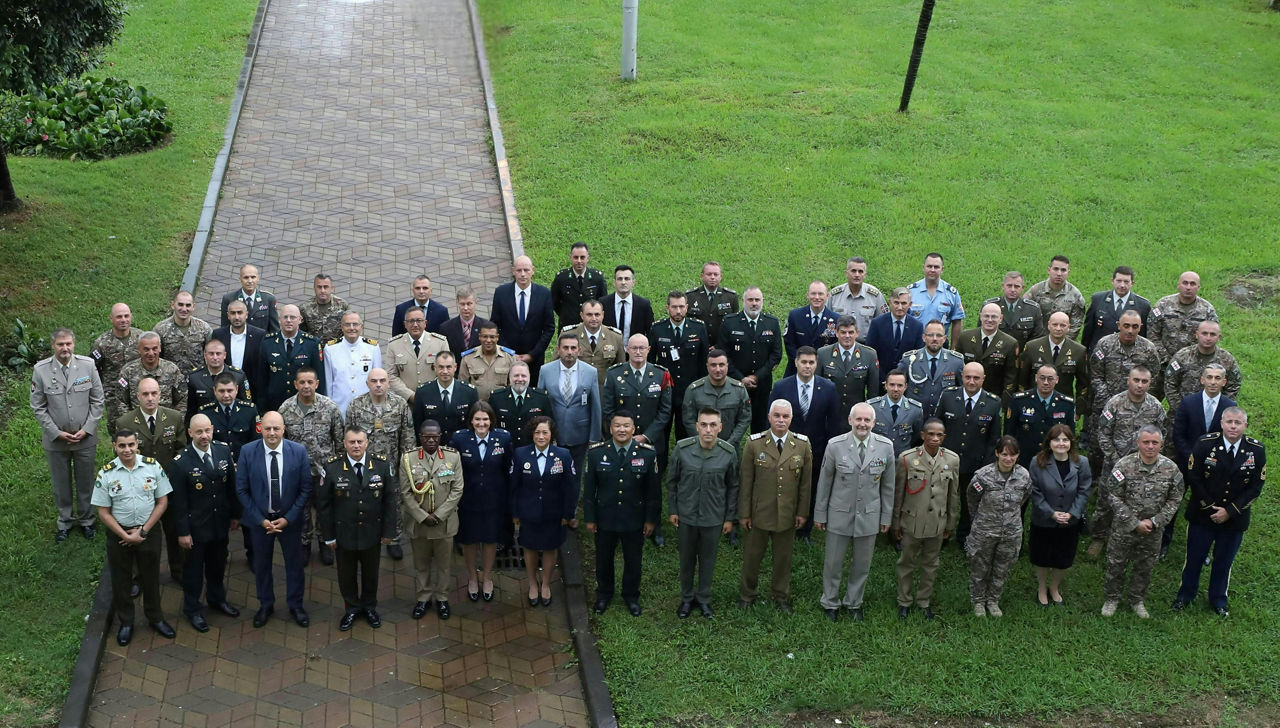
27 September 2024
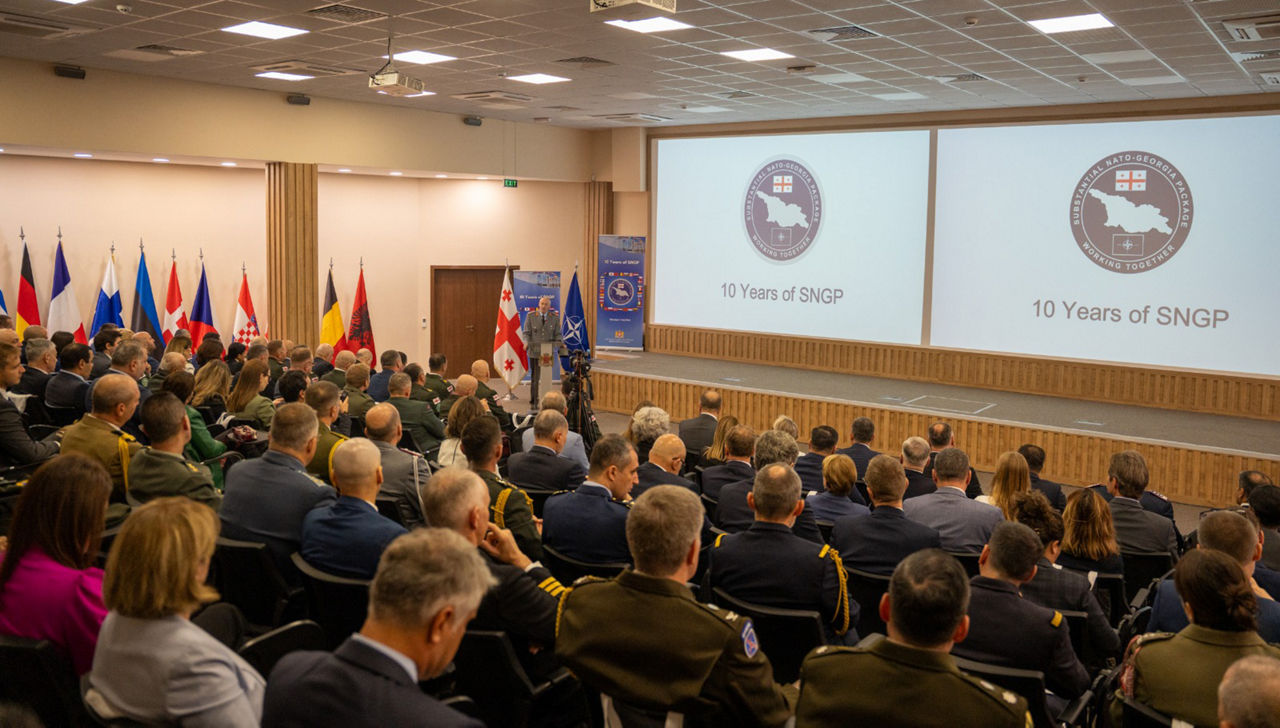
17 September 2024
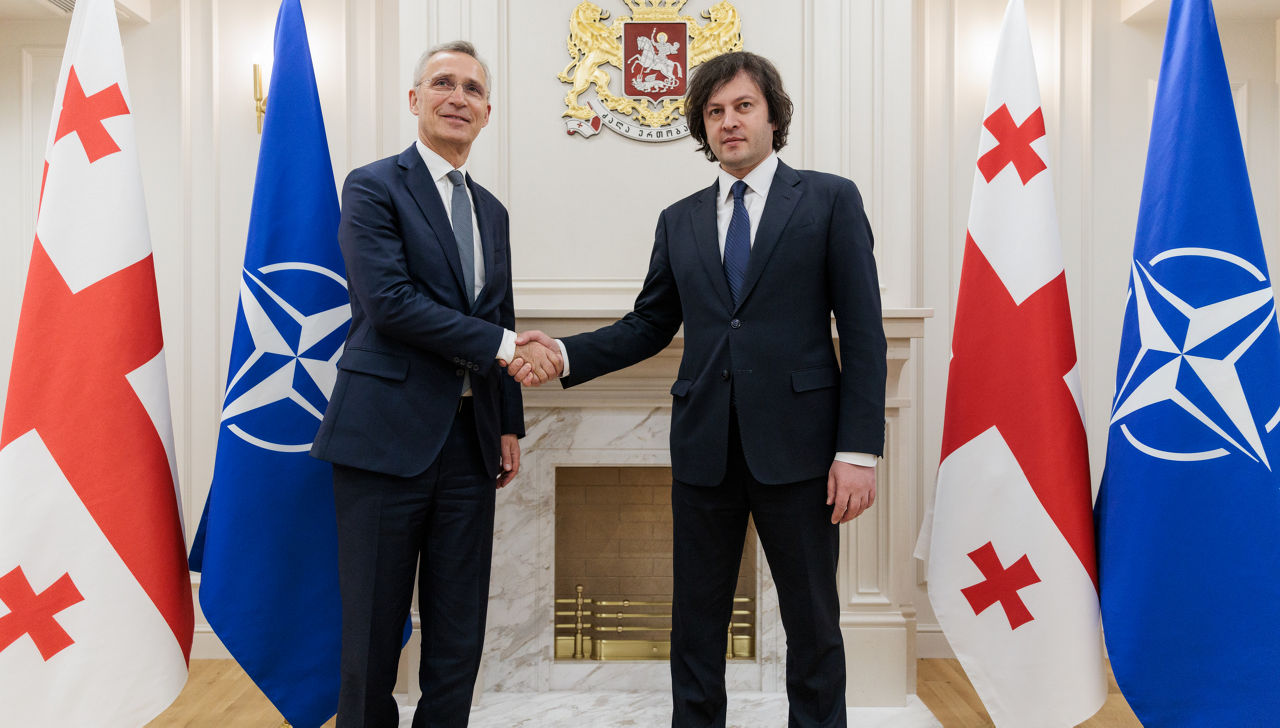
15 December 2021
22 January 2021
29 June 2022
18 June 2021
3 October 2019