The road to accession
NATO and Finland have long shared common values. As one of NATO’s closest partners, Finland cooperated extensively with the Alliance for several decades, but the country did not aspire to NATO membership. Finland’s partnership with NATO was historically based on its policy of military non-alignment and a firm national political consensus, which NATO has fully respected.
Finland’s stance changed following Russia’s full-scale invasion of Ukraine in February 2022, the biggest security crisis in Europe since the Second World War. After a thorough democratic process, Finland (alongside Sweden) submitted on 18 May 2022 its official letter of application to become a NATO Ally. On 4 July 2022, following NATO’s Madrid Summit, Allied Leaders completed accession talks, signing Accession Protocols for Finland and Sweden the following day.
Following the signature of the Accession Protocols, each country had ‘Invitee’ status, allowing their representatives to participate as observers in Allied meetings.
Over the following months, Finland’s Accession Protocol was ratified in the capitals of each of the then 30 Allies. Subsequently, Finland acceded to the Washington Treaty (or the North Atlantic Treaty) when the country (represented by the Finnish Foreign Minister) deposited its Instrument of Accession with the United States government (represented by the US Secretary of State) at NATO Headquarters, making Finland a full member of the Alliance on 4 April 2023.
Thereafter, Sweden joined the Alliance on 7 March 2024, after Sweden’s Accession Protocol was ratified by all NATO member countries according to their national procedures and its Instrument of Accession was deposited with the US State Department.
Key areas of cooperation
Finland's cooperation with NATO as a partner was mutually beneficial and included the following activities, many of which it continues to participate in as an Ally:
Building capabilities and interoperability
- Finland participated in the PfP Planning and Review Process (PARP) and the Operational Capabilities Concept, two frameworks that assist partner countries in planning and evaluating the readiness of its contributions to NATO-led peace-support operations.
- Finland participated in NATO and PfP exercises and has declared a variety of infantry, engineering, naval, and air units as potentially available for exercises and operations.
- Finland participates in a strategic airlift initiative, namely the Strategic Airlift Capability (SAC) programme.
- In 2017, Finland created the Helsinki European Centre of Excellence for Countering Hybrid Threats. The centre is open to participating states and supported by NATO and the EU.
- Beginning in 2014, under the Partnership Interoperability Initiative, Finland participated in the Interoperability Platform, which brings Allies together with selected partners that are active contributors to NATO's operations.
- Finland and NATO signed a Political Framework Arrangement in 2017 for cooperation on cyber defence. The country also participated in the NATO Cooperative Cyber Defence Centre of Excellence, NATO cyber defence exercises and cyber-related 'Smart Defence' projects.
- In July 2001, NATO formally recognised the Finnish Defence Forces International Centre (FINCENT) as a PfP Training Centre. FINCENT provides training on military crisis management for staff employed by international organisations such as NATO, the United Nations (UN) and the EU.
- Finland has close ties with other Nordic countries and participates in Nordic Defence Cooperation (NORDEFCO), a regional defence initiative that promotes collaboration between Nordic armed forces.

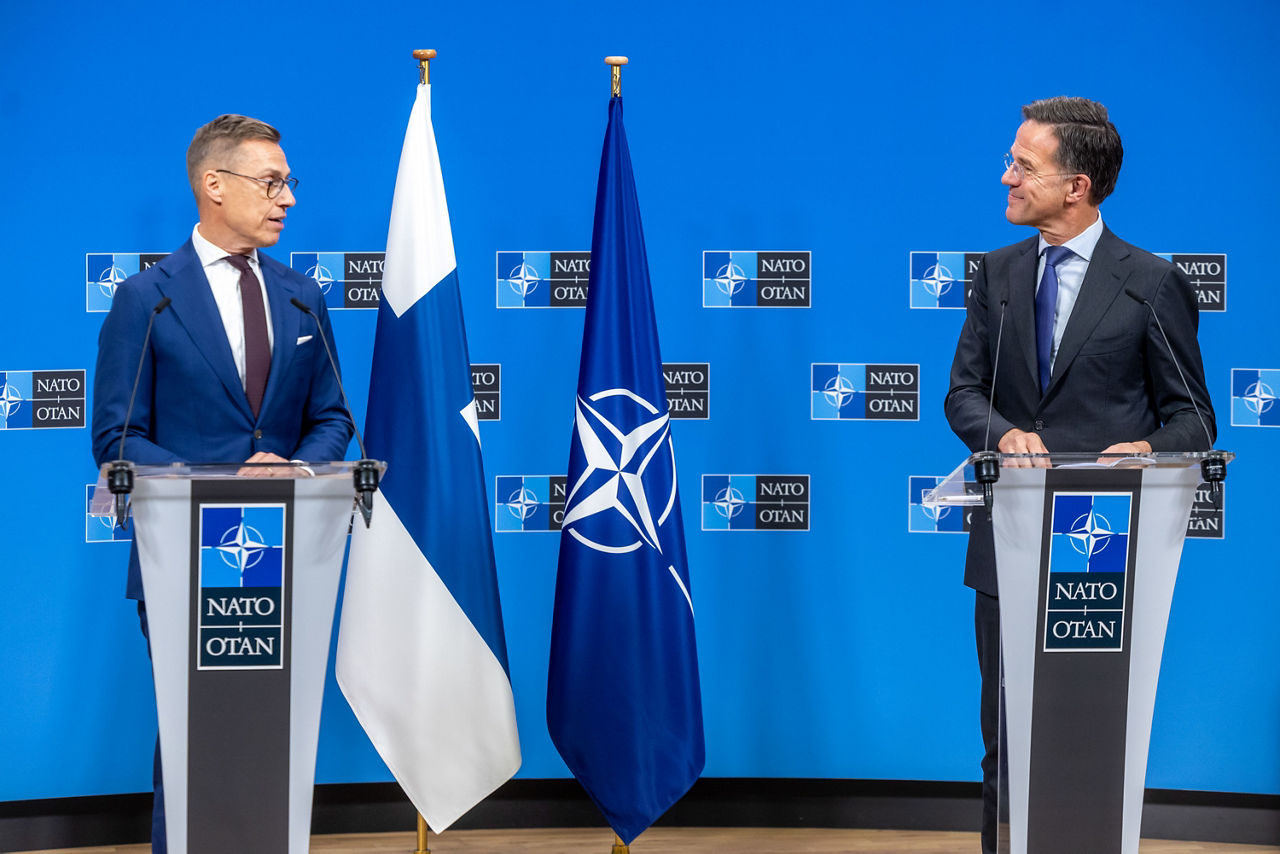
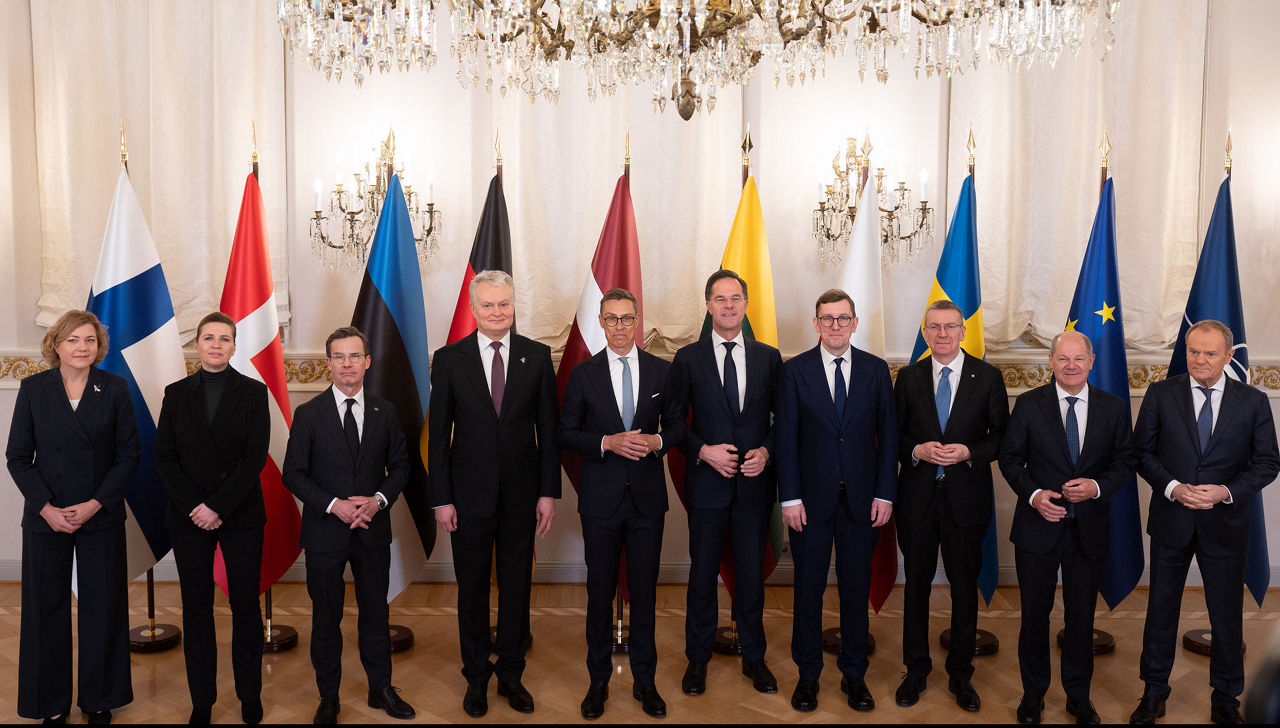
President of Finland Alexander Stubb with former NATO Secretary General Jens Stoltenberg (April 2024)
Support for NATO-led operations and missions
- Finland first participated in a NATO-led operation in 1996 when it contributed a battalion to the NATO-led peacekeeping force in Bosnia and Herzegovina.
- From 2002, Finnish soldiers worked alongside Allied forces in Afghanistan – first as part of the International Security Assistance Force (ISAF), which completed its mission at the end of 2014, and later as part of the follow-on Resolute Support Mission (RSM) to further train, assist and advise the Afghan security forces and institutions until its completion in September 2021. Finland also contributed over USD 14 million to the Afghan National Army Trust Fund.
- Finland provides personnel to the NATO-led peacekeeping force in Kosovo (KFOR).
- Finland has also participated in NATO Mission Iraq (NMI), NATO's advisory and capacity-building mission in Iraq.
- Finland participated in the enhanced NATO Response Force (NRF) in a supplementary role and subject to national decisions. Additionally, Finland signed a memorandum of understanding on Host Nation Support which, subject to a national decision, allowed for logistical support to Allied forces located on, or in transit through, its territory during exercises or in a crisis.
Wider cooperation
- Finland has engaged with NATO's Resilience Committee and cooperated with Allies on regional assessments, security of supply, critical infrastructure protection, and in providing mutual support in dealing with the consequences of a major accident or disaster in the Euro-Atlantic area.
- Finnish civil resources have been listed with NATO's Euro-Atlantic Disaster Response Coordination Centre (EADRCC) and Finland has contributed to NATO's pool of preparedness experts. Finland has also provided civil preparedness training to Allies and other partners.
- Other practical cooperation has taken place under the Science for Peace and Security (SPS) Programme, which focuses on activities pertaining to counter-terrorism, cyber defence, chemical, biological, radiological and nuclear (CBRN) defence, environmental security, and advanced technology. A noteworthy example was the participation of Finland in the DEXTER Programme, which is developed an integrated system to detect explosives and firearms in public spaces.
- Finland has actively supported the implementation of UN Security Council Resolution 1325 on Women, Peace and Security (WPS), and since 2008 has developed successive National Action Plans in support of the WPS agenda.
- Finland is an active supporter of NATO Trust Fund projects in partner countries and has contributed to nearly a dozen so far, including the Partnership Trust Fund, the Defence and Related Security Capacity Building (DCB) Trust Fund and the Comprehensive Assistance Package (CAP) for Ukraine Trust Fund. This has included projects for partner countries including shelter and generators, fuel, and medical rehabilitation to Ukraine, and to DCB projects in Georgia, Iraq, Jordan and the Republic of Moldova.