Close
Back


From now on you can download videos from our website
If you would also like to subscribe to the newsletter and receive our latest updates, click on the button below.
Enter the email address you registered with and we will send you a code to reset your password.
The password must be at least 12 characters long, no spaces, include upper/lowercase letters, numbers and symbols.
Click the button to return to the page you were on and log in with your new password.
Updated: 31 October 2024
NATO recognises the disproportionate impact that conflict has on women and girls, the vital roles women play in peace and security, and the importance of incorporating gender perspectives in all that the Alliance does. The Women, Peace and Security agenda was launched on 31 October 2000 with the adoption of United Nations Security Council Resolution 1325 and now includes nine additional Resolutions (1820, 1888, 1889, 1960, 2106, 2122, 2422, 2467 and 2493).
The resolve of Allies and partners to take forward the principles outlined in the UNSCRs on WPS and to apply them in a NATO context led to the first formal NATO/EAPC Policy on Women, Peace and Security in December 2007. It focused on how gender perspectives apply in operational contexts. A first Action Plan to support the implementation of this Policy was endorsed at the Lisbon Summit in 2010 on the occasion of the 10th anniversary of UNSCR 1325.
The Policy has been updated several times, most recently in 2024. The updates account for changes in the security environment, as well as the continued evolution of NATO’s understanding of how best to integrate gender perspectives across all of its work. Action plans have subsequently been developed to guide the implementation of the Policy.
The NATO 2021-2025 Action Plan on WPS was endorsed by Defence Ministers in October 2021. It supports the commitment by Allies to further advancing gender equality and integrating gender perspectives in all that NATO does, building on the progress made since the creation of NATO’s agenda on WPS.
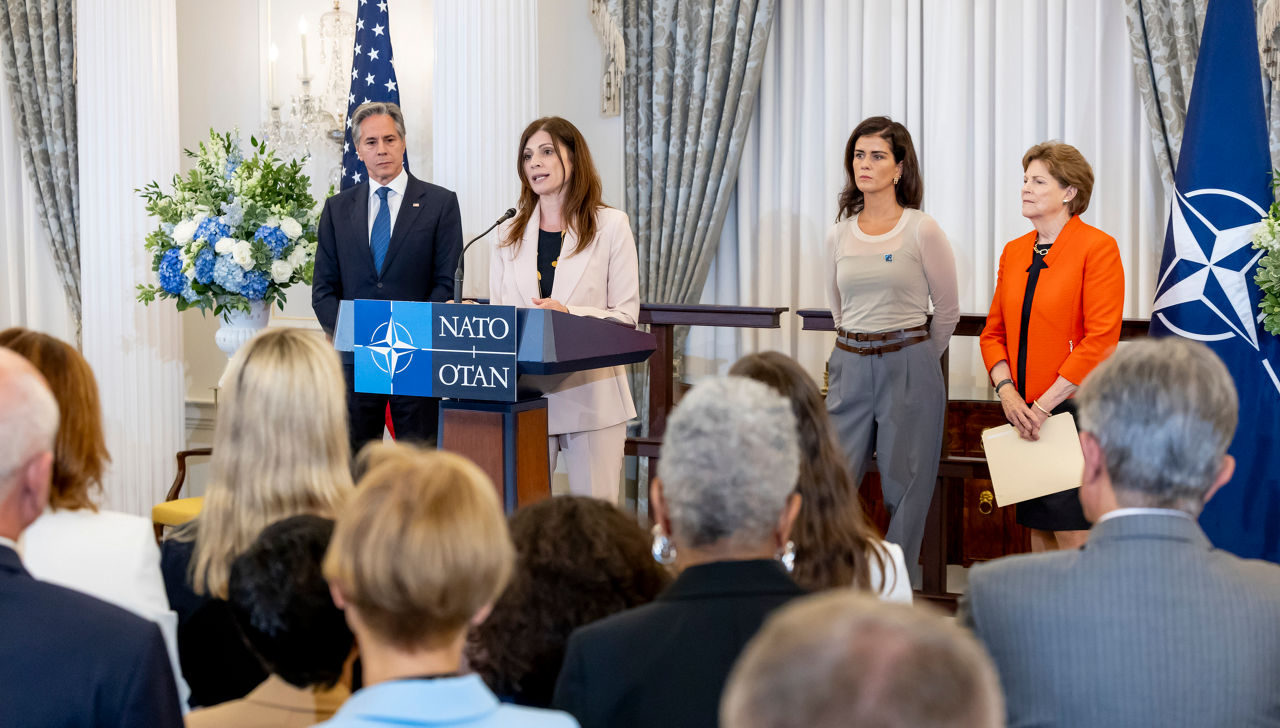
At NATO Headquarters in Brussels, Belgium, the Secretary General’s Special Representative for Women, Peace and Security serves as the high-level focal point for all of NATO’s work on the WPS agenda. The position was created in 2012 and made permanent in 2014. In November 2021, Ms Irene Fellin was appointed as the Special Representative. Her tenure commenced in early 2022.
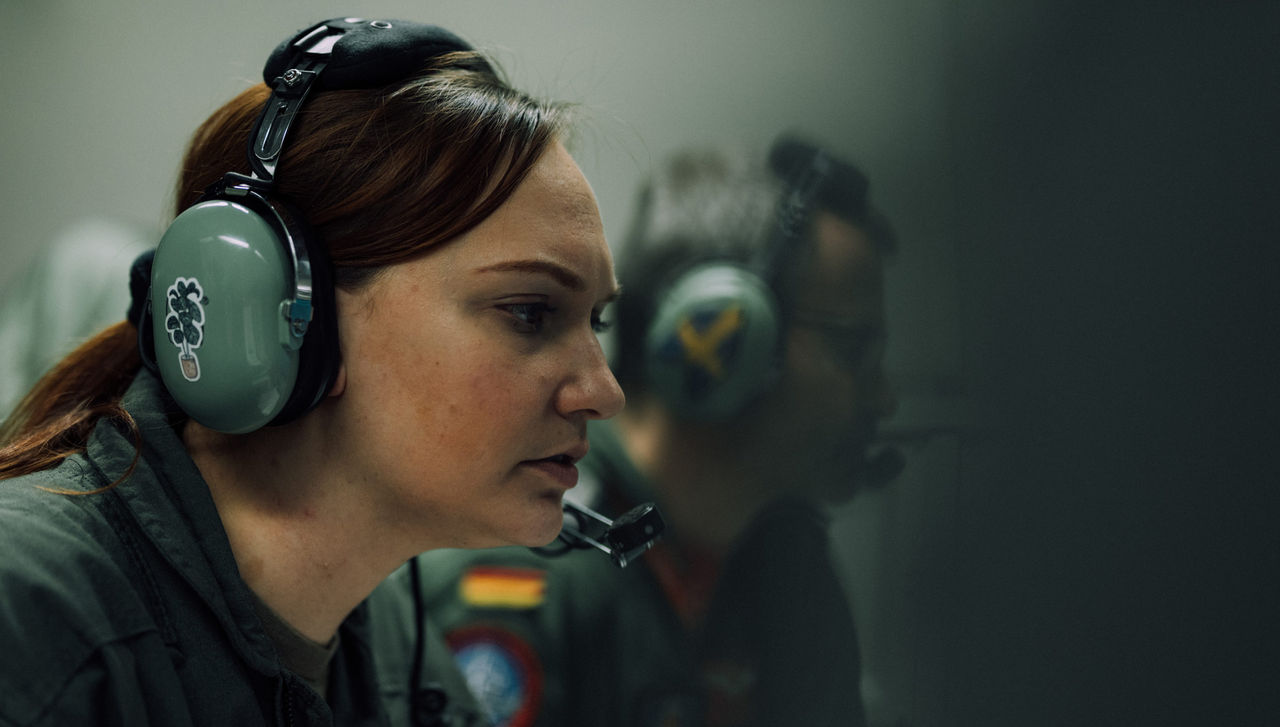
Gender Advisors are in place across NATO’s military structures and in all operations and missions. The first NATO Gender Advisors were deployed in 2009 to NATO’s two Strategic Commands, as well as to the International Security Assistance Force (ISAF) in Afghanistan, replaced in 2015 by the Resolute Support Mission (RSM), which operated until early September 2021. There are now Gender Advisors deployed across NATO structures and missions, including NATO Mission Iraq (NMI) and NATO’s Kosovo Force (KFOR). These men and women operate at strategic and operational levels, and are valuable resources to Commanders, who are responsible for the overall integration of gender perspectives into planning, execution and evaluation.
Gender Focal Points and WPS Focal Points steer the integration of gender perspectives and the implementation of the WPS agenda across NATO’s International Military Staff (IMS) and International Staff (IS), respectively. These Focal Points perform their roles in addition to their core tasks, which enables them to integrate gender perspectives and WPS efficiently into their areas of expertise and communicate the WPS Agenda with colleagues.
The WPS Leadership Task Force is a platform for NATO Headquarters and NATO Agencies to engage on the implementation of the WPS agenda across NATO. This Task Force enables senior management at NATO to share progress, challenges and opportunities in implementing WPS. Supporting the WPS Leadership Task Force, the WPS Technical Task Force is a platform for staff-level engagement across NATO IS, IMS and Agencies, and for coordination and information-sharing to aid in the implementation of WPS across all strands of NATO’s work.
The NATO Committee on Gender Perspectives promotes the integration of gender as a strategy for making the concerns and experiences of both women and men an integral dimension of the design, implementation, monitoring and evaluation of policies, programmes and military operations.
Partners have been integral to NATO’s work on WPS from the start.
Through their cooperation programmes with NATO, partners are also encouraged to adopt specific goals that reflect the principles and support implementation of the WPS agenda. Some contribute to the development of education and training activities on WPS, from which they also benefit, and they help ensure that gender perspectives are included in the curriculum of NATO training centres and Centres of Excellence, as well as in pre-deployment training. NATO member Sweden hosts the Nordic Centre for Gender in Military Operations.
The NATO Science for Peace and Security (SPS) Programme promotes concrete, practical cooperation on gender-related issues among NATO member and partner countries, through collaborative multi-year projects, training courses, study institutes and workshops.
NATO also collaborates with international organisations, and this is particularly valuable in its work related to WPS. NATO works closely with the United Nations, the European Union, the Organization for Security and Co-operation in Europe and the African Union to learn from and build on each other’s experiences. NATO’s work on WPS is supported by women and men, civilian and military, throughout NATO’s structures.
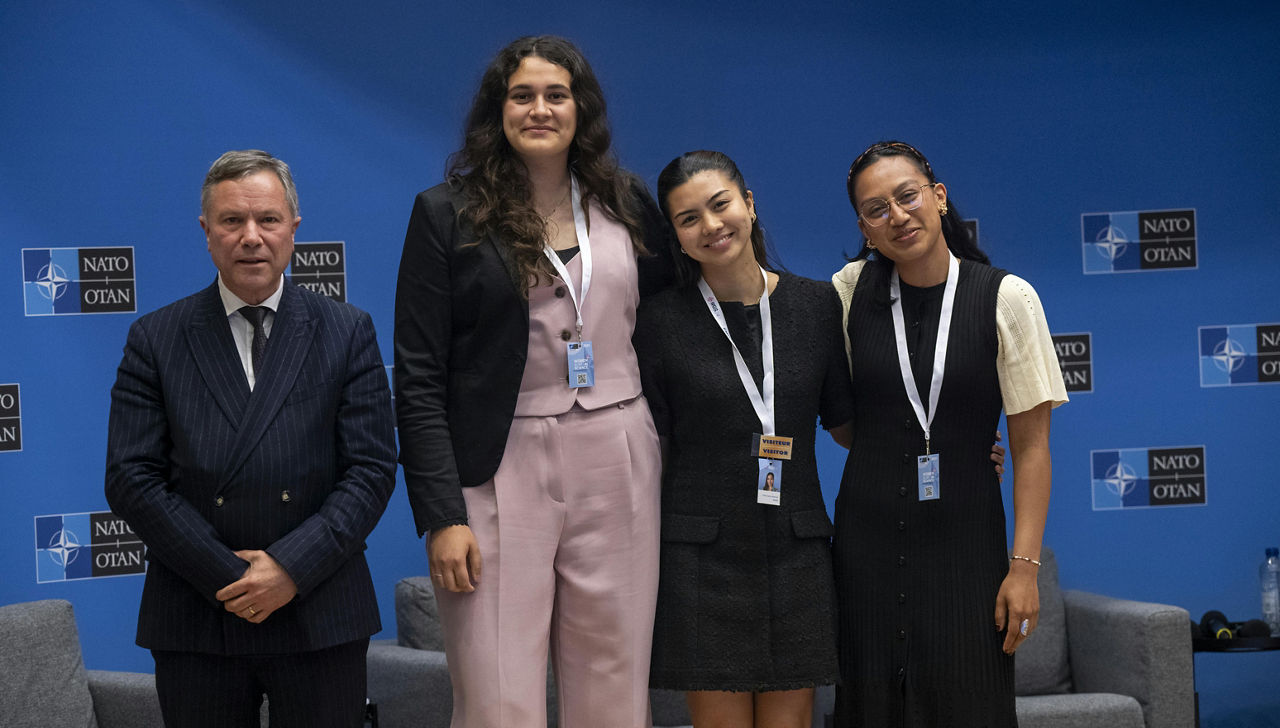
11 February 2025
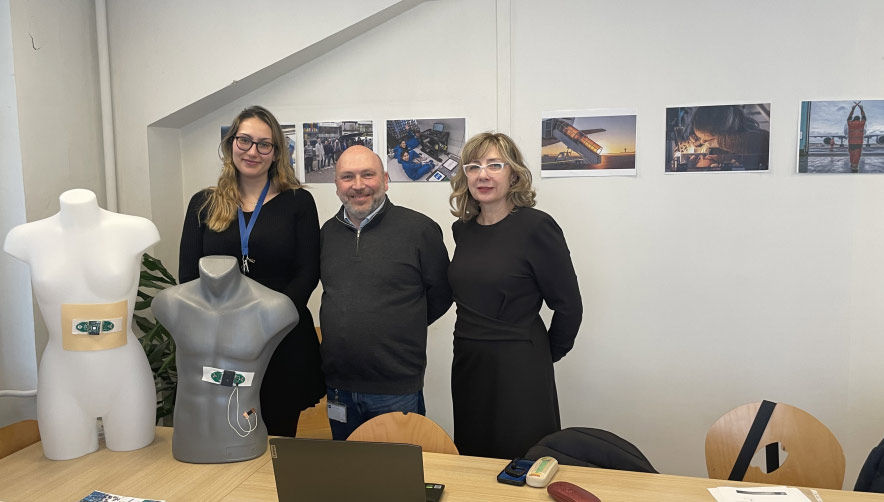
11 February 2025
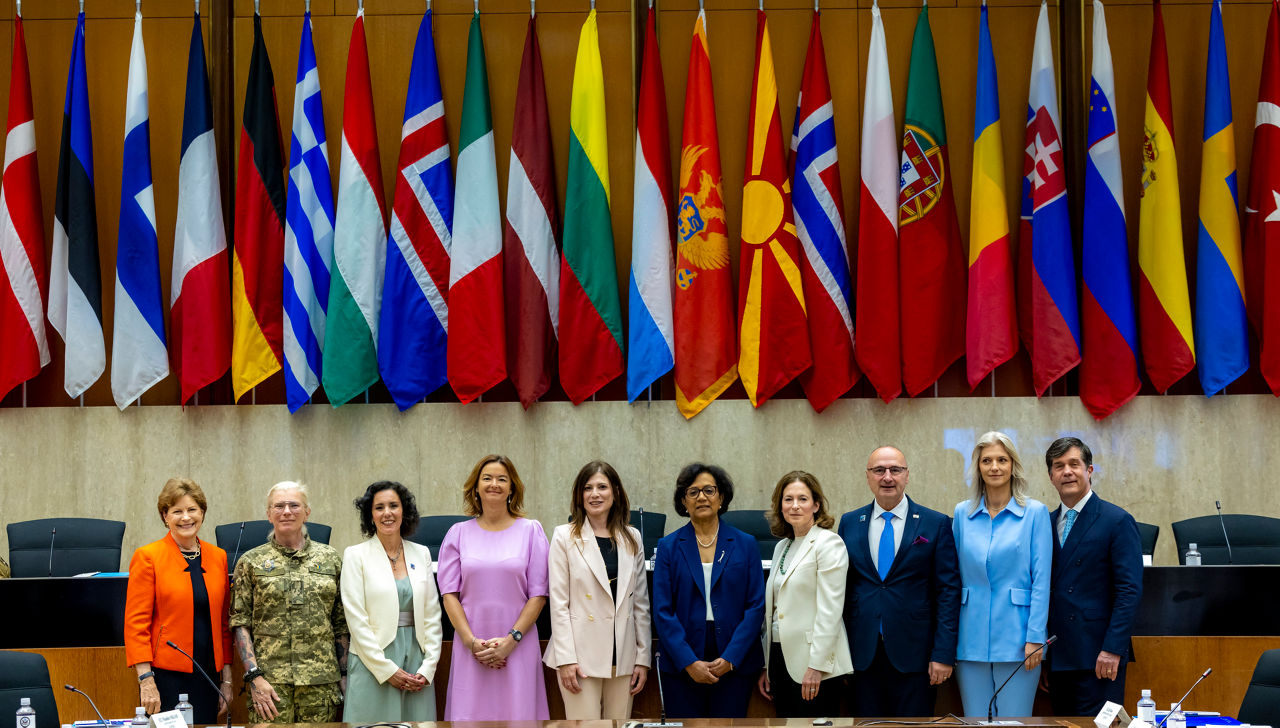
10 July 2024
29 June 2022