Close
Back


From now on you can download videos from our website
If you would also like to subscribe to the newsletter and receive our latest updates, click on the button below.
Enter the email address you registered with and we will send you a code to reset your password.
The password must be at least 12 characters long, no spaces, include upper/lowercase letters, numbers and symbols.
Click the button to return to the page you were on and log in with your new password.
Updated: 19 June 2024
NATO agencies are an integral part of the Alliance and constitute a vital mechanism for procuring and sustaining capabilities and services multinationally and collectively. They provide economies of scale and enhance the interoperability of Allied armed forces. Whereas NATO’s International Staff and International Military Staff at NATO Headquarters cover activities related to the Alliance’s political and military agenda, NATO agencies across the Alliance have responsibilities in more technical and specialised fields. Each NATO agency is governed by a corresponding organisation, composed of representatives from participating countries and ultimately overseen by the North Atlantic Council.

The NATO Communications and Information Agency (NCIA) is headquartered in Brussels, Belgium and has offices in more than 20 locations around the Alliance. It provides NATO-wide IT services, procurement and support in areas such as command and control systems; cyber defence; joint intelligence, surveillance and reconnaissance; and strategic and tactical communications – primarily to the NATO Military Authorities, but also to Allies and partner countries. The NCI Agency is the executive arm of the NATO Communications and Information Organization (NCIO), which aims to deliver capabilities and provide services at minimum cost to Allies, individually and collectively. All Allies are members of the NCIO.
The NATO Support and Procurement Agency (NSPA) has its headquarters in Capellen, Luxembourg and main operational centres in France, Hungary and Italy. It provides responsive, effective and cost-efficient acquisition, including armaments procurement, logistics, and operational and systems support and services to Allies, the NATO Military Authorities and partner countries. The NSPA is a customer-funded agency, operating on a "no profit - no loss" basis. The Agency is the executive body of the NATO Support and Procurement Organisation (NSPO), of which all NATO Allies are members.
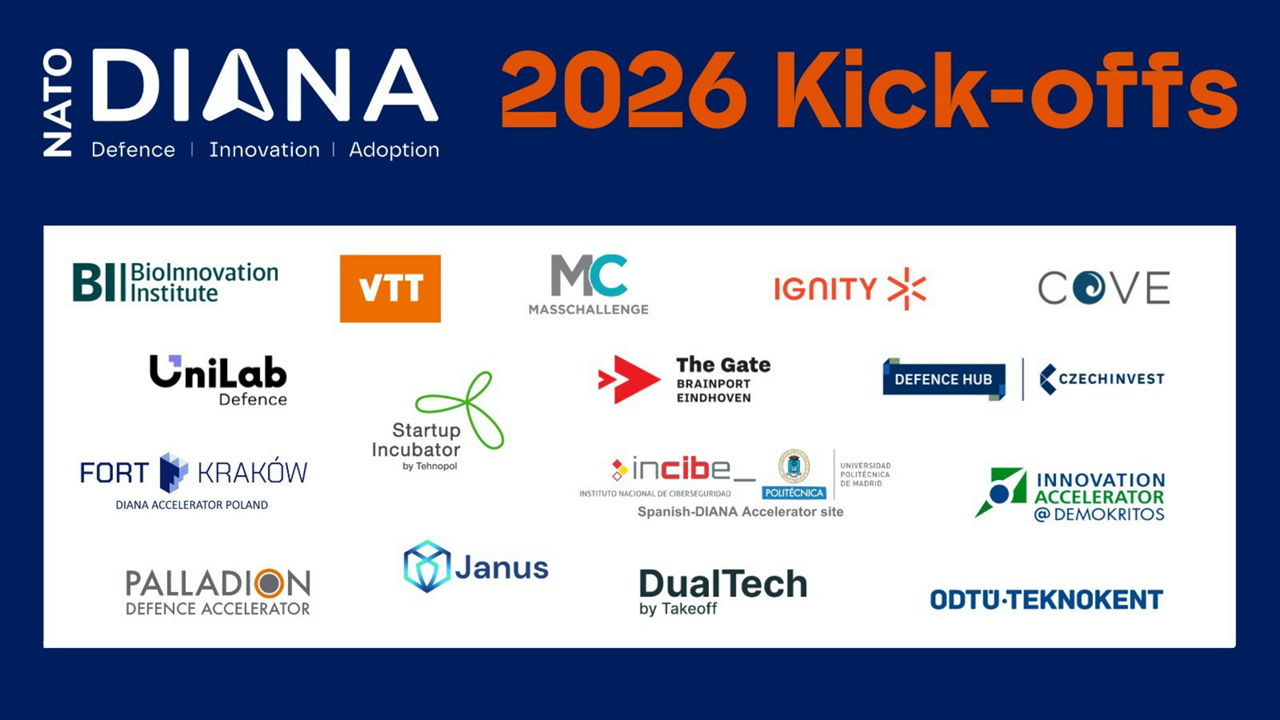
The Defence Innovation Accelerator for the North Atlantic (DIANA) was launched following an agreement at the 2021 NATO Summit in Brussels. It aims to foster transatlantic cooperation on emerging and disruptive technologies (EDTs), promote interoperability among Allied forces and harness civilian innovation by engaging with the private sector and academia. DIANA works directly with leading entrepreneurs, from early-stage start-ups to more mature companies, to solve critical problems in defence and security through dual-use, deep technologies (i.e. transformational technologies that solve important challenges through the convergence of breakthrough science and engineering). DIANA’s European Regional Office is located in London, United Kingdom and the North American Regional Office will be in Halifax, Canada. DIANA’s Regional Hub is in Tallinn, Estonia.
The NATO Science and Technology Organization (STO) is based in Brussels and headed by the NATO Chief Scientist, who serves as the Alliance-wide senior scientific advisor. The STO is the Alliance’s principal source of cutting-edge technology and novel solutions to problems, with a network of over 6,000 national subject-matter experts. It includes a Collaboration Support Office (CSO) in Neuilly-sur-Seine, France and a Centre for Maritime Research and Experimentation (CMRE) in La Spezia, Italy. All Allies are members of the Science and Technology Board (STB), which governs the STO.
Multinational programme agencies, established by groups of countries to meet specific requirements, acquire and sustain defence capabilities that contribute to the security of all Allies. These include agencies for NATO’s Airborne Early Warning and Control capability (NAPMA), the NH90 Helicopter programme (NAHEMA) and the Eurofighter-Typhoon and Tornado fighter jet programmes (NETMA). The acquisition phase for NATO’s Alliance Ground Surveillance capability was also executed with the support of a multinational programme agency (NAGSMA).
NATO has established and maintained various agencies since shortly after the Alliance was founded in 1949. These bodies have evolved and adapted over the years, continuing to provide vital capabilities that meet the Alliance’s military and civilian needs.
At the 2010 NATO Summit in Lisbon, Allied Heads of State and Government agreed to reform the 14 existing NATO agencies. In particular, Allies agreed to streamline the agencies into three major programmatic themes: procurement, support, and communications and information.
In July 2012, a major milestone was reached when the functions and responsibilities of the existing agencies were restructured into four new NATO bodies: the NCI Agency, the NSPA, the STO and the NATO Standardization Agency (NSA). The latter was responsible for the coordination of standardization activities within NATO. These reforms were implemented through several phases, to incrementally achieve increased effectiveness, efficiency and cost savings, while preserving capability and service delivery.
In July 2014, the NSA became – without change in its mission, function and activities – the NATO Standardization Office (NSO), an integrated NATO Headquarters staff element reporting to the Military Committee and the Committee for Standardization.
At the 2021 NATO Summit in Brussels, Allied Leaders agreed to launch the Defence Innovation Accelerator for the North Atlantic (DIANA).
3 February 2026