NATO - North Atlantic Treaty Organisation

NATO’s relations with the Kyrgyz Republic

NATO Secretary General Anders Fogh Rasmussen welcomes the President of the Kyrgyz Republic, Ms. Roza Otunbayeva to NATO headquarters

Kyrgyzstan cooperates with NATO within the Partnership for Peace and the Euro-Atlantic Partnership Council. NATO and Kyrgyzstan have developed practical cooperation in many areas, with the goal of enhancing regional and global security. The Individual Partnership Programme (IPP) lays out the programme of cooperation between NATO and Kyrgyzstan.

Framework for cooperation

Dialogue takes place within the framework of the Euro-Atlantic Partnership Council (EAPC). The NATO Secretary General’s Special Representative for the Caucasus and Central Asia, Robert F. Simmons, conducts high-level political dialogue with Kyrgyz authorities through regular visits to the country. The NATO Liaison Officer in Central Asia also visits Bishkek regularly and reviews cooperation with the government.

NATO and Kyrgyzstan are developing practical cooperation in a number of areas through the country’s Individual Partnership Programme (IPP), which is jointly agreed each year. Key areas include security and peacekeeping cooperation, especially counter-terrorism cooperation and border security, crisis management, and civil emergency planning.

The country joined the PfP Planning and Review Process (PARP) in 2007 to work more closely with the Allies on military interoperability and defence planning initiatives, with objectives underpinned by a set of tailored Partnership Goals.

Key areas of cooperation

Security cooperation

Kyrgyzstan participates in numerous PfP exercises. The Kyrgyz Government has identified a number of units as available for NATO/PfP operations and training exercises. Participation requires a government decision in each individual case. The units include an infantry company, a special National Guards platoon for counter-terrorism and peacekeeping training, and a border guard company. Kyrgyzstan is also seeking to enhance cooperation with NATO Allies in mine-clearing activities.

Defence and security sector reform

In consultation with the NATO Allies, Kyrgyzstan is in the process of reforming its armed forces. The PARP, which Kyrgyzstan joined in 2007, has the potential to further assist the government in developing reform plans and activities. These reforms should also enhance Kyrgyzstan’s ability to take part in peacekeeping operations alongside NATO forces.

Kyrgyzstan is working to enhance its mountain search and rescue capabilities, and its military command and control structures. Military education plays a role in these processes and cooperation in this area covers a wide range of areas, including language training, search and rescue education and training, border security and control, and the law of armed conflicts and human rights.

Civil emergency planning

Civil emergency planning is a key area of cooperation for Kyrgyzstan. With the Allies, the country is working to improve its effectiveness in responding to natural disasters and emergency situations. Kyrgyzstan is particularly interested in relevant scientific and technical cooperation and the mechanisms available through the Euro-Atlantic Disaster Response Coordination Centre (EADRCC).

Kyrgyzstan has sent experts to relevant seminars at the NATO School in Oberammergau, as well as to relevant discussions at NATO Headquarters.

Science and environment

Scientists from Kyrgyzstan have received grant awards in a range of subject areas under NATO’s Science for Peace and Security programme. In June 2006, an advanced research workshop on “high altitude medicine and biology” took place at Lake Issyk-Kul. Collaboration with NATO and other Partner countries is also ongoing on dealing with the environmental consequences of uranium extraction and other issues of environmental security.

Kyrgyzstan also participates in the Virtual Silk Highway project, which aims to increase internet access for academic and research communities in countries of the Caucasus and Central Asia through a satellite-based network.

Public information

Kyrgyzstan and NATO are working together to increase public understanding of NATO and the benefits of cooperation. The country is aiming to increase public awareness of defence and security reforms in order to increase public support.

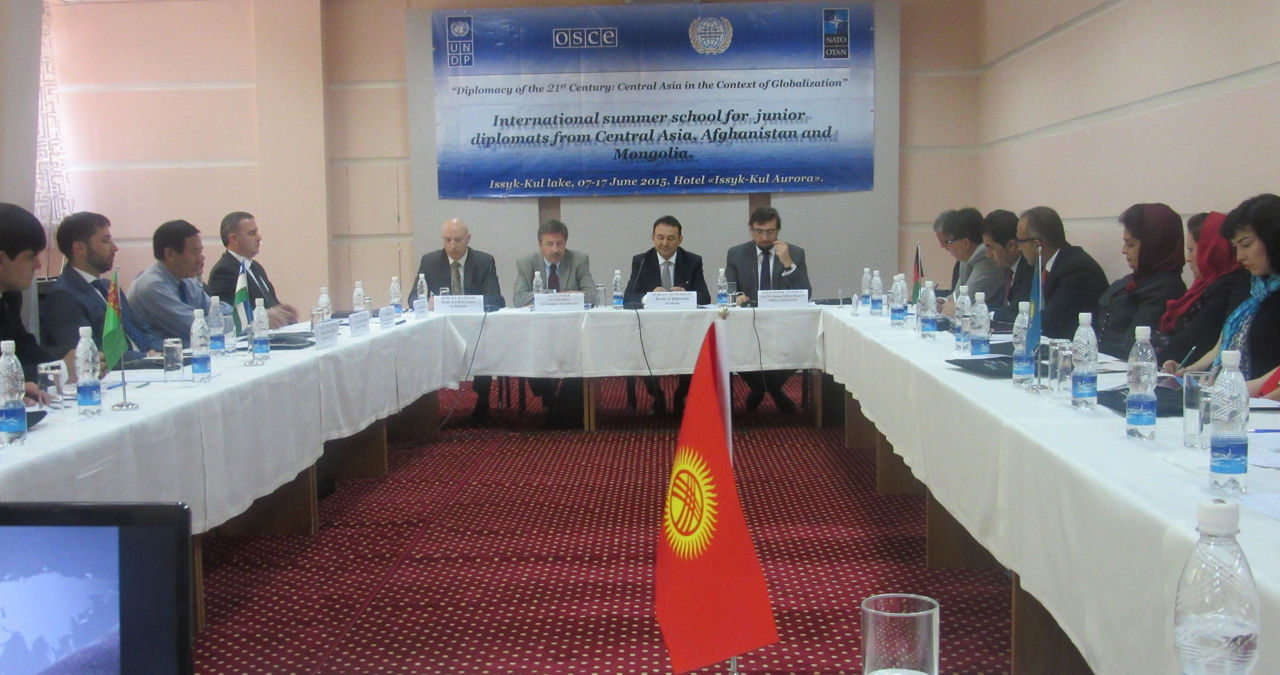
Work is ongoing to build and enhance networks with universities, non-governmental organisations, and the press and media in order to increase awareness of the Alliance and Euro-Atlantic security issues in general. To this end, Kyrgyzstan hosted the EAPC youth forum in Bishkek in November 2007.

NATO supports educational activities relevant to security and defence issues and is working with Kyrgyzstan to increase public access to NATO and security-related documents. To this end, NATO and Kyrgyzstan opened a NATO Depository Library at the Diplomatic Academy in Bishkek in February 2009.

Evolution of relations

Kyrgyzstan joined the North Atlantic Cooperation Council in 1992 (later renamed the Euro-Atlantic Partnership Council in 1997). The country joined the Partnership for Peace in 1994, to work alongside the Allies in areas where bilateral aims converge. Since PfP accession, Kyrgyzstan has participated in a number of PfP exercises, with a special focus on command and control, civil-emergency planning and civil-military cooperation.

Key milestones
1992 Kyrgyzstan joins the North Atlantic Cooperation Council, renamed the Euro-Atlantic Partnership Council in 1997.
1994 Kyrgyzstan joins the Partnership for Peace.
2000 NATO’s Secretary General visits Kyrgyzstan
2003 Kyrgyzstan is connected to the Virtual Silk Highway.
2004 NATO Secretary General visits Kyrgyzstan
2006 The Allies provide aid to Kyrgyzstan through the EADRCC as heavy snowfall causes extensive damage in the south of the country
2007 Kyrgyzstan joins the PfP Planning and Review Process (PARP).
  Kyrgyzstan hosts the EAPC youth forum in Bishkek in November.
2009 Opening of a NATO Depository Library at the Diplomatic Academy in Bishkek