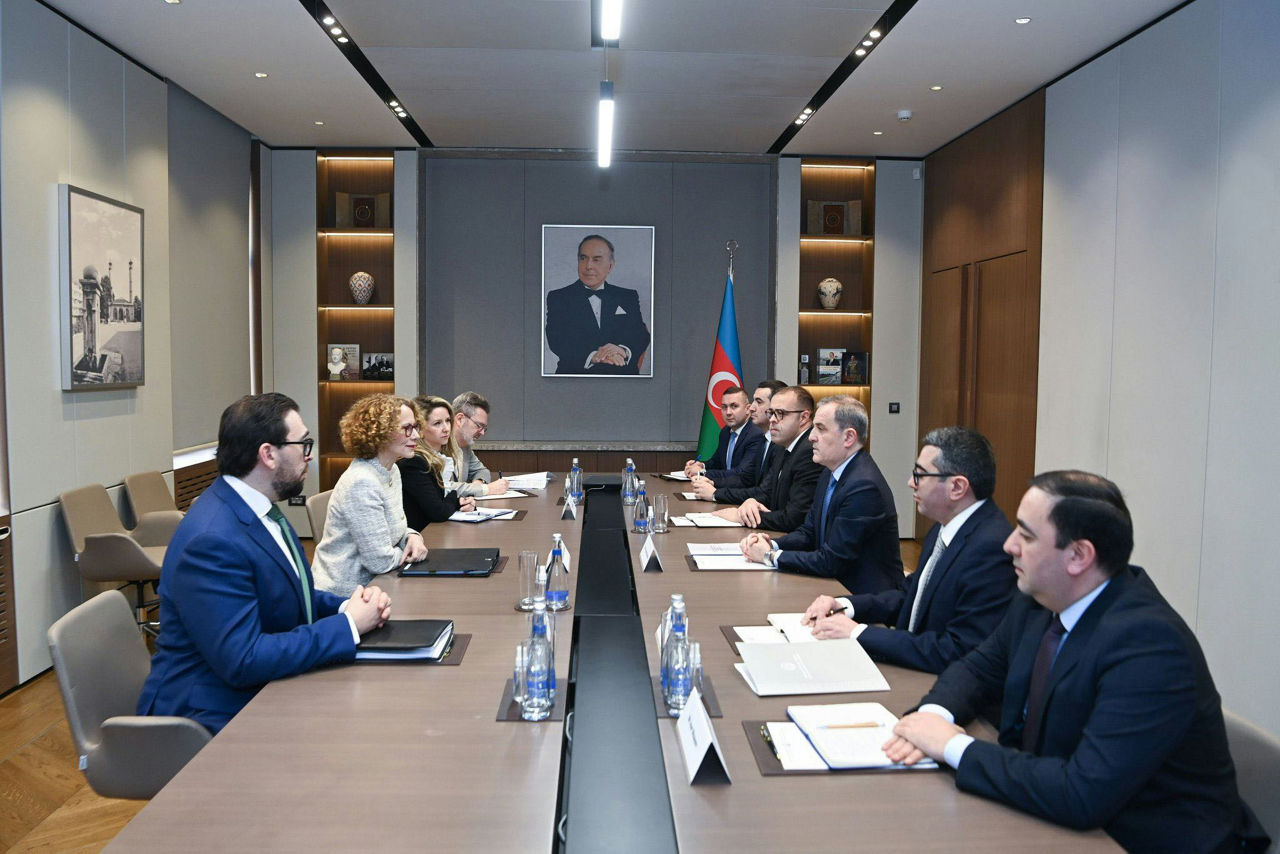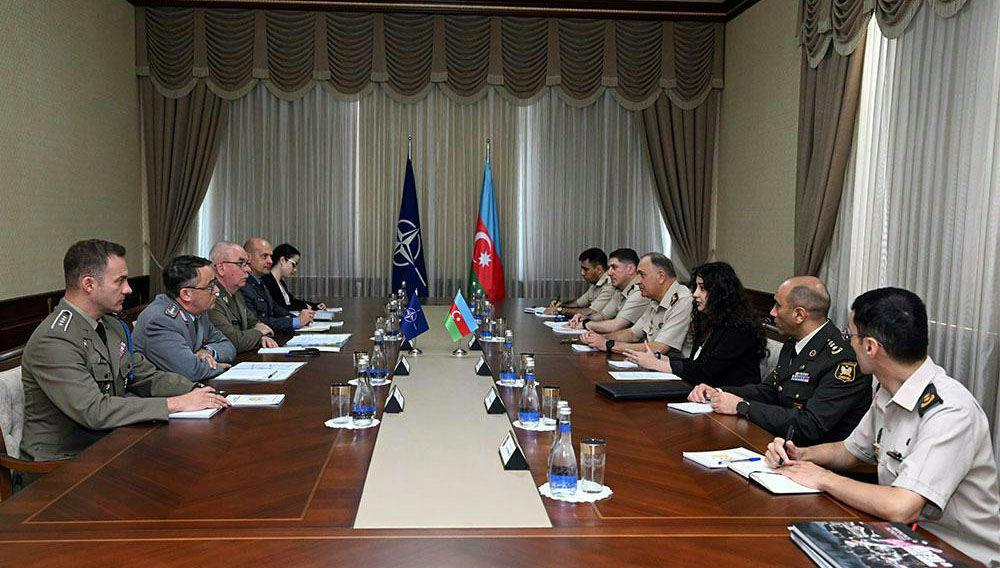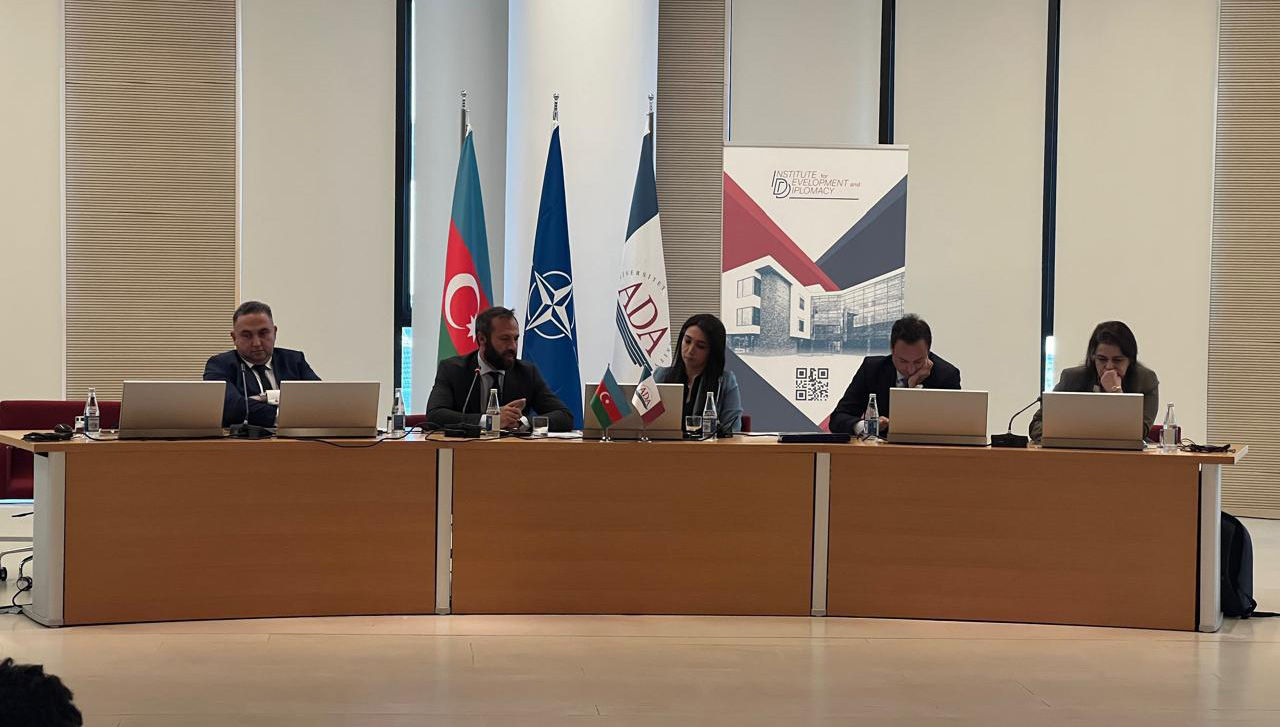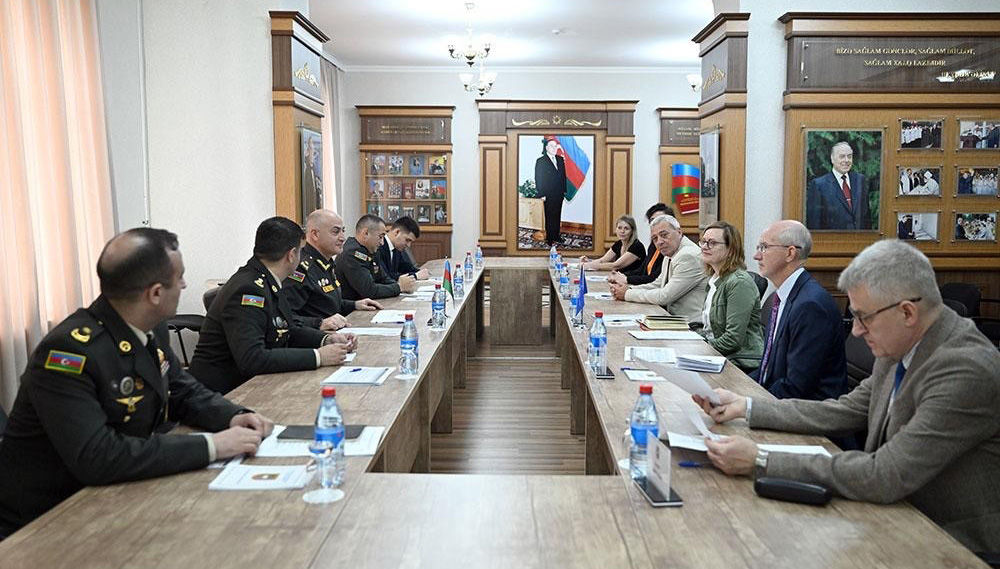
Azerbaijan is seeking to achieve Euro-Atlantic standards and to draw closer to Euro-Atlantic institutions. Consequently, support to security sector reform and democratic institution building are key elements of NATO-Azerbaijan cooperation..
Beyond the focus on reform, another important area of cooperation is the country’s support for NATO-led operations. Azerbaijan currently contributes peacekeepers the International Security Assistance Force (ISAF) in Afghanistan. In the past, it also actively supported the peacekeeping operation in Kosovo.
Framework for cooperation
Cooperative activities, reform plans and political dialogue processes are detailed in Azerbaijan’s IPAP, which is jointly agreed for a two-year period. Key areas of cooperation include the improvement democratic control of the armed forces, defence planning and budgeting and the reorganization of the armed forces structure using NATO standards.
Beyond supporting reform, another key objective of NATO’s cooperation with Azerbaijan is to develop the ability of the country’s forces to work together with forces from NATO countries in peacekeeping and crisis-management operations. Forces from Azerbaijan were part of NATO peacekeeping operations in Kosovo from 1999 to 2008. Azerbaijan has actively supported ISAF operations in Afghanistan since 2002, where it has gradually increased its forces to about 45 personnel and is currently preparing to double its contingent to about 90 personnel.
Azerbaijan also cooperates with NATO and Partner countries in a wide range of other areas through the Partnership for Peace (PfP) and the Euro-Atlantic Partnership Council (EAPC).
Key areas of cooperation
Security cooperation
Thanks to regular participation in PfP activities, Azerbaijan has been able to contribute actively to Euro-Atlantic security by supporting NATO-led peace-support operation. A two-platoon-sized unit from Azerbaijan is serving alongside NATO forces, as part of a Turkish contingent, in the International Security Assistance Force (ISAF) in Afghanistan.
Azerbaijan has declared a number of units available for PfP activities, on a case by case basis. These include infantry units, logistical support units and other specialists.
Azerbaijan contributes to the fight against terrorism through its participation in the Partnership Action Plan on Terrorism (PAP-T). This includes sharing intelligence and analysis with NATO, and cooperating with the Allies on enhancing national counter-terrorist training capabilities and improving border and infrastructure security. Information exchange through NATO’s terrorist threat intelligence unit is being developed. Azerbaijan is also working to establish an international Anti-Terrorism Training Centre at the Academy of the Ministry of National Security.
Azerbaijan and NATO are working together on increasing air and maritime security in Azerbaijan’s airspace and the Caspian Sea. NATO is also in discussions with Azerbaijan on the prevention of illegal activity in its sector of the Caspian, in concert with other regional Partner countries. Joint work is ongoing to strengthen and reform Azerbaijan’s border and coast guards.
NATO has no direct role in negotiations aimed at resolving the conflict between Azerbaijan and Armenia over the breakaway region of Nagorno-Karabakh, which are being conducted in the framework of the Organization for Security and Cooperation in Europe. However, NATO takes an interest in this process and encourages both countries to continue their efforts aimed at a peaceful resolution of the conflict. Peaceful resolution of conflicts is a core value of NATO, and is one of the core commitments that all Partner countries commit to when joining the Partnership for Peace.
Defence and security sector reform
Defence and security sector reforms are crucial to the development of Azerbaijan and its goal of achieving Euro-Atlantic standards as well as its increasing Euro-Atlantic cooperation. This is an area in which NATO and individual Allies have considerable expertise which Azerbaijan can draw upon. A key priority is working to establish democratic control over the armed forces. NATO is also supportive of the wider democratic and institutional reform process underway in Azerbaijan.
With NATO advice, Azerbaijan is developing strategic documents on defence and security, which will support and provide guidance during the conduct of the Strategic Defence Review. Cooperation on a new military doctrine and training methods is ongoing. Consultations are also underway on the necessary steps for improving other areas of defence planning and budgeting ..
NATO and individual Allies continue to assist Azerbaijan in creating modern, mobile, high-readiness, well-equipped and cost-effective forces that are interoperable with those of the Allies. Azerbaijan’s participation in the PfP Planning and Review Process (PARP), since 1997, has been instrumental in the development of the Peacekeeping Battalion and is now supporting the development of an additional unit, which would potentially be available for the full spectrum of NATO operations.
Consultations are ongoing on Azerbaijan’s military education structures and methods, since the Ministry of Defence is interested in adapting these to meet NATO standards. Within and alongside the PARP process, NATO and Azerbaijan are cooperating on improving the command and control capabilities of each of the armed services and improving logistics.
Civil emergency planning
In cooperation with NATO and through participation in activities organised by NATO’s Euro-Atlantic Disaster Response Coordination Centre (EADRCC), Azerbaijan is developing its national civil emergency and disaster-management capabilities. Azerbaijan’s special search-and-rescue platoon has participated in several exercises organised by the EADRCC. In addition, Civil Emergency Planning experts from NATO and NATO nations are providing advice to the Azerbaijani Ministry of Emergency Situations on a number of issues, including organisational issues, and CBRN defence.
Science and environment
Under the Science for Peace and Security (SPS) Programme, Azerbaijan has received grant awards for about 30 cooperative projects. Projects include collaboration on improving trans-boundary water quality and protecting drinking water supply from terrorism. Azerbaijan also participates in the Virtual Silk Highway project, which aims to increase internet access for academic and research communities in countries of the Caucasus and Central Asia through a satellite-based network.
Projects through the SPS Programme also cover environmental protection. In 1991, a major explosion at a former Soviet munitions facility in the Agstafa region spread unexploded ordnance over a large area. NATO and Azerbaijan continue to cooperate on the demilitarisation of this dangerous debris. Another key project is converting dangerous stocks of ”mélange” – a highly toxic and corrosive rocket fuel oxidizer, formerly used by Warsaw Pact Countries – into a harmless chemical. In response to a request from Azerbaijan for assistance, NATO sent a transportable conversion plant, which was officially inaugurated in July 2006. This project was successfully concluded in 2008.
Public information
Another key area of cooperation is to improve access to information and increasing public awareness of NATO and the benefits of NATO-Azerbaijan cooperation. Azerbaijan and NATO officially launched the ‘Euro-Atlantic Centre’ in Baku in July 2006, which serves as a key information hub on NATO.
Since 2003, NATO has been co-sponsoring a summer school in Baku. Programmes developed year on year, leading to the establishment of the NATO International School in Azerbaijan (NISA) in 2005. Seminar topics have included transatlantic energy security and regional security issues. NISA continues to be an active and productive forum on international security issues for students from Azerbaijan and beyond
Evolution of relations
NATO-Azerbaijan relations date back to 1992, when Azerbaijan joined the North Atlantic Cooperation Council (later renamed the Euro-Atlantic Partnership Council in 1997). Cooperation has steadily increased since Azerbaijan joined the Partnership for Peace programme in 1994 and its participation in the PfP Planning and Review Process since 1997. The focus on supporting Azerbaijan’s domestic reform process has intensified since the development of Azerbaijan’s first IPAP with NATO in 2005. A second, updated IPAP document was concluded in March 2008.
Key milestones
| 1992 | Azerbaijan joins the newly created North Atlantic Cooperation Council, renamed the Euro-Atlantic Partnership Council in 1997. |
|---|---|
| 1994 | Azerbaijan joins the Partnership for Peace (PfP), a programme aimed at increasing security and defence cooperation between NATO and individual Partner countries. |
| 1997 | Azerbaijan joins the PfP Planning and Review Process. |
| 1999 | Azerbaijan sends a unit to support the NATO-led peacekeeping operation in Kosovo. |
| 2001 | Azerbaijan hosts a multinational PfP military training exercise “Cooperative Determination 2001”. |
| 2002 | Azerbaijan sends a unit to support the NATO-led force in Afghanistan. |
| A specialist Azeri platoon participates in civil emergency relief exercise in Russia with Allies and Partner countries. | |
| 2003 | Azerbaijan is connected to the Virtual Silk Highway. |
| 2004 | At the Istanbul Summit, Allied leaders place special focus on the Caucasus – a special NATO representative and a liaison officer are assigned to the region. |
| President Aliyev presents Azerbaijan’s first Individual Partnership Action Plan (IPAP) paper to NATO in Brussels. | |
| Azerbaijan’s search and rescue platoon participates in civil emergency relief exercise in Romania. | |
| 2005 | Azerbaijan begins its first IPAP with NATO |
| 2006 | The Euro-Atlantic Centre (NATO information centre) is officially opened in Baku. |
| A NATO PfP Trust Fund project is launched to clear unexploded ordnance from a former military base at Saloglu, Agstafa district. | |
| With the support of the NATO Science for Peace and Security Programme, a mobile mélange treatment plant started operating in Azerbaijan to convert this highly toxic substance into fertilizer. | |
| President of Azerbaijan, Ilham Aliyev, visits NATO Headquarters. | |
| 2008 | The Melange Project is successfylly concluded.Azerbaijan and NATO agree the second IPAP document.Azerbaijan withdraws troops from KFOR.The Azerbaijani military contingent in Afghanistan is increased to about 45 personnel. |