Close
Back


From now on you can download videos from our website
If you would also like to subscribe to the newsletter and receive our latest updates, click on the button below.
Enter the email address you registered with and we will send you a code to reset your password.
The password must be at least 12 characters long, no spaces, include upper/lowercase letters, numbers and symbols.
Click the button to return to the page you were on and log in with your new password.
Updated: 06 March 2026
Many countries in proximity to NATO territory possess ballistic missiles, or are trying to develop or acquire them. The devastating impact of these weapons has been made clear throughout Russia’s war of aggression against Ukraine. NATO Ballistic Missile Defence (NATO BMD) is one of the Alliance’s permanent activities, as a component of NATO Integrated Air and Missile Defence. NATO BMD is strictly defensive and contributes to NATO’s core task of deterrence and defence. BMD capabilities are an essential part of NATO’s strategic mix, along with conventional forces and nuclear deterrence, complemented by space and cyber capabilities.

US Aegis Ashore BMD site at the Deveselu military base in Romania
The aim of NATO BMD is to provide full coverage and protection for all NATO European populations, territory and forces against the increasing threat posed by the proliferation of ballistic missiles. For example, over the last decade, Allies have continuously voiced concerns about Iran’s intensified missile tests, and the range and precision of its ballistic missiles.
NATO BMD is based on the principles of indivisibility of Allied security and NATO solidarity, and the equitable sharing of risks and burdens. It also takes into account the level of threat, affordability and technical feasibility, and is in line with the latest common threat assessments agreed by Allies.
Effective ballistic missile defence capabilities make hostile planning more complicated for potential adversaries. In times of crisis, they also give civilian and military leaders more time to determine an appropriate response to a threat. Ballistic missile defence can complement – but not substitute for – the role of nuclear weapons in deterrence.
NATO BMD is based on voluntary national contributions, including nationally funded interceptors and sensors, and hosting arrangements. It is also based on the command and control systems backbone delivered through the NATO BMD Programme, which is commonly funded by all Allies.
National contributions to NATO BMD:
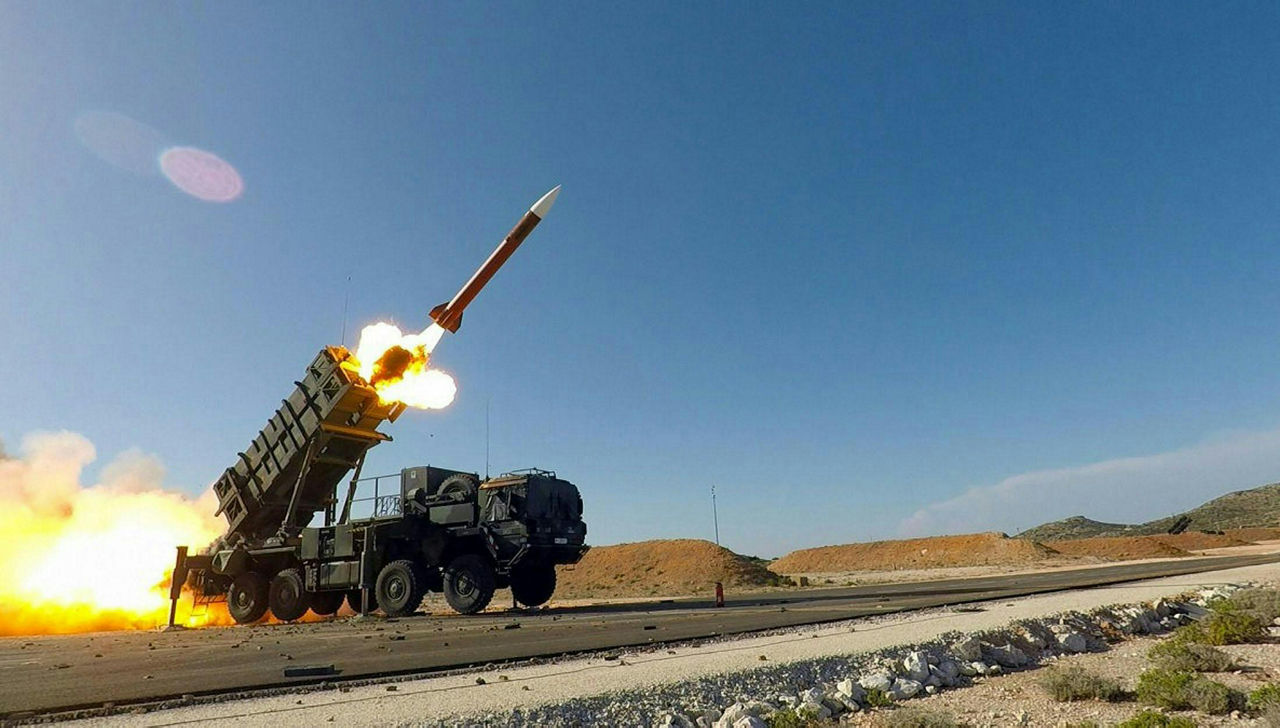
Several Allies offer additional integrated air and missile defence systems (such as Patriot or SAMP/T) or ships. Other Allies are also developing or acquiring BMD-capable assets, such as sensors, which could be made available for NATO BMD.
The Integrated Air and Missile Defence Policy Committee (IAMD PC) is the senior committee under the North Atlantic Council that oversees and coordinates all efforts at the political-military level to develop the NATO BMD capability. It also provides political-military advice on NATO BMD to the North Atlantic Council, as part of its overall mandate related to policy aspects of NATO IAMD.
The Conference of National Armaments Directors (CNAD) is the senior committee responsible for steering the BMD programme, aimed at developing the necessary command and control functionalities for NATO BMD.
NATO Military Authorities are responsible for developing a military doctrinal framework for BMD and related operational planning, training and execution.
Several other NATO senior committees address NATO BMD in the context of broader topics, such as civil preparedness and crisis management.
May 2001
NATO launches two parallel feasibility studies for a future Alliance Theatre Ballistic Missile Defence (TBMD) system.
November 2002
At the 2002 Prague Summit, Allied Leaders task a missile defence feasibility study to examine options for protecting Alliance forces, territory and populations against the full range of ballistic missile threats.
April 2006
The study concludes that a territorial ballistic missile defence capability is technically feasible.
April 2008
At the 2008 Bucharest Summit, Allied Leaders agree that the deployment of European-based US BMD assets should be an integral part of any future NATO-wide missile defence architecture.
September 2009
The United States announces a plan for its European Phased Adaptive Approach (EPAA).
November 2010
At the 2010 Lisbon Summit, Allied Heads of State and Government agree to address air and missile defence in a holistic way by developing a NATO Integrated Air and Missile Defence (NATO IAMD) framework, including the development of a territorial BMD capability. Prior to this, NATO’s BMD efforts were focused on Theatre Ballistic Missile Defence (TBMD) – that is, BMD designed to protect armed forces deployed to a theatre of operation. The shift to territorial BMD represents a broader effort to defend NATO forces, populations and territory in Europe. In this context, the EPAA and other national contributions are welcomed as valuable components of the NATO BMD architecture.
September 2011
Türkiye announces a decision to host a US-owned missile defence radar as part of the NATO BMD capability.
September 2011
Romania and the United States sign an agreement to host a US Aegis Ashore system in Romania as part of NATO's BMD capability.
September 2011
An agreement between Poland and the United States on hosting a US Aegis Ashore system in Poland enters into force.
October 2011
Spain and the United States announce an agreement to host US Aegis ships in the port of Rota, Spain, as another US contribution to NATO's ballistic missile defence capability.
April 2012
NATO successfully installs and tests the command and control architecture at Allied Air Command in Ramstein, Germany.
May 2012
At the 2012 Chicago Summit, the Alliance declares the achievement of the Interim NATO BMD Capability, which is an operationally significant first step. Allies also endorse a Deterrence and Defence Posture Review, which states that missile defence can complement the role of nuclear weapons in deterrence; it cannot substitute for them.
2013-2014
Between 2003 and 2013, in the framework of the NATO-Russia Council (NRC), NATO and Russia engage in discussions related to Theatre Ballistic Missile Defence (TBMD), including assessing possible levels of interoperability among TBMD systems of NATO Allies and Russia. In 2013, Russia unilaterally suspends discussions on missile defence in the NRC framework. In response to the illegal and illegitimate annexation of Crimea by Russia in 2014, NATO suspends all practical cooperation with Russia, including on ballistic missile defence.
2014
First US Aegis destroyer stationed in Rota, Spain in February; second US Aegis destroyer stationed in Rota in June.
2015
Third US Aegis destroyer stationed in Rota in April; fourth US Aegis destroyer stationed in Rota in September.
May 2016
The Aegis Ashore site in Deveselu, Romania is declared operational.
July 2016
At the 2016 Warsaw Summit, Allies declare the achievement of Initial Operational Capability of NATO BMD, which provides an enhanced capability to defend NATO populations, territory and forces across the south-eastern part of the Alliance from a potential ballistic missile attack.
July 2018
At the 2018 Brussels Summit, Allied Leaders confirm that the next major milestone will be the completion of the core element of NATO BMD Command and Control, to enhance the planning and execution of BMD operations. They also acknowledge that further work will be required to reach Full Operational Capability.
June 2022
At the 2022 Madrid Summit, Allied Heads of State and Government adopt the NATO 2022 Strategic Concept, the key policy document guiding the Alliance’s activities, including BMD. In reference to the new and changed strategic environment, the Strategic Concept notes that “authoritarian actors challenge our interests, values and democratic way of life. They are investing in sophisticated conventional, nuclear and missile capabilities, with little transparency or regard for international norms and commitments”. The Strategic Concept, therefore, emphasises that “NATO’s deterrence and defence posture is based on an appropriate mix of nuclear, conventional and missile defence capabilities, complemented by space and cyber capabilities. It is defensive, proportionate and fully in line with our international commitments”.
July 2024
At the 2024 Washington Summit, Allied Leaders declare the Enhanced Operational Capability of NATO’s Ballistic Missile Defence (BMD) and welcome the delivery of the Aegis Ashore site Redzikowo, Poland, which complements existing BMD assets in Romania, Spain and Türkiye, marking the completion of the US EPAA.
March 2026
NATO BMD identifies, tracks and intercepts ballistic missiles from Iran that targeted Türkiye. In response, NATO’s Supreme Allied Commander Europe orders an increase to the Alliance-wide ballistic missile defence posture, stating that NATO’s BMD posture will remain at this heightened level until the threat from Iran’s indiscriminate attacks across the region subsides.
10 July 2024
11 July 2018
12 July 2017
15 December 2016
9 July 2016