
Close
Back


From now on you can download videos from our website
If you would also like to subscribe to the newsletter and receive our latest updates, click on the button below.
Enter the email address you registered with and we will send you a code to reset your password.
The password must be at least 12 characters long, no spaces, include upper/lowercase letters, numbers and symbols.
Click the button to return to the page you were on and log in with your new password.
Updated: 07 May 2026
The primary role of the International Staff (IS) is to provide advice, guidance and administrative support to the national delegations at NATO Headquarters in Brussels, Belgium. The IS helps to implement decisions taken by the representatives of NATO member countries at different committee levels and, in doing so, supports the process of consensus-building and decision-making within the Alliance.
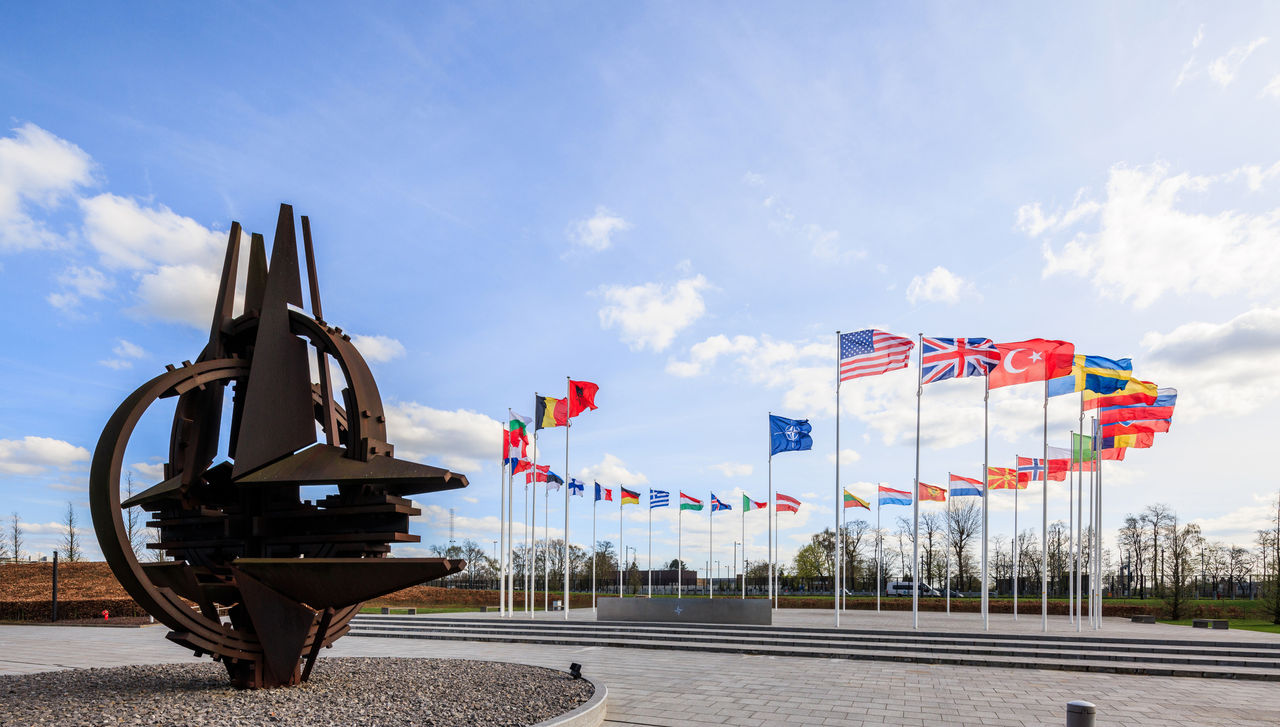
The International Staff (IS) is an advisory and administrative body that supports the North Atlantic Council (the Council or NAC) – NATO’s top political decision-making body. It is responsible for organising all sessions of the Council, preparing all necessary information for NATO’s members to discuss and debate, and taking action following the Council’s decisions. The IS produces a wide range of documents, from policy papers to background notes, reports and speeches, on issues relevant to NATO’s political and military agenda. It also supports and advises all of the NAC’s subordinate committees, preparing and following up on their discussions and decisions, and thereby facilitating the political consultation process.
The IS liaises closely with NATO’s International Military Staff (IMS), which is also located at NATO Headquarters in Brussels. The IMS is the executive body of the Military Committee – NATO’s senior military authority.
Members of the IS owe their allegiance to the Organization throughout the period of their appointment. They are either recruited directly by the Organization or seconded by their governments.
Vacancies within the IS are announced on NATO’s website, and are open to the citizens of all member countries.
The International Staff includes the Office of the Secretary General; six divisions, each headed by an Assistant Secretary General; and 10 Independent Offices.
The Office of the Secretary General (OSG) comprises: the Secretary General himself, as well as the Deputy Secretary General; the Chief of Staff, Senior Deputy Director, Deputy Directors and their support team; the Director-General for Management and his team; and the Policy Planning Unit.
This joint civil-military division focuses on cyber and hybrid threats, data and artificial intelligence, and NATO’s digital transformation. CDT not only shapes policy in these areas but also defines requirements in capability development, capability coherence and interoperability. It also leads in certain aspects of operational planning, especially in the digital and cyber fields.
This division focuses on innovation, relations with industry, and emerging and disruptive technologies. It facilitates the development and adoption of cutting-edge capabilities for the Alliance, including by promoting standardisation and interoperability, and fostering a capable transatlantic defence industrial base.
This division develops and implements the defence policy and planning dimension of NATO’s fundamental security tasks. This includes defence planning, the Alliance's nuclear policy, enablement and resilience, as well as certain aspects of operational planning, including Integrated Air and Missile Defence.
This joint civil-military division produces strategic analytical reports based on intelligence-sharing between member country intelligence services and the Alliance. These reports can cover areas such as terrorism and its links with other transnational threats. JISD is also responsible for coordinating, monitoring and implementing NATO's security policy, for overall security within NATO and for the NATO Headquarters Security Service.
This division provides the operational capability required to meet NATO's core tasks, including deterrence and defence, and crisis prevention and management. Its responsibilities include NATO's crisis management and peacekeeping activities, civil preparedness and exercises, and defence institution building and capacity-building. It also oversees NATO’s Science for Peace and Security (SPS) programme.
This division provides political advice and policy guidance to the NAC and its subordinate committees. It has the lead role in the political aspects of NATO's core security tasks, including global, regional and security affairs, as well as relations with other international organisations and partner countries. It also deals with arms control issues, disarmament and the non-proliferation of weapons of mass destruction.
In addition to the six divisions, the IS also includes 10 independent offices:
The IS was created in 1951 to support the NAC. It was made responsible for the preparation and follow-up of action in all matters of the NAC. The Agreement on the Status of the North Atlantic Treaty Organization defined its status, which National Representatives and International Staff negotiated and signed in September 1951.