Close
Back


From now on you can download videos from our website
If you would also like to subscribe to the newsletter and receive our latest updates, click on the button below.
Enter the email address you registered with and we will send you a code to reset your password.
The password must be at least 12 characters long, no spaces, include upper/lowercase letters, numbers and symbols.
Click the button to return to the page you were on and log in with your new password.
Updated: 08 July 2026
The NATO Intelligence, Surveillance and Reconnaissance Force (NISRF) is a multinational force that provides timely, high-quality intelligence products to NATO decision-makers and member countries. Originally established in 2015 as the NATO Alliance Ground Surveillance Force, NISRF conducts and supports unified ISR operations as tasked by Supreme Headquarters Allied Powers Europe (SHAPE) in coordination with Allied Air Command (AIRCOM). In this role, NISRF makes a significant contribution to the operational readiness of the Alliance.

NATO Intelligence, Surveillance and Reconnaissance Force facilities at the Main Operating Base in Sigonella, Italy
The NATO ISR Force is a foundational element of NATO's Joint Intelligence, Surveillance and Reconnaissance (JISR) system. It acts as a Federated Processing, Exploitation and Dissemination (FEDPED) intelligence node for the Alliance – receiving intelligence collection and exploitation taskings from SHAPE and AIRCOM, gathering the required information and synthesising it into useful intelligence, and sharing this intelligence with NATO leadership and Allies.
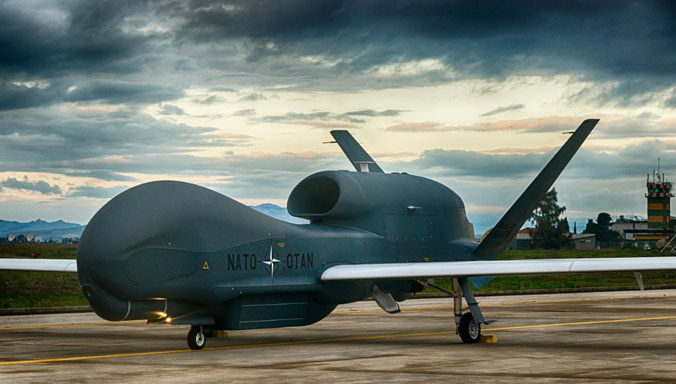
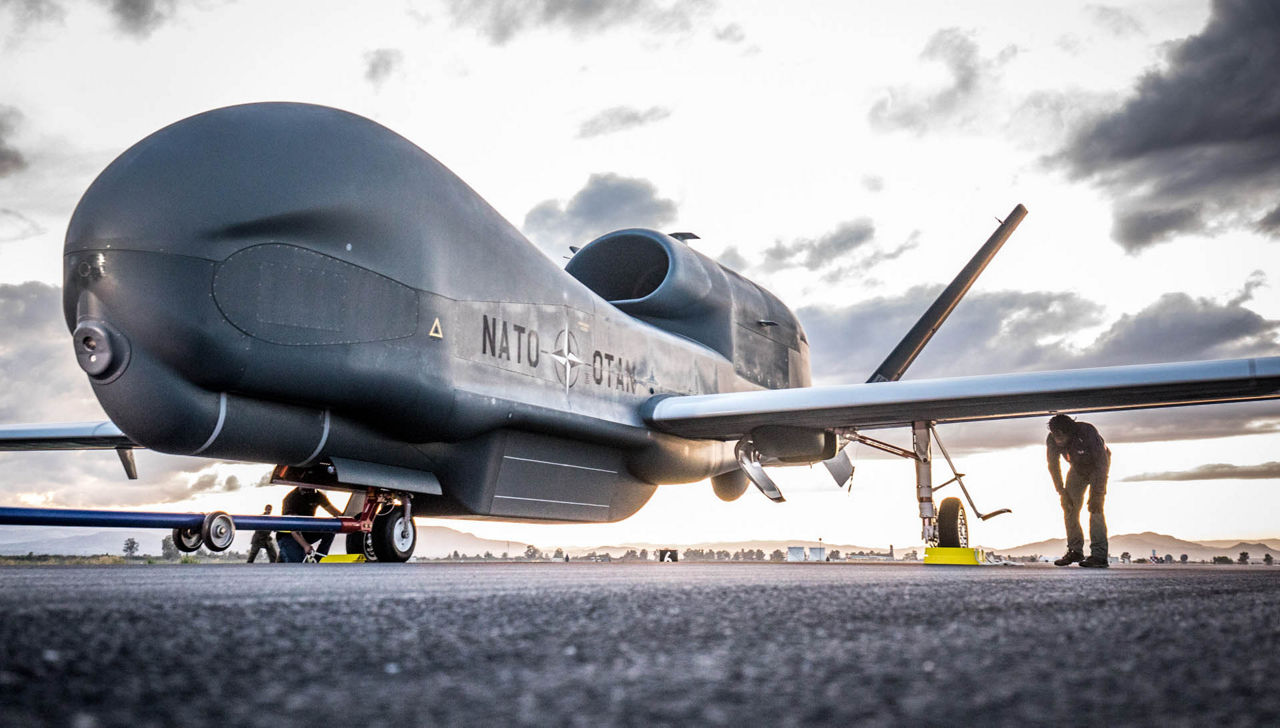
NISRF conducts organic collection operations via its Alliance Ground Surveillance (AGS) fleet of five RQ-4D "Phoenix" uncrewed aerial vehicles (UAVs); the RQ-4D’s synthetic aperture radar (SAR) allows the Force to perform reconnaissance and surveillance autonomously and independently of the weather, day and night – a unique and critical capability for the Alliance. NISRF also receives surveillance and reconnaissance data from NATO member countries; the Force’s intelligence professionals analyse, exploit and fuse this data with information from other data sources to produce timely, high-value intelligence products.

NISRF is divided into three main components: the NISRF Operations Wing, the NISRF Support Wing and the NISRF Training Center.

The NISRF Operations Wing serves as the cornerstone of the Force, responsible for the planning, execution and coordination of all intelligence, surveillance and reconnaissance missions. This entails the operation of the Force’s RQ-4D UAVs, the reception and processing of surveillance data from diverse sources, and the generation of high-quality intelligence products tailored to the specific requirements of NATO decision-makers. The Operations Wing is staffed by intelligence analysts, sensor operators and mission planners who provide timely and accurate information to support the Alliance's strategic and operational objectives.

The NISRF Support Wing provides logistical and technical support to the Force's operations. This includes the maintenance of aircraft and equipment, the management of facilities, and the assurance that the Force possesses the necessary resources to effectively execute its missions. The Support Wing is staffed by a team of technicians, engineers and logistics experts who collaborate closely with the Operations Wing to ensure that all requirements are met.

The NISRF Training Center offers comprehensive training programmes for all the career fields of personnel assigned to the Force, including Joint ISR analysts, pilots, sensor operators and maintainers. The training is designed to meet the evolving needs of the Force and to ensure that NATO personnel are equipped to address the challenges of the contemporary ISR environment.

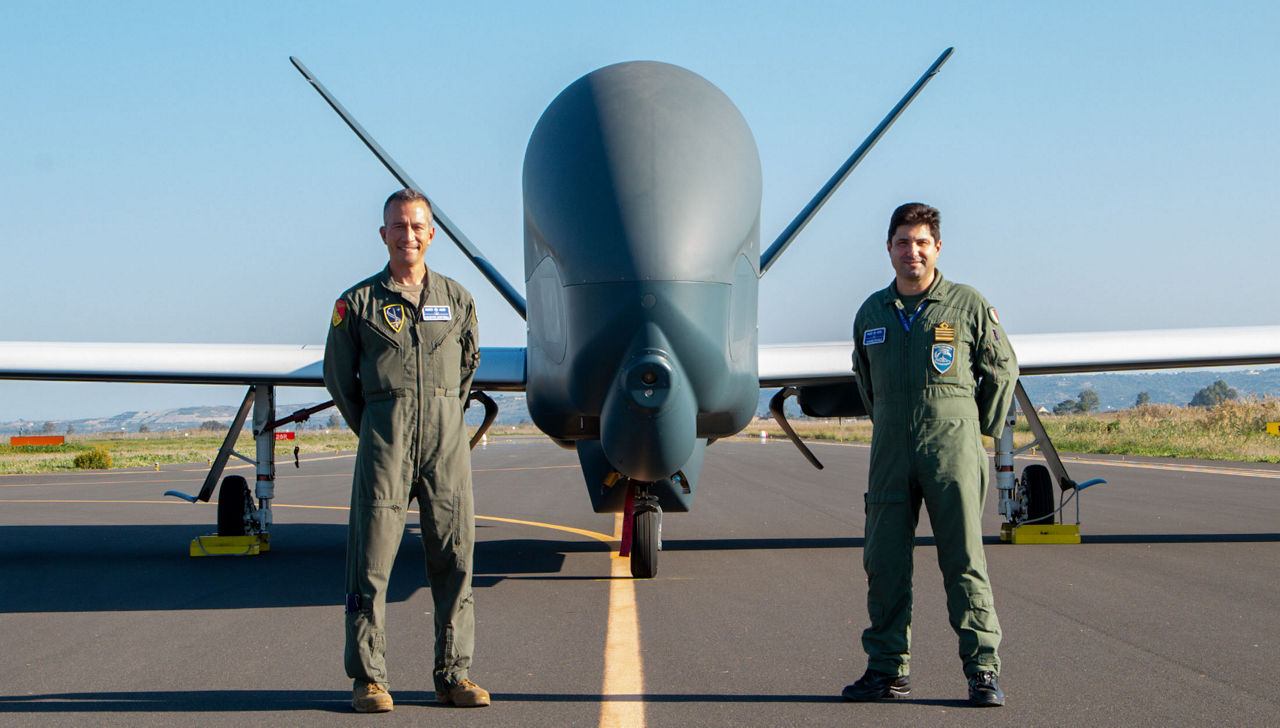
NISRF has a fleet of five NATO RQ-4D “Phoenix” remotely piloted aircraft. The aircraft are equipped with a multi-platform radar technology insertion programme (MP-RTIP) and synthetic aperture radar (SAR) ground surveillance radar sensors, as well as an extensive suite of line-of-sight and beyond-line-of-sight, long-range, wideband data links.
General characteristics of the NATO RQ-4D remotely piloted aircraft:
The NATO Intelligence, Surveillance and Reconnaissance Force (NISRF) was established in September 2015, at that time under the name “NATO Alliance Ground Surveillance (AGS) Force”, at Naval Air Station Sigonella in Sicily, Italy.
Between September and December 2015, several important milestones were achieved:
From 2016 to 2019, a number of further test flights took place. These included the first flight remotely controlled from the Main Operating Base in Sigonella at the end of 2017.
Throughout 2018 and 2019, temporary infrastructure at the Main Operating Base was put in place. The construction of permanent facilities for the Force began on the site and was completed in 2022.
During this set-up period, pilots, Joint ISR analysts, sensor operators and maintainers received training at the Main Operating Base, marking the creation of the Force’s Training Center in Sigonella.
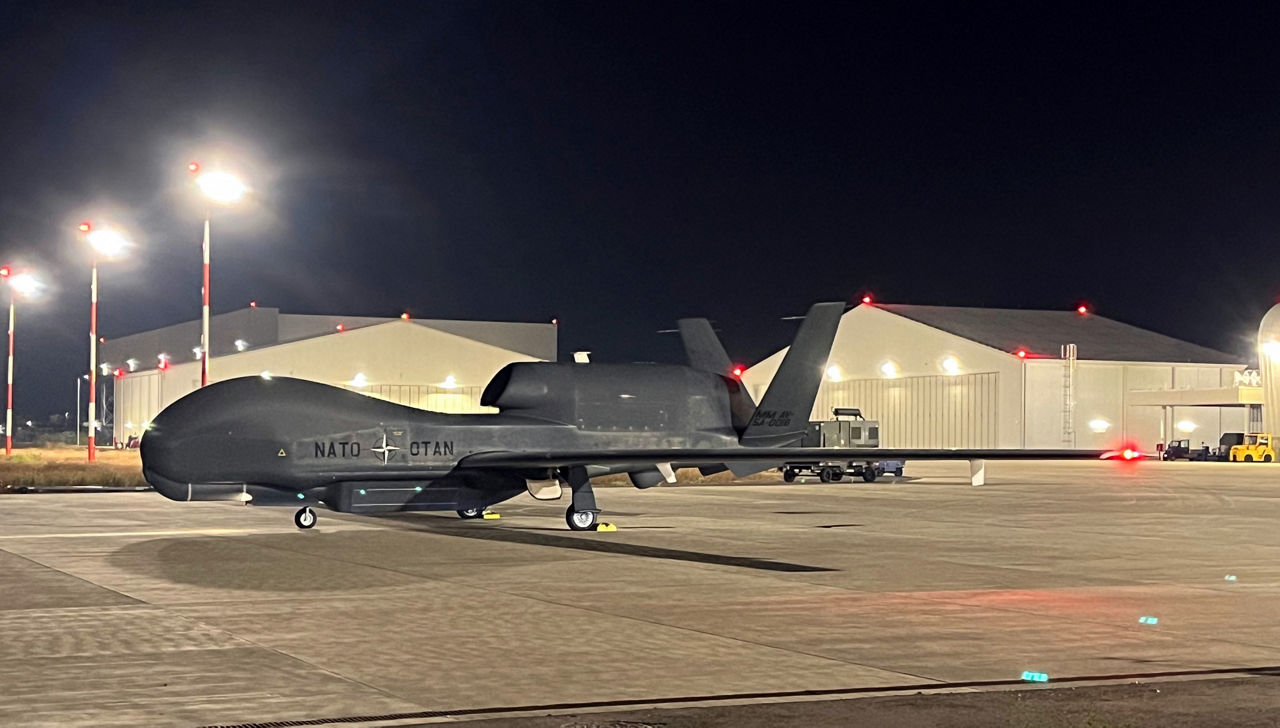
The first of the Force’s five NATO RQ-4D aircraft landed at its new permanent home in Sigonella, Italy on 21 November 2019. The first AGS ferry flight from California in the United States to Sicily in Italy marked the implementation of a key multinational project for the procurement of state-of-the art equipment. Following arrival, a system-level performance verification phase was undertaken in order to ensure full compliance of the system with NATO requirements. The second NATO RQ-4D aircraft landed in Sigonella on 19 December 2019, followed by the remaining three on 15 July 2020, 26 July 2020 and 12 November 2020.
Handover of the entire AGS system to the NATO AGS Force commenced in November 2020. Initial operational capability was achieved on 15 February 2021. Full handover was completed on 31 March 2022, when AGS was fully transferred from the 15 AGS acquiring
countries (organised through the NATO Alliance Ground Surveillance Management Agency or NAGSMA) to all NATO Allies and the NATO Support and Procurement Agency (NSPA).
In September 2023, the NATO Alliance Ground Surveillance (AGS) Force was re-designated as the NATO Intelligence, Surveillance and Reconnaissance Force (NISRF). This change reflected the broadening scope of NISRF beyond ground surveillance to also include a critical analytic capability that processes, exploits and disseminates intelligence information to NATO Allies.
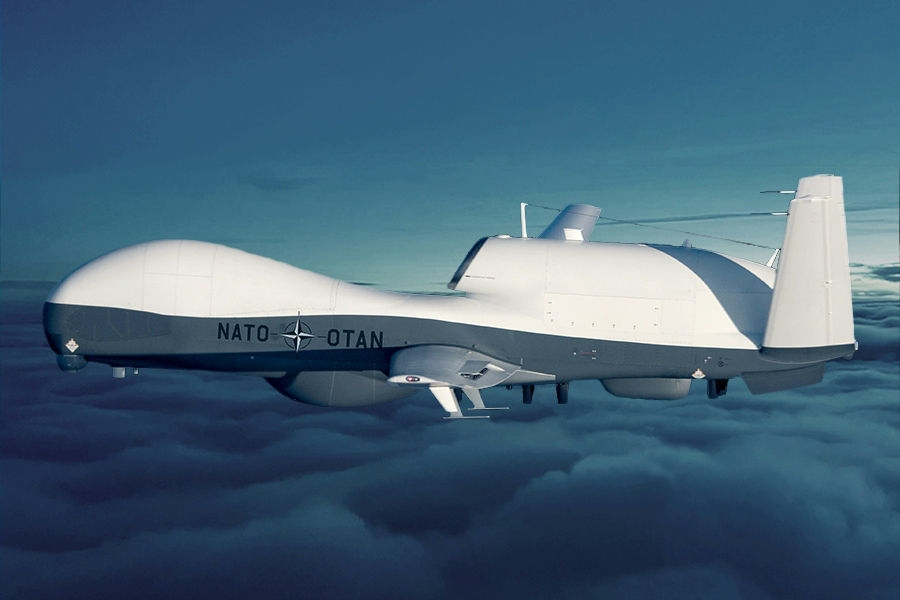
At the 2026 NATO Summit Defence Industry Forum in Ankara, four Allies – Denmark, Finland, Germany and Norway – announced the procurement of up to five MQ-4C Triton high-end, high-altitude and long-endurance uncrewed aircraft to enhance NISRF. Triton aircraft will complement the existing AGS fleet by providing maritime surveillance and help with early threat detection and protection of sea lines of communication. It will also support operations in demanding regions, including in the Arctic and the High North.
Note: Prior to September 2023, the NATO Intelligence, Surveillance and Reconnaissance Force (NISRF) was named the NATO Alliance Ground Surveillance (AGS) Force. The timeline below preserves the AGS name until that point.
Originating from NATO’s Defence Planning Committee in 1992, the AGS programme was defined as a capability acquisition effort in 1995, when NATO Defence Ministers agreed that “the Alliance should pursue work on a minimum essential NATO-owned and -operated core capability supplemented by interoperable national assets.”
The AGS programme was to provide NATO with a complete and integrated ground surveillance capability that would offer the Alliance and its member countries rapid unrestricted and unfiltered access to ground surveillance data, and in an interoperable manner. It was to include an air segment comprising airborne radar sensors, and a ground segment comprising fixed, transportable and mobile ground stations for data exploitation and dissemination, all seamlessly interconnected through high-performance data links.
From the outset, the AGS capability was expected to be based on one or more types of ground surveillance assets either already existing or in development in NATO member countries, an approach that later also came to include proposed developmental systems based on American or European radar. However, all those approaches failed to obtain sufficient support by the Allies to allow their realisation. In 2001, the North Atlantic Council decided to revitalise AGS through a developmental programme available to all NATO countries and a corresponding cooperative radar development effort called the Transatlantic Cooperative AGS Radar (TCAR).
In 2004, NATO decided to move ahead with what was labelled a mixed-fleet approach. The air segment was to include Airbus A321 crewed aircraft and Global Hawk uncrewed aerial vehicles (UAVs), both carrying versions of the TCAR radar, while the ground segment was to comprise an extensive set of fixed and deployable ground stations.
Due to declining European defence budgets, NATO decided in 2007 to discontinue the mixed-fleet approach and instead to move forward with a simplified AGS system where the air segment was based on the off-the-shelf Global Hawk Block 40 UAV and its associated MP-RTIP sensor. The ground segment, which would largely be developed and built by European and Canadian industry, remained virtually unchanged as its functional and operational characteristics were largely independent of the actual aircraft and sensor used.
In February 2009, the NATO Allies participating in the AGS programme started the process of signing the Programme Memorandum of Understanding (PMOU). This was a significant step forward in realising an urgently required, operationally essential capability for NATO. The NATO Alliance Ground Surveillance Management Agency (NAGSMA) was established in September 2009, after all participating countries had agreed on the PMOU. The PMOU served as the basis for the procurement of this new NATO capability.
Another important milestone for the AGS programme was the 2010 Lisbon Summit, where the strong operational need for a NATO owned and operated AGS capability was reconfirmed with NATO’s 2010 Strategic Concept. AGS also featured in the Lisbon Package as one of the Alliance’s most pressing capability needs.
On 3 February 2012, the North Atlantic Council decided on a way ahead to collectively cover the costs for operating AGS for the benefit of the Alliance. The decision to engage NATO common funding for infrastructure, satellite communications and operations and support paved the way for awarding the AGS acquisition contract. In addition, an agreement was reached to make the UK Sentinel system and the future French Heron TP system available as national contributions in kind, partly replacing financial contributions from those two Allies.
On the margins of the 2012 Chicago Summit, NATO Allies took an important step towards the delivery of a NATO owned and operated ground surveillance and reconnaissance capability. A procurement contract for the AGS system was signed on 20 May 2012, in preparation for the delivery of a vital capability that would be made available to all NATO member countries. NAGSMA, representing the 15 AGS acquiring countries (Bulgaria, Czechia, Denmark, Estonia, Germany, Italy, Latvia, Lithuania, Luxembourg, Norway, Poland, Romania, Slovakia, Slovenia and the United States), awarded the prime contract for the system to Northrop Grumman. The company's primary industrial team included Airbus Defence and Space (Germany), Leonardo (Italy) and Kongsberg (Norway), as well as leading defence companies from all acquiring countries, which contributed to the delivery of the AGS system. The AGS acquisition contract included the purchase and initial operation and maintenance of uncrewed aircraft equipped with advanced ground surveillance radar sensors.
Designated the AGS NATO RQ-4D, NATO’s remotely piloted aircraft is based on the US Air Force Block 40 Global Hawk. It has been uniquely adapted to NATO requirements to provide a state-of-the-art ISR capability to NATO.
In September 2015, the NATO AGS Force was activated, meaning that Allies formally agreed the configuration of the unit (number of staff, their rank structure, etc.) and agreed that its Main Operating Base would be established at Naval Air Station Sigonella in Sicily, Italy.
14 September 2023
12 November 2020