Close
Back


From now on you can download videos from our website
If you would also like to subscribe to the newsletter and receive our latest updates, click on the button below.
Enter the email address you registered with and we will send you a code to reset your password.
The password must be at least 12 characters long, no spaces, include upper/lowercase letters, numbers and symbols.
Click the button to return to the page you were on and log in with your new password.
Updated: 07 March 2024
Effective strategic airlift capabilities are vital to ensuring that NATO Allies and partners are able to deploy their forces and equipment rapidly to wherever they are needed. That is why some NATO Allies and partners are pooling their resources to enable the Alliance to benefit from commonality, interoperability and economies of scale.

The Strategic Airlift Capability (SAC) maximises efforts through the sharing of resources and pooling of capacity among its 12 participating countries.

The SALIS contract provides participating countries with assured access to Antonov AN-124-100 aircraft, capable of carrying up to 120 tons of cargo.
The Strategic Airlift International Solution (SALIS) is a Support Partnership of nine countries chartering Antonov AN-124-100 aircraft, providing assured access to up to five aircraft – three of them mission-ready within a few days in case of crisis and an additional two subject to availability – in support of national, NATO and EU operations and missions.
A Support Partnership – managed by the NATO Support and Procurement Agency (NSPA) – is a multinational cooperation mechanism established on the initiative of two or more NATO member countries wishing to organise common support and services activities.
In October 2021, the NSPA signed a five-year contract with Antonov Logistics Salis, a company based in Germany. It replaces the previous SALIS contracts, of which the last one ended in December 2021. In addition to the AN-124 aircraft, the current contract also provides cargo capacity on other large cargo aircraft, including the IL-76 (ICAO Chapter IV), subject to availability.
Under this contract, SALIS participating countries are provided with assured access to strategic airlift capability for outsized cargo based on agreed quota of flight hours per year.
The SALIS contract provides assured access to one Antonov AN-124-100 aircraft on 72 hours' notice, access to an additional aircraft on six days' notice, to an additional AN-124-100 aircraft on nine days' notice and to two additional AN-124-100 subject to availability. The consortium countries have committed to using the aircraft for a minimum of 1,500 flight hours per year. In 2022, a total of 2,103 flight hours were provided through the SALIS contract.
A single Antonov AN-124-100 can carry up to 120 tons of cargo. SALIS participating countries have used Antonov aircraft in the past to transport equipment to and from Afghanistan, deliver aid to the victims of the October 2005 earthquake in Pakistan, and airlift African Union peacekeepers in and out of Darfur.
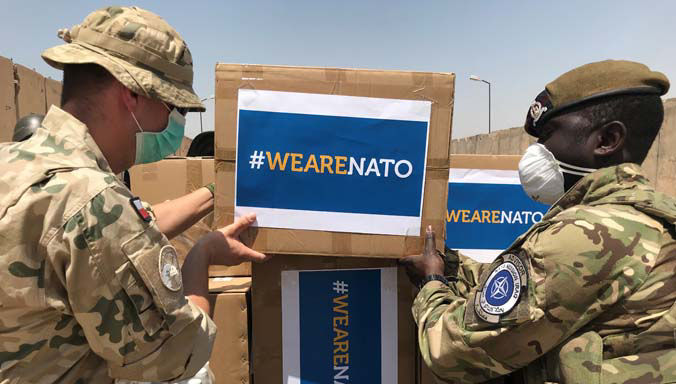
The SALIS is used by its participating countries almost on a daily basis in national, NATO and EU operations and missions. During the COVID-19 pandemic, the SALIS played a vital role in helping participating countries transport urgently needed medical equipment. The SALIS also helped some participating countries evacuate equipment during the withdrawal of international forces from Afghanistan in 2021. It is currently supporting participating countries to deliver equipment to NATO's multinational battlegroups in Central and Eastern Europe, reinforcing NATO's military presence in the east of the Alliance.
The consortium consists of nine NATO Allies: Belgium, Czechia, France, Germany, Hungary, Norway, Poland, Slovakia and Slovenia.
The capability is coordinated on a day-to-day basis by the Strategic Airlift Coordination Cell, which is co-located with the Movement Coordination Centre Europe (MCCE) based in Eindhoven, the Netherlands.
NSPA manages the SALIS contract on behalf of the participating countries and provides support to the SALIS Support Partnership.

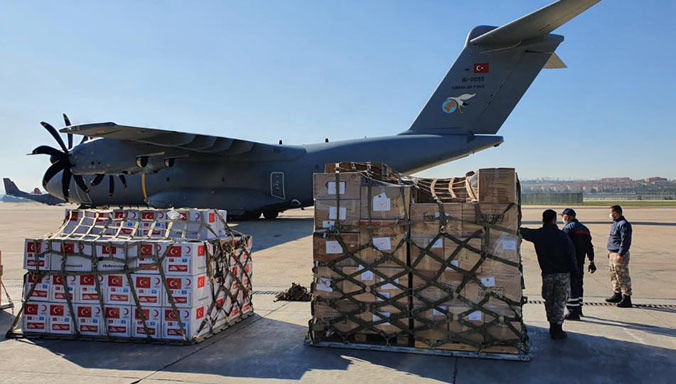
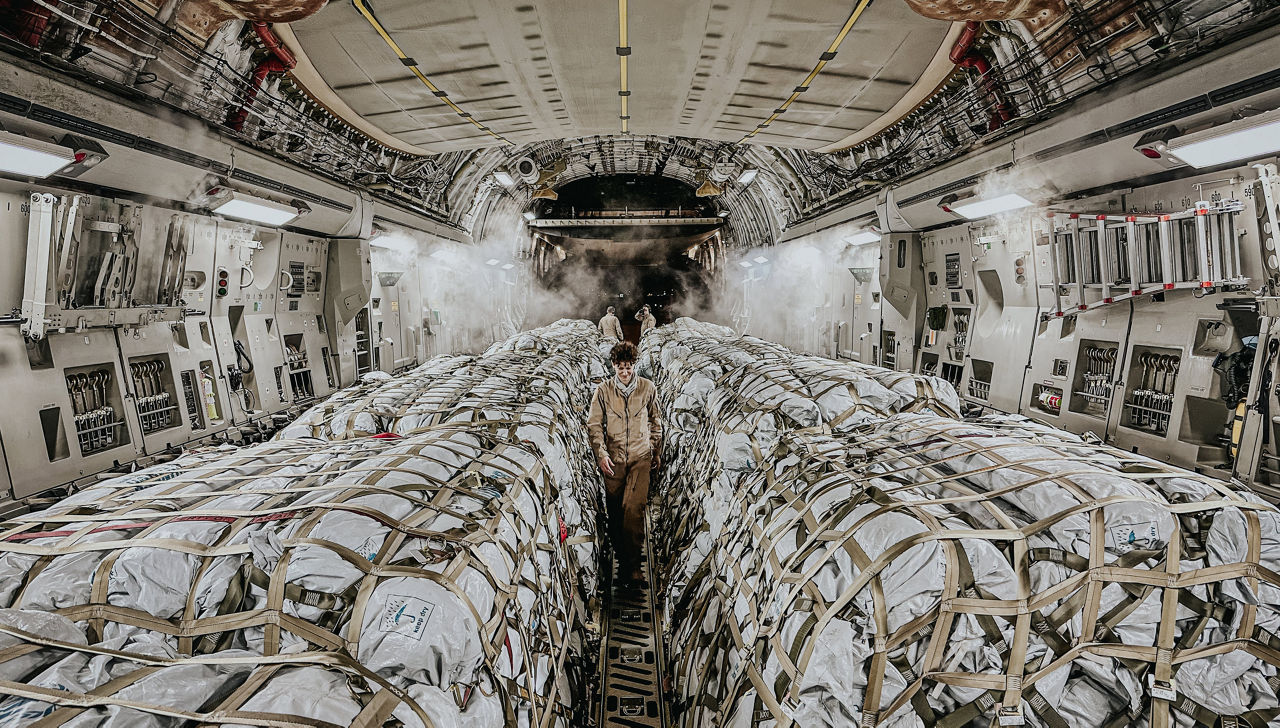
The Strategic Airlift Capability (SAC) transported 500 humanitarian tents amounting to 30 tons to Incirlik, Türkiye as part of the relief effort after the devastating earthquakes in 2023.
The second initiative aimed at providing NATO Allies and partners with access to strategic airlift is the Strategic Airlift Capability (SAC), which has procured three Boeing Globemaster III C-17 transport aircraft on behalf of a group of 12 NATO Allies.
The first C-17 was delivered in July 2009 with the second and third aircraft following in September and October 2009, respectively. The SAC's operational arm, the military Heavy Airlift Wing (HAW) at the Hungarian Defence Forces 47th Air Base in Pápa, operates the aircraft.
The HAW is operated by military personnel from all SAC countries, and its missions support national requirements. Operations have included support to the International Security Assistance Force (Afghanistan), the Kosovo Force (KFOR), Operation Unified Protector in Libya, humanitarian relief in Haiti and Pakistan, African peacekeeping, and assistance to the Polish authorities following the Smolensk air disaster in Russia. Two humanitarian SAC flights were organised to bring relief to victims in Barbados and Guadalupe in the aftermath of Hurricane Irma in 2017.
The SAC also transported essential personal protective equipment to several consortium members during the peak of COVID-19 in 2020. In 2021, SAC deployed flights to Afghanistan to evacuate people (constituting personnel from Allied and partner countries and NATO- and SAC-affiliated Afghan staff and their families) following the collapse of the Afghan government and the Afghan National Defence and Security Forces. In 2022, the SAC transported firefighting units from Romania to France to help fight wildfires.
In response to the devastating earthquakes that struck Türkiye in February 2023, the SAC flew nine missions to transport 340 tons of urgent equipment and personnel to the country on behalf of Finland, the Netherlands, Romania, Sweden and the United States.
The Boeing Globemaster III C-17 (nicknamed "The Moose") is one of the world's most versatile cargo aircraft, capable of carrying 77,000 kilogrammes (169,776 pounds) of cargo over 4,450 kilometres (2,400 nautical miles). The aircraft can perform tactical airlift, airdrop missions and aeromedical evacuations in the most difficult environments and austere conditions.
The three planes of the SAC fleet are configured and equipped to the same general standard as C-17s operated by the US Air Force. The crews and support personnel are trained for mission profiles and standards agreed by the participating countries.
These strategic lift aircraft are used to meet national requirements, but could also be allocated for NATO, United Nations and European Union operations and missions, or for other international purposes based on a participating country's request.
The participants include 12 NATO Allies (Bulgaria, Estonia, Finland, Hungary, Lithuania, the Netherlands, Norway, Poland, Romania, Slovenia, Sweden and the United States). Membership in the airlift fleet remains open to other countries upon agreement by the consortium members.
The Multinational SAC Steering Board has the overall responsibility for the governance and oversight of the programme and formulates its requirements. The NATO Support and Procurement Agency (NSPA) Airlift Management Programme (NAMP) manages and supports the SAC airlift assets and provides administrative support to the Heavy Airlift Wing at Pápa Airbase.

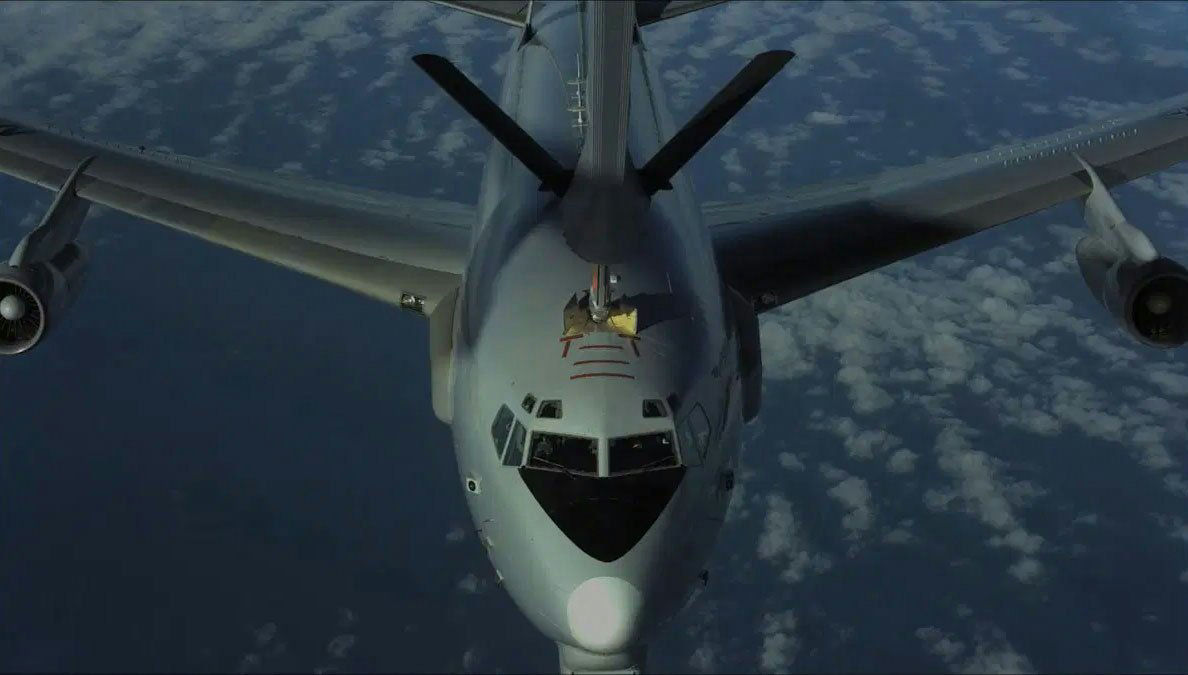
The Multinational Multi Role Tanker Transport (MRTT) Fleet (MMF) provides strategic transport, air-to-air refuelling and medical evacuation capabilities to participating countries.
The Multinational Multi Role Tanker Transport (MRTT) Fleet (MMF) provides strategic transport, air-to-air refuelling and medical evacuation capabilities to participating countries.
The programme is based on a pooling and sharing concept, outlined in a memorandum of understanding in which participating countries pool the aircraft and share costs while benefitting from economies of scale.
The 111 tons basic fuel capacity enables the aircraft to excel in air-to-air refuelling missions without the need for any additional fuel tanks. Moreover, it can provide a maximum fuel flow rate of approximately 2,200 litres a minute, using a boom or a hose and drogue mechanism, and can quickly fuel all of the aircraft in inventory with the MMF countries (F-16, F-35, C-17, Eurofighter, Tornado and Gripen) and most of the other aircraft used within NATO.
The MRTT fleet is one of NATO's High Visibility Projects, whose aim is to leverage commonality of equipment, training, doctrine and procedures to assure economies of scale and interoperability.
The MRTT fleet currently consists of seven aircraft already in service. The delivery of two more aircraft is expected in 2024, while the 10th aircraft will be delivered at the end of 2026.
Six NATO Allies participate in the MRTT: Belgium, Czechia, Germany, Luxembourg, the Netherlands and Norway. The MRTT capability also stands out as a unique example of effective cooperation between NATO and the European Union in delivering critical capabilities.
The fleet is owned by NATO and managed by the NATO Support and Procurement Agency (NSPA). The NSPA MMF team is based at the NSPA headquarters in Capellen, Luxembourg, but others provide support from other locations, including Eindhoven, Cologne-Wahn, Bonn and Getafe. The NSPA provides this support to participating countries through its Multinational Multi Role Tanker Transport Fleet Support Partnership.
The fleet is operated by the Multinational Multirole Tanker Transport Unit (MMU), comprising military personnel from participating countries. The unit is based at the Main Operating Base (MOB) in Eindhoven, the Netherlands, and the Forward Operating Base (FOB) in Cologne, Germany.
21 February 2023