Close
Back


From now on you can download videos from our website
If you would also like to subscribe to the newsletter and receive our latest updates, click on the button below.
Enter the email address you registered with and we will send you a code to reset your password.
The password must be at least 12 characters long, no spaces, include upper/lowercase letters, numbers and symbols.
Click the button to return to the page you were on and log in with your new password.
Updated: 14 December 2017
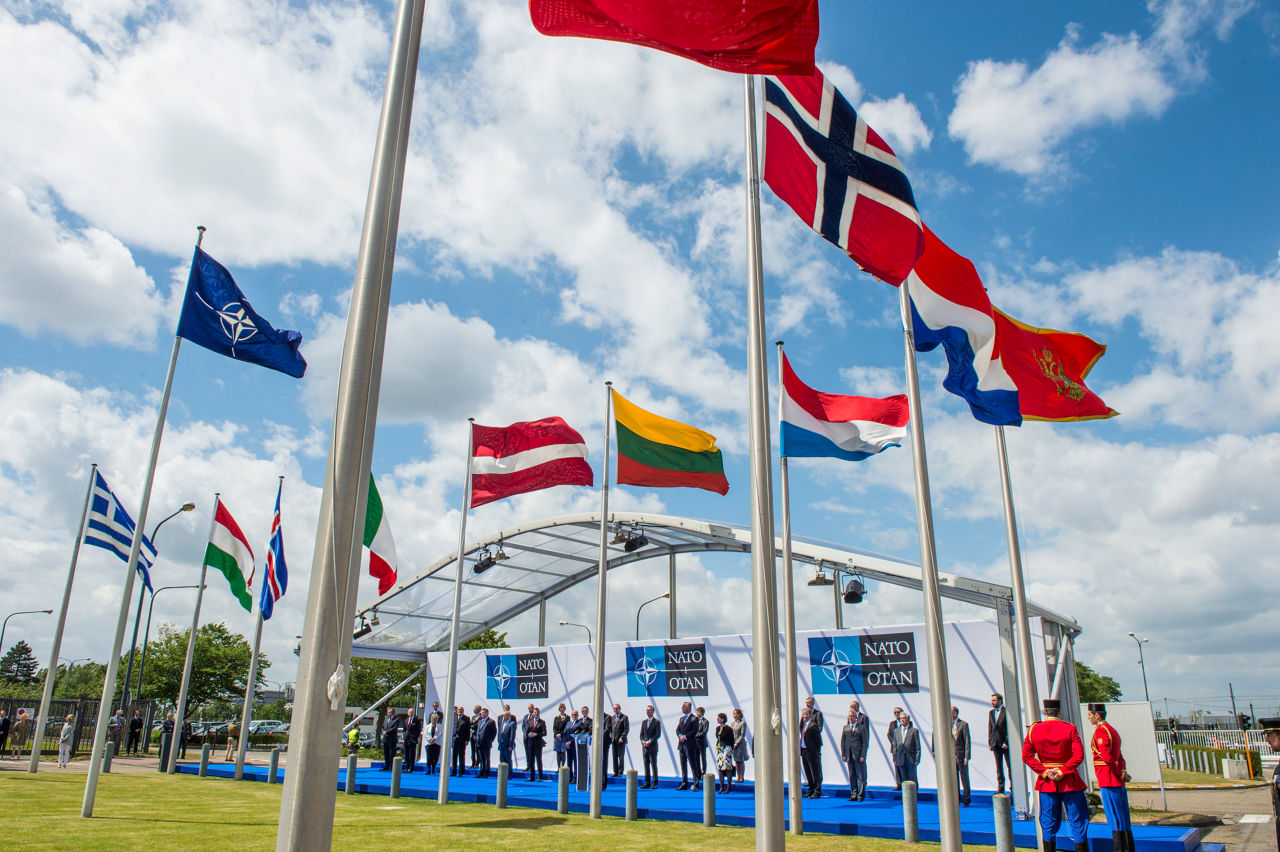
Montenegro joined the Alliance on 5 June 2017, when the instrument for its accession to the Washington Treaty (or the North Atlantic Treaty) was formally deposited with the US State Department.

The Allies are committed to keeping NATO’s door open to Western Balkan partners that wish to join the Alliance, share its values and are willing and able to assume the responsibilities and obligations of membership. Euro-Atlantic integration is seen as the best way to ensure long-term, self-sustaining security and stability in the region.
The Membership Action Plan (MAP) is a NATO programme of advice, assistance and practical support tailored to the individual needs of countries wishing to join the Alliance. Participation in the MAP does not prejudge any decision by the Alliance on future membership.
Montenegro began its first MAP cycle in the autumn of 2010 with the submission of its first Annual National Programme. This process allowed the country to identify key challenges that needed to be addressed, including reinforcing the rule of law, meeting NATO standards in security sector reforms and fighting corruption and organised crime.
The Allies decided in December 2015 to invite the country to being accession talks to join the Alliance. They stated that they expect further progress on reforms, especially in the area of rule of law and that NATO will continue to provide support and assistance though the MAP.
On 19 May 2016, Allied foreign ministers signed the Accession Protocol for Montenegro. Following the signature of the Protocol, Montenegro had 'Invitee' status, allowing its representatives to participate as observers in Allied meetings.
Once all 28 Allies had ratified the Accession Protocol, Montenegro could accede to the Washington Treaty and become a full member of the Alliance. This was formalised with the deposit of the instrument of accession with the US State Department.
An important focus of NATO’s cooperation with Montenegro is to develop the ability of the country’s forces to work together with forces from NATO countries and other partners, especially in peacekeeping and crisis-management operations. Participation in joint planning, training and military exercises within the framework of the PfP programme is essential in this regard.
In February 2010, Montenegro decided to contribute troops to the NATO-led International Assistance Force (ISAF) in Afghanistan, which were deployed there together with a Croatian unit. Following the completion of ISAF’s operation at the end of 2014, Montenegro is currently supporting the follow-on mission (‘Resolute Support’) to train, advise and assist the Afghan security forces. In support of past efforts to equip and train the Afghan National Army, Montenegro donated more than 1,600 weapons and 250,000 rounds of ammunition. The government has also pledged financial support for the future development of the Afghan National Security Forces.
Defence and security sector reforms continue to be key elements of cooperation. The Alliance as a whole and individual Allies have considerable expertise that the country can draw upon in this area. The Allies also support the wider democratic, institutional and judicial reform process underway in Montenegro.
In 2013, Montenegro conducted a new Strategic Defence Review and produced a long-term development plan for its army. These documents have provided a basis for a comprehensive reform of the country’s defence system.
The country’s participation in the PfP Planning and Review Process (PARP) helps to develop forces that will be fully capable of conducting peacekeeping and relief operations with NATO and partner forces.
Montenegro is also participating in NATO’s Building Integrity Programme to strengthen good governance in the defence and security sector. This Programme seeks to raise awareness, promote good practice and provide practical tools to help countries enhance integrity and reduce risks of corruption in the security sector by strengthening transparency and accountability.
The country is also working with NATO to promote the implementation of United Nations Security Council Resolution (UNSCR) 1325, which recognises the disproportionate impact that war and conflicts have on women and children. UNSCR 1325 calls for full and equal participation of women at all levels in issues ranging from early conflict prevention to post-conflict reconstruction, peace and security.
Montenegro is participating in various cyber defence initiatives.
Surplus and obsolete armaments and ammunition remain a significant issue for Montenegro in terms of both security and environmental concerns. NATO Allies and partners have previously supported practical Trust Fund projects in this area, including a project in both Serbia and Montenegro to remove anti-personnel landmines. A new Trust Fund project with Montenegro got under way in the summer of 2016, aimed at supporting the safe demilitarization of about 416 tonnes of ammunition.
In cooperation with NATO’s Euro-Atlantic Disaster Response Coordination Centre (EADRCC), Montenegro is establishing a national early warning system, building a national crisis situation centre and developing its emergency response capabilities.
Montenegro hosted a consequence-management field exercise, “Crna Gora 2016”, from 31 October to 4 November 2016. The exercise was jointly organised by the EADRCC and the Montenegrin Directorate for Operational Affairs (Section for Emergency Management at the Ministry of Interior).
Montenegro has been actively engaged within the framework of the NATO Science for Peace and Security (SPS) Programme since 2006. The SPS Programme enables close collaboration on issues of common interest to enhance the security of NATO and partner countries. By facilitating international efforts, in particular with a regional focus, the Programme seeks to address emerging security challenges, support NATO-led operations and advance early warning and forecast for the prevention of disasters and crises.
Today, scientists and experts from Montenegro are working to address a range of security issues, notably in the fields of environmental security and disaster forecast and prevention of natural catastrophes.
Montenegro’s journey to NATO membership requires good public access to information on the benefits of cooperation and membership with NATO. NATO’s Public Diplomacy Division cooperates actively with the Montenegrin authorities as well as with a wide range of civil society partners, media representatives, members of parliament, local municipalities, etc. Public diplomacy programmes, such as visits to NATO Headquarters, seminars, speaking tours and educational youth programmes, aim to raise public awareness about NATO and the membership process.
Since regaining its independence in 2006, Montenegro has been undertaking a wide-ranging programme of structural and institutional reforms. The instruments available within the PfP greatly assist in this process. Initially the country chose to strengthen the reform focus of cooperation by developing an Individual Partnership Action Plan (IPAP) with NATO in 2008. It moved through a successful IPAP cycle from 2008 to 2010, before shifting in the autumn of 2010 to an Annual National Programme within the MAP framework.
Montenegro has also been participating in the PfP Planning and Review Process PARP since 2006. The role of the PARP is to provide a structured basis for identifying forces and capabilities that could be available to the Alliance for multinational training, exercises and operations. It also serves as the principal mechanism used to guide and measure defence and military reform progress. A biennial process, the PARP is open to all partners on a voluntary basis.
To facilitate cooperation, Montenegro has established a mission to NATO as well as a liaison office at the Supreme Headquarters Allied Powers Europe (SHAPE).
February 2003: The Federal Republic of Yugoslavia is replaced by a looser state union named Serbia and Montenegro.
3 June 2006: Following a vote for independence on 21 May, the Montenegrin parliament formally declares independence.
November 2006: The NATO Allies invite Montenegro to join the Partnership for Peace (PfP) at the Riga Summit.
December 2006: Montenegro joins the Partnership for Peace.
2007: In support of NATO's efforts to equip and train the Afghan National Army, Montenegro donates weapons and ammunition.
April 2008: At the Bucharest Summit, Allied leaders agree to start an Intensified Dialogue with Montenegro on its membership aspirations and related reforms.
July 2008: Montenegro agrees an Individual Partnership Action Plan with NATO, which focuses on the full range of political, military, financial, and security issues relating to its aspirations to membership.
December 2009: NATO foreign ministers invite Montenegro to join the Membership Action Plan.
February 2010: Montenegro decides to contribute to the International Security Assistance Force in Afghanistan.
Autumn 2010: Montenegro submits its first Annual National Programme under the Membership Action Plan.
29 June 2011: The NATO Secretary General Anders Fogh Rasmussen visits Budva, Montenegro, where he meets President Filip Vujanović and Prime Minister Igor Lukšić. During his trip, he delivers a major speech on "NATO and the Western Balkans" at a meeting of the Adriatic Charter.
21 March 2012: Prime Minister Luksić addresses the North Atlantic Council.
27 June 2012: The Secretary General praises Montenegro’s commitment to implement the needed reforms to meet NATO membership standards, after talks at NATO Headquarters with the country’s Foreign Minister Milan Roćen and Defence Minister Milica Pejanović-Durišić.
26 March 2013: Prime Minister of Montenegro Milo Dukanović visits NATO Headquarters for meetings with the Secretary General and the North Atlantic Council.
16 October 2013: President Filip Vujanović visits NATO Headquarters for a meeting with the Secretary General to discuss progress in Montenegro’s reform agenda and growing cooperation.
March 2014: Prime Minister Milo Djukanović holds talks with the NATO Secretary General and addresses the North Atlantic Council at NATO Headquarters.
May 2014: NATO Secretary General Anders Fogh Rasmussen visits Podgorica for talks with President Filip Vujanović, Prime Minister Milo Djukanović, Foreign Affairs Minister Igor Lukšić and President of the Parliament Ranko Krivokapić.
June 2014: Following a meeting of NATO foreign ministers, the Secretary General announces that NATO will open intensified and focused talks with Montenegro and will assess at the latest by the end of 2015 whether to invite Montenegro to join the Alliance.
September 2015: At the Wales Summit, NATO leaders endorse the decisions taken by foreign ministers in June and invite Montenegro in the meantime to continue its efforts to address the remaining challenges for NATO membership.
15 April 2015: Prime Minister of Montenegro Milo Djukanović visits NATO Headquarters to meet NATO Secretary General Jens Stoltenberg and the North Atlantic Council.
14-15 October 2015: The NATO Secretary General and the Ambassadors of the North Atlantic Council pay a two-day visit to Montenegro to assess the country’s progress on reforms and its perspectives for membership in the Alliance.
2 December 2015: NATO foreign ministers meeting in Brussels invite Montenegro to start accession talks to join the Alliance, while encouraging further progress on reforms, especially in the area of rule of law.
February 2016: Montenegrin representatives conduct Accession Talks with the NATO International Staff at NATO Headquarters.
19 May 2016: Allied foreign ministers sign the Accession Protocol, which gives Montenegro ‘Invitee’ status and starts the ratification process in Allied capitals.
9 July 2016: At the NATO Summit in Warsaw, Allied leaders underline their continued commitment to the stability and security of the Western Balkans, as well as their support for the Euro-Atlantic aspirations of countries in the region. They emphasise that democratic values, rule of law, domestic reforms, and good neighbourly relations are vital for regional cooperation and for the Euro-Atlantic integration process. With regard to Montenegro, they look forward to the expeditious conclusion of the ratification of the Accession Protocol, and to Montenegro's continued progress on reform, before and after joining the Alliance.
31 October – 4 November 2016: Montenegro hosts a consequence-management field exercise, “Crna Gora 2016”, jointly organised by parts of its Ministry of Interior and NATO’s Euro-Atlantic Disaster Response Coordination Centre (EADRCC).
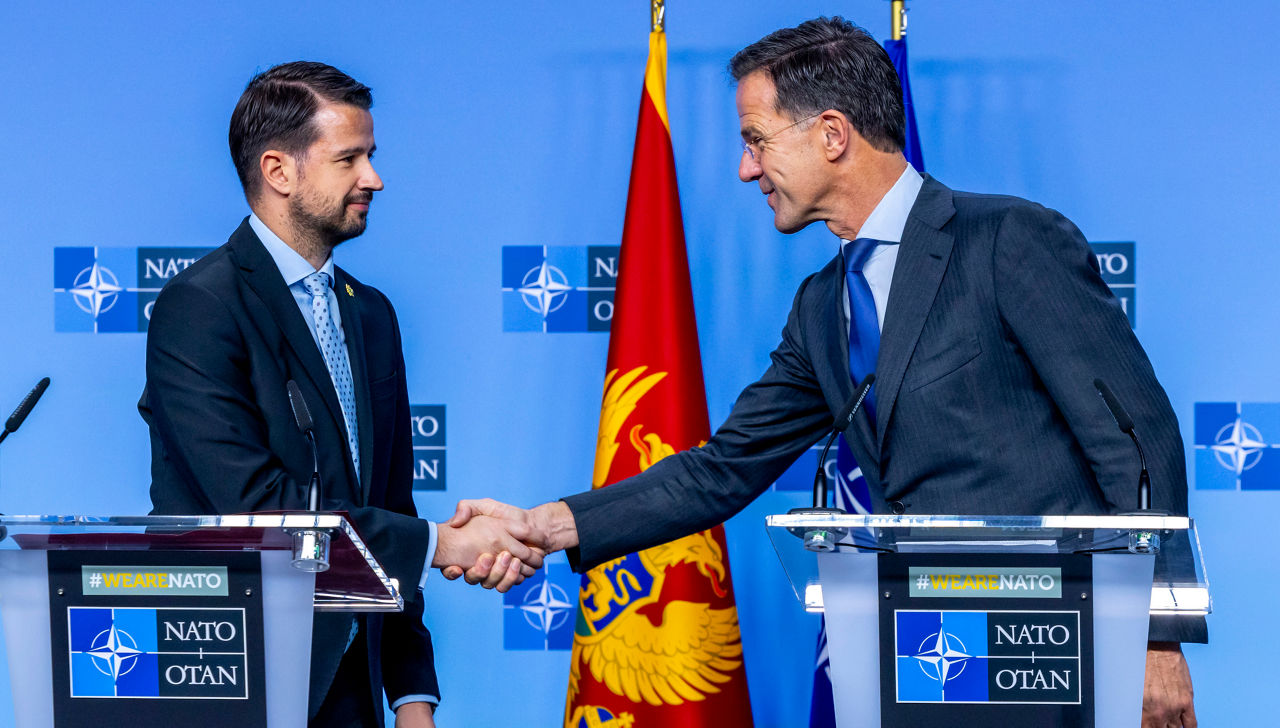
3 November 2016: Deputy Secretary General Rose Gottemoeller attends the closing ceremony of the civil emergency exercise and has discussions President Filip Vujanović, Prime Minister Milo Djukanović and other key ministers. She congratulates Montenegro on celebrating its tenth year of independence in 2016 and on its progress toward NATO membership, underlining that the Alliance looks forward to welcoming the country as NATO’s 29th member in the near future.
5 June 2017: Montenegro joins NATO.
2 December 2015
20 May 2012
20 November 2010