Close
Back


From now on you can download videos from our website
If you would also like to subscribe to the newsletter and receive our latest updates, click on the button below.
Enter the email address you registered with and we will send you a code to reset your password.
The password must be at least 12 characters long, no spaces, include upper/lowercase letters, numbers and symbols.
Click the button to return to the page you were on and log in with your new password.
Updated: 17 December 2025
In order to safeguard the freedom and security of its members, the Alliance must maintain the capabilities to prevent, detect, deter and defend against any threat of aggression. For this reason, NATO conducts education and training programmes to increase cohesion, effectiveness and readiness of its multinational forces. Furthermore, NATO shares its expertise with partner countries in their education and training reform efforts.
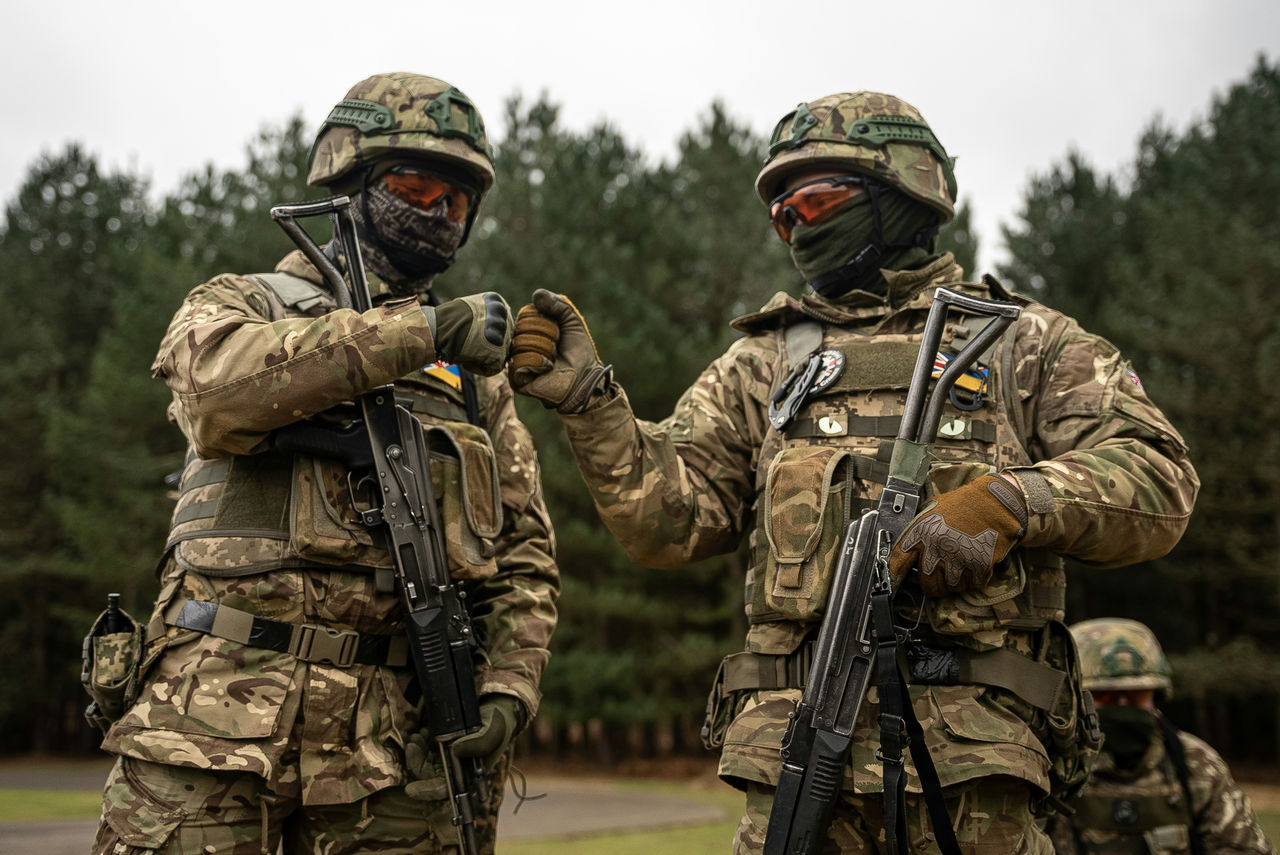
Recruits participate in Operation Interflex, a multinational effort that sees NATO Allies and partner countries engage in training programmes for Ukrainian personnel at sites across the UK.
Through the constant adaptation of its courses, training events, exercises and the introduction of new concepts and capabilities, NATO ensures it is able to respond to emerging security challenges. There are four core dimensions to this transformation process:
Allies and partner countries are also committed to supporting the implementation of United Nations Security Council Resolution 1325 and related Resolutions, and take actions to promote the Women, Peace and Security agenda, also through education and training.
NATO forces have been conducting joint training¹ to strengthen their ability to practise collective defence since 1949. The outbreak of the Korean War helped the Allies quickly understand the importance of an integrated force under centralised command. Over time, training has expanded both geographically and institutionally to become an integral part of NATO's ability to provide security. As a priority, NATO ensures its commands and multinational forces remain ready, responsive, adaptable and interoperable, despite differences in tactics, doctrine, training, structures and language.
NATO's two Strategic Commands – Allied Command Operations (ACO) and Allied Command Transformation (ACT) – manage the education, training, exercise and evaluation process. There are a number of organisations through which NATO education and training is implemented; some operate under the direction of the Alliance and others are external but complementary to Alliance structures.
ACO, located at Supreme Headquarters Allied Powers Europe (SHAPE) in Mons, Belgium, plays an important role in the field of education and training. It develops and maintains forces standards; provides guidance on exercise programmes and their evaluation; and identifies requirements related to training and force development capabilities.
Located in Norfolk, Virginia, United States, ACT holds lead responsibility for directing NATO schools as well as for the development of joint education, individual training, and associated policy and doctrine between NATO and Partnership Training and Education Centres. Since July 2012, ACT is responsible for managing collective training and exercises based on ACO's requirements. It identifies and develops the most appropriate education and training solution for every discipline while annual conferences keep the disciplines aligned with evolving requirements, and guarantee responsive and flexible education and training cycles. Once the solutions are defined, delivery of courses, training and exercises is synchronised with all stakeholders.
These entities have a relationship with NATO, but are administered by sponsor countries, national authorities or civil organisations. They are open to personnel from member and partner countries, and sometimes welcome individuals from other organisations.
The Centres of Excellence are nationally or multinationally sponsored entities that provide high-quality expertise and experience to the benefit of the Alliance, especially in support of transformation. They provide opportunities to enhance training and education, assist in doctrine development, identify lessons learned, improve interoperability and capabilities, and test and validate concepts through experimentation. There are 30 Centres of Excellence that offer specialised courses to military and civilian personnel within their field of expertise.
Partnership Training and Education Centres (PTECs) are a global network of educational and training establishments that promote collaborative initiatives and high-quality instruction to enhance capacity-building, interoperability and a comprehensive understanding of wider security issues.
The PfP Consortium – an Austrian-German-Swiss-US initiative – was established in 1999 to help promote education in security-related topics by facilitating cooperation between both civilian and military institutions in NATO and partner countries in support of the Alliance's priorities such as defence institution building and defence reform.
Organisations that are not directly related to NATO support the Alliance in its education and training activities. These facilities can come from national, multinational and non-governmental organisations, such as military schools and universities.
NATO's efforts help to increase stability in crisis areas go beyond deploying troops. They include education and training to help partners develop security institutions and provide for their own security.
NATO launched a non-combat capacity-building mission – NATO Mission Iraq – in July 2018, at the request of the Iraqi government and in coordination with the Global Coalition to Defeat ISIS. NATO is helping Iraqi forces secure their country and the wider region against terrorism, and prevent the re-emergence of ISIS. The mission will also help to set up military schools and sustain more effective, transparent and inclusive national security structures and institutions.
From 2004 to 2011, NATO conducted a relatively small but important support operation in Iraq that consisted of training, mentoring and assisting the Iraqi Security Forces. It was known as the NATO Training Mission in Iraq. In 2011, Iraq was granted partner status by NATO and signed a jointly agreed Individual Partnership and Cooperation Programme in September 2012. This was followed by a Defence and Related Security Capacity Building Package for Iraq in 2015, which involved, for instance, a train-the-trainers course. NATO's support to Iraq was boosted in January 2017 by a small core team of NATO civilian and military personnel, based in Baghdad that coordinates training and capacity-building activities.
The Resolute Support Mission (RSM), a non-combat mission to provide training, advice and assistance to Afghan security forces and institutions, was launched on 1 January 2015 and was terminated early September 2021. Its key functions included supporting planning, programming and budgeting; assuring transparency, accountability and oversight; supporting the adherence to the principles of rule of law and good governance; and supporting the establishment and sustainment of processes such as force generation, recruiting, training, managing and development of personnel.
Initially, NATO's education and training programmes focused on increasing interoperability between NATO and partner forces. They were later expanded to provide the means for members and partners to collaborate on how to build, develop and reform educational institutions in the security, defence and military domains. The Alliance has also developed partnerships with international organisations to give more coherent and effective responses to complex security challenges.
When NATO invited former Warsaw Pact countries, former Soviet Republics and non-member western European countries to join the Partnership for Peace (PfP) programme in 1994, participating countries committed themselves to increasing interoperability with NATO forces. This opened the way for joint training and marked the beginning of NATO's support for defence reform. NATO training institutions soon followed suit. The first officers' course for partner countries was conducted in October 1994 at the NATO Communications and Information Systems School. Similarly, the NATO Defense College integrated PfP issues into its Senior Course.
The Mediterranean Dialogue (MD) was created in 1994, initially as a forum for political dialogue. In 1997, at a meeting in Sintra, Portugal, the Alliance decided to open selected military training activities to countries participating in this initiative (Algeria, Egypt, Israel, Jordan, Mauritania, Morocco and Tunisia). In 2004, Allied leaders elevated the MD initiative to a genuine partnership to include increased participation in exercises and individual training at NATO institutions.
The Istanbul Cooperation Initiative (ICI) was launched during the Istanbul Summit in 2004, as a means of engaging in practical security cooperation activities with countries throughout the broader Middle East region. Four countries participate in the initiative: Bahrain, Kuwait, Qatar and the United Arab Emirates. The ICI offers both cooperation with interested countries in training and education activities and participation in NATO exercises, as well as in other areas. In January 2017, the NATO-ICI Regional Centre in Kuwait was inaugurated as the hub for training, education and other cooperative activities between NATO and its ICI partners in the Gulf.
NATO continues to support the African Union (AU) in its peacekeeping missions on the African continent. Since June 2007, NATO has assisted the AU Mission in Somalia (AMISOM) by providing capacity-building support, as well as expert training support to the African Standby Forces (ASF), all at the AU's request.
The Defence Education Enhancement Programme (DEEP) is a vehicle for reform, providing tailored, practical support to individual countries in developing and reforming their professional military education institutions. Through faculty development, teaching curricula development and peer-to-peer consultations, DEEP provides a platform to foster defence capacity building, cooperative capability development and standardization, and promotes interoperability of processes and methodologies to enhance democratic institutions.
A vast network of institutions and individuals support these projects on a voluntary basis, for instance the NATO Defense College, the NATO School Oberammergau, the US Army War College, the Canadian Defence Academy, the National Defence University of Poland, the National Defence University of Romania, the Czech University of Defence, the Slovak Armed Forces Academy, the Geneva Centre for Security Policy, the George C. Marshall Center in Garmisch-Partenkirchen (Germany) and the Partnership for Peace Consortium of Defense Academies and Security Studies Institutes.
NATO shares its expertise in the field of defence capabilities with partners. It does this through the Planning and Review Process (PARP), a voluntary mechanism that helps identify partner forces and capabilities and assesses the implementation of defence-related objectives, established on a case-by-case basis under different cooperation packages.
Additional mechanisms exist for partners that have a special relationship with NATO such as dedicated Working Groups or NATO-led multinational teams of experts that address the education and training requirements listed in the Individually Tailored Partnership Programmes of the countries concerned.
A dedicated Middle East Faculty has been established at the NATO Defense College in Rome. The faculty has a unique nature, being focused on curriculum development, academic programme delivery and outreach activities. It also conducts research on the international security environment and on strategic issues, with an emphasis on the Middle East and North Africa (MENA) region.
Since 1949, collective education and training has expanded to become an integral part of NATO’s ability to provide security. It has expanded geographically, with NATO working with many countries, and institutionally, with the creation of Allied Command Transformation (ACT), a strategic command entirely dedicated to leading transformation throughout the Alliance.
In the early years of the Alliance, NATO forces conducted joint training to strengthen their ability to practise collective defence. In other words, education and training was conducted to ensure that forces were prepared in the case of an attack.
An integrated force under centralised command
An integrated force under centralised command was called for as early as September 1950, following the outbreak of the Korean War in June 1950. The first Supreme Allied Commander Europe, US General Dwight D. Eisenhower, was appointed in December 1950. Following this appointment, national forces were put under centralised command.
The Alliance’s first exercises
The Alliance’s first exercises were held in the autumn of 1951. During 1953, there were approximately 100 exercises of various kinds conducted by NATO. From this point on, NATO forces began to gain cohesion.
Education for individuals
Individual education soon followed. The need for a specialised setting to explore issues unique to the Alliance was first recognised by General Eisenhower in April 1951. The NATO Defense College was inaugurated later that year, on 19 November, and was transferred from Paris, France to Rome, Italy in 1966, where it is still located.
The NATO Communications and Information Systems School (NCISS) was established in 1959, when a civil contractor began to train a small number of NATO personnel on what would become NATO's “ACE HIGH Communications System”. On 2 May of the same year, the NATO Undersea Research Centre in La Spezia, Italy was commissioned. Both entities were later restructured: during the 2002 reform process, this centre in La Spezia was moved to the agency structure of the Alliance as an organisational element linked to research. In 2021, building on the achievements of the NCISS, the NATO Communications and Information (NCI) Academy was opened in Oeiras, Portugal as a training facility for Allies and partners on NATO systems that support operations and exercises.
In 1971, the Military Committee established the NATO Training Group. This Group met for many years in joint session with the Euro-training sub-group, which was set up to improve multinational training arrangements between European countries (its responsibilities were passed on to NATO in 1993). The NATO Training Group was formally transferred from the Military Committee to ACT in 2004. Its principal aim is to improve interoperability among Allies and between the forces of partner countries.
In 1975, the NATO School in Oberammergau, Germany received its charter and present name. Its principal focus was on issues relating to collective defence. Later, in 2003, the NATO Maritime Interdiction Operational Training Centre was established in Souda Bay, Greece to conduct training for NATO forces in surface, sub-surface, aerial surveillance and Special Operations activities.
While the PfP programme and the MD initiative had been set up in 1994, NATO decided to increase cooperation with all its partners.
In 1998, the Euro-Atlantic Partnership Council approved the creation of the Partnership for Peace Consortium, and at the 1999 Washington Summit NATO leaders approved plans for an “Enhanced and more Operational Partnership”. In addition, with the revision of the NATO Strategic Concept in 1999, the role of the NATO School was fundamentally altered to include cooperation and dialogue with civilian personnel from non-NATO countries.
In May 2002, the Joint Analysis and Lessons Learned Centre in Monsanto (Lisbon), Portugal was established. This facility’s mission is to perform joint analysis and experimentation of operations, training and exercises – also with partners.
In February 2005, the North Atlantic Council started developing the Education and Training for Defence Reform (EfR) initiative. EfR helps educators incorporate principles linked to defence institution building into their curricula. Since the courses are aimed at civil servants and other persons participating in defence institution building, they contribute indirectly to improving defence reform.
At the 2014 Wales Summit, Allies endorsed the Partnership Interoperability Initiative, launching the Interoperability Platform. This widened opportunities for partner participation in NATO exercises, with the aim of increasing interoperability and preparedness for crisis management situations.
Recognising the importance of a strengthened strategic partnership, European Union members and NATO Allies – at the 2016 Warsaw Summit – decided to find ways to better provide security in Europe and beyond. In this regard, the Joint Declaration by the President of the European Council, the President of the European Commission and the Secretary General of NATO underlines the importance of stepping up coordination on exercises.
At the 2021 Summit, NATO leaders agreed NATO 2030 – a transatlantic agenda for the future. To that end they agreed, inter alia, to “Substantially strengthen NATO’s ability to provide training and capacity building support to partners, recognising that conflict, other security developments and pervasive instability in NATO’s neighbourhood directly impact Allied security.”
With the creation of the two new strategic commands in 2002 and the introduction of global programming, the coordination and coherence of NATO education and training activities has been greatly increased. From 2002, ACT was able to look holistically at education and training and was supported in its efforts by the creation of a Joint Warfare Centre in Stavanger, Norway (inaugurated on 23 October 2003) and the Joint Training Centre in Bydgoszcz, Poland (31 March 2004). Since July 2012, ACT has also been given the responsibility of managing collective training and exercises based on ACO's requirements.
At the 2004 Istanbul Summit, education and training were not only offered to a broader range of countries (participants in the Mediterranean Dialogue and the Istanbul Cooperation Initiative), but the Summit also made provision for partners to engage in joint training to combat terrorism and to train jointly with the NATO Response Force, NATO’s rapid-reaction force.
At the Chicago Summit in 2012, NATO leaders stressed the importance of expanding education and training, especially within the context of the Connected Forces Initiative (CFI). CFI sought to make greater use of education, training and exercises to reinforce links between the forces of NATO member countries and maintain the level of interoperability needed for future operations.
Shortly after Russia’s illegal annexation of Crimea in 2014, at the NATO Summit in Wales, Allies committed to enhancing capabilities and agreed to a Defence Planning Package that included, inter alia, reinforcing training and exercises. Training was also identified as a key area of activity in the cyber defence domain and in NATO’s relations with other international organisations such as the United Nations, the European Union and the African Union.
At the Warsaw Summit in 2016, Allies took stock of the eight multinational NATO Force Integration Units established on Allied territory in the eastern part of the Alliance to assist in training forces and in the reception of reinforcements when needed. They also agreed to develop a tailored forward presence in the southeast part of Alliance territory, which includes an initiative to help improve integrated training of Allied units in the Black Sea region as part of NATO’s strengthened deterrence and defence posture.
Other training initiatives comprise the Transatlantic Capability Enhancement and Training (TACET) Initiative, which promote capability development, interoperability and training, and enhance NATO resilience in response to the challenges in the Baltic region. Additionally, the Combined Joint Enhanced Training (CJET) Initiative provides similar engagement with Bulgaria and Romania.