Close
Back


From now on you can download videos from our website
If you would also like to subscribe to the newsletter and receive our latest updates, click on the button below.
Enter the email address you registered with and we will send you a code to reset your password.
The password must be at least 12 characters long, no spaces, include upper/lowercase letters, numbers and symbols.
Click the button to return to the page you were on and log in with your new password.
Updated: 06 May 2025
The Planning and Review Process (PARP) is a NATO mechanism to guide and measure progress in security, defence and military transformation and modernisation efforts in NATO partner countries. Through the PARP, NATO helps partners reform their defence institutions, identify and develop capabilities, achieve interoperability with NATO standards, and prepare forces for possible participation in international peace and security operations. The PARP is also a mechanism to promote transparency between NATO and its partners.
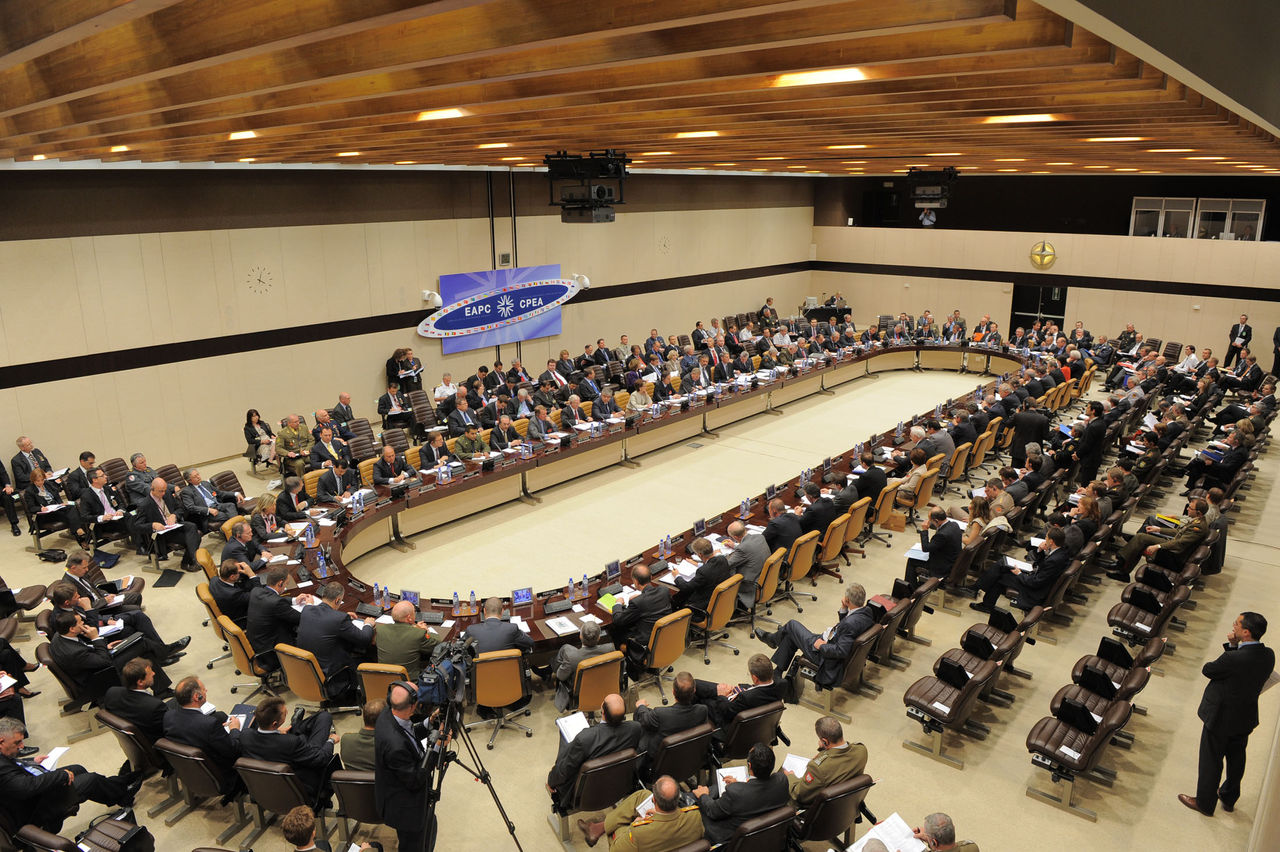
The PARP provides an efficient tool for NATO to work with partners to achieve interoperability, ensuring that their capabilities, structures, processes, procedures and mind-sets are in line with NATO standards. This enables partners to participate in NATO operations, missions or other activities. The PARP also helps promote political engagement between NATO and partners, increasing transparency on NATO processes and on progress achieved in partner countries.
Over time, the PARP has developed in several ways in order to serve different purposes. It was originally established in 1995 to provide a structured basis for identifying partner forces and capabilities that could be available to the Alliance for multinational training, exercises and operations. This was particularly relevant for partners who aspired to join NATO in the 1990s, and sought to bring their national standards in line with NATO standards. As such, participation in the PARP became a prerequisite to joining the Membership Action Plan (MAP), a NATO programme that provides advice, assistance and practical support tailored to the individual needs of countries wishing to join NATO (but does not prejudge any decision by the Alliance on future membership). The Alliance continues to use the PARP as a planning tool to guide and measure progress in security, defence and military transformation and modernisation efforts – not only for countries who wish to join the Alliance, but also for all partner countries who seek to cooperate with NATO.
The PARP is also used as an interoperability mechanism for countries participating in international operations and missions organised by the European Union or United Nations.
The PARP was initially developed for the Partnership for Peace (PfP) partners. The review of NATO’s partnerships policy in April 2011 opened the participation to all other NATO partners on a voluntary and case-by-case basis, subject to approval by the North Atlantic Council, NATO’s principal political decision-making body. Countries that wish to join NATO must participate in the PARP as a pre-requisite.
The PARP remains a voluntary process, as the decision to take part in it rests with each partner country, as does the provision of resources to achieve and maintain capabilities. Participation requires the interested country to first complete a PARP Survey, which elaborates on the partner’s forces and capabilities available to the Alliance, its wider security and defence plans, the structure of its forces and its budgetary plans. Completion of the survey triggers the PARP and its working mechanism. Additionally, PARP countries are expected to commit to transparency in national defence planning and budgeting, ensuring democratic control of defence forces, maintaining capability and readiness of achieved capabilities, and developing military cooperation and interoperability with NATO.
Currently, 14 partners are participating in the PARP: Armenia, Austria, Azerbaijan, Bosnia and Herzegovina, Georgia, Ireland, Jordan, Kazakhstan, Malta, the Republic of Moldova, Serbia, Switzerland, Tunisia and Ukraine.
In line with NATO’s Partnership Reform, agreed in 2021, the PARP is currently part of the Individually Tailored Partnership Programmes (ITPPs), which bring together all aspects of NATO’s collaboration with individual partners into a strategic and goal-oriented framework. The PARP itself is a two-year process, with each ITPP cycle now embedding two PARP cycles: partners and NATO agree to a package of Partnership Goals in the first and third year of the ITPP cycle, while PARP Assessments are conducted in the second and fourth year of the ITPP cycle. For partners participating in the PARP, the PARP Assessments form the basis of the ITPP mid-term and end-of-cycle assessments.
The PARP’s main constituent elements are Partnership Goals and PARP Assessments.
The first year of the PARP cycle is for goal-setting, whereby goals are jointly developed and agreed between a partner country and NATO. PGs express the outcome a partner country voluntarily commits to achieving and maintaining within national resources and means, with voluntary support from NATO, individual Allies and other partners (the composition of which varies on a case-by-case basis).
PGs are demand-driven and tailored to each partner’s needs. They must be specific, measurable, acceptable, realistic and time-bound, with a clear indication of the related objectives and their end state. PGs may range from capability development across all domains, up to reform and transformation of security and defence related institutions.
Based on the PARP Survey completed at the beginning of the process, PGs are drafted in consultation between the partner and NATO staff. These stakeholders engage in bilateral talks about these goals and amend them as necessary, following discussions between the partner and all of the Allies. Finally, once this process is complete, the Allied Ambassadors and the partner country approve the Partnership Goals.
The PARP continuously reviews the progress of each country in implementing its Partnership Goals. To this end, based on an updated PARP Survey completed by the partner, NATO staff produce a PARP Assessment, which analyses the advancement of the partner in meeting the agreed Partnership Goals. The PARP Assessment is then discussed with the partner, reviewed with the Allies and approved by the Allied Ambassadors and the partner concerned.
The second year of the PARP cycle provides an assessment of the overall achievements during the two-year cycle, for the defence and related security sector in general, and for each of the set goals in particular. The assessment feeds into the next PARP cycle, when existing PGs are updated as necessary and new PGs may be introduced.
This assessment is prepared based on the completed PARP Survey, which contains a set of questions common to all PARP countries, agreed by Allies and partners who participate in the PARP.
Coordination of the PARP is the responsibility of the PARP Team, comprising members of the Operations Division at NATO Headquarters. In addition, due to the wide-encompassing nature of the process and the range of topics that the PARP addresses, the execution of the process also involves support from relevant experts across NATO, such as other divisions at NATO Headquarters, the International Military Staff, Allied Command Operations and Allied Command Transformation.
In recognition of the value the Allies place on force planning, the 1994 Partnership for Peace (PfP) Framework Document committed NATO to developing a planning and review process with partners. The Partnership for Peace Planning and Review Process (PARP) was subsequently launched in 1995.
Over the following years, the PARP was expanded to include non-PfP partner countries and moved beyond developing interoperability to also focus on the development of new capabilities. Currently, Allies and participating partners jointly develop and agree the PARP as part of the broader package of the Individually Tailored Partnership Programme (ITPP).
The PARP has the additional function of providing a planning mechanism for the participating partners who are also European Union (EU) members. In this respect, it also assists these partners in developing capabilities for, and contributions to, the EU’s military capabilities, which reflects the imperative that each country has only a single set of forces on which it can draw for NATO-led, EU-led or other operations.
In the past, the PARP was a vehicle for specifically encouraging defence reform, but has now extended to the wider security sector. For countries that agree, Partnership Goals now also cover reform and development objectives for other defence and security-related ministries and agencies (e.g. Ministries of Interior, Finance, and Veterans’ Affairs, as well as Emergency Services, Border Guard, Police and other Security Services).